although it is most frequently diagnosed in teenagers and young adults. What makes the condition especially dangerous is that symptoms can begin subtly and resemble common digestive problems such as indigestion, gas pain, food poisoning, or a mild stomach virus. Because of this, many people delay seeking medical attention during the earliest stage of the illness.

Appendicitis is one of the most common surgical emergencies in the United States and affects people of all ages, although it is most frequently diagnosed in teenagers and young adults. What makes the condition especially dangerous is that symptoms can begin subtly and resemble common digestive problems such as indigestion, gas pain, food poisoning, or a mild stomach virus. Because of this, many people delay seeking medical attention during the earliest stage of the illness.
The condition develops when the appendix becomes inflamed, usually because its opening is blocked. As pressure builds inside the appendix, blood circulation may decrease, allowing bacteria to multiply rapidly. Without prompt treatment, the swollen appendix can eventually rupture, spreading infection throughout the abdominal cavity. This complication, known as peritonitis, can become life-threatening and often requires more extensive treatment and a longer hospital stay.
One of the reasons appendicitis receives so much attention in emergency medicine is the speed at which it can progress. Some patients move from mild discomfort to severe abdominal pain within a matter of hours. Early recognition of symptoms can therefore play a critical role in preventing complications and improving recovery outcomes. While modern surgical techniques and antibiotics have significantly improved survival rates, delayed diagnosis still increases the risk of serious infection, abscess formation, and longer recovery periods.
This guide explains what appendicitis is, how symptoms typically evolve, what causes the condition, and how doctors diagnose and treat it using current medical approaches in 2026. It also covers recovery after appendectomy surgery and answers common questions patients often ask in emergency settings. The information is intended for educational purposes only and should not replace professional medical care or emergency evaluation.
What is Appendicitis? (The “Red Flag” Overview)
Appendicitis is the inflammation of the appendix, a small tube-like pouch attached to the beginning of the large intestine near the cecum. The appendix is located in the lower right side of the abdomen, close to the ileocecal valve, where the small intestine connects to the colon. Although the appendix is relatively small, inflammation within this organ can quickly trigger severe pain and dangerous complications if left untreated.
For many years, doctors believed the appendix had little or no purpose. More recent research suggests it may support immune function and help maintain healthy gut bacteria. However, people can live normal, healthy lives without it, and surgical removal usually does not cause long-term digestive problems.
Appendicitis usually begins when the inside of the appendix becomes blocked. This blockage may result from hardened stool deposits known as fecaliths, swollen lymph tissue after infections, intestinal inflammation, or, in rare cases, tumors. Once blocked, mucus and bacteria become trapped inside the appendix. Pressure increases, blood flow decreases, and the organ becomes inflamed and infected.
As inflammation worsens, the appendix wall may weaken. If it ruptures, bacteria and infected material can leak into the peritoneum, the thin membrane lining the abdominal cavity. This can lead to widespread infection and severe complications requiring emergency surgery and intensive medical care.

Acute Appendicitis
Acute appendicitis is the most common form and develops suddenly, often over 12 to 48 hours. Symptoms usually begin with vague abdominal discomfort before progressing into sharper, more localized pain. Acute appendicitis is considered a medical emergency because delaying treatment increases the risk of rupture.
Patients with acute appendicitis often experience:
- Pain that shifts toward the lower right abdomen
- Nausea and vomiting
- Loss of appetite
- Fever
- Increased pain with movement or coughing
Because symptoms can intensify rapidly, emergency evaluation is generally recommended when appendicitis is suspected.
Chronic Appendicitis
Chronic appendicitis is far less common and can be more difficult to recognize. Instead of severe sudden pain, patients may experience recurring abdominal discomfort that comes and goes over weeks or even months. Symptoms may temporarily improve before returning again.
This form of appendicitis is sometimes mistaken for:
- Irritable bowel syndrome
- Digestive infections
- Gynecological conditions
- Other chronic gastrointestinal disorders
Although chronic appendicitis is usually less aggressive than acute appendicitis, it can still eventually progress into a more serious infection if untreated.
Why Early Recognition Matters
One of the biggest dangers of appendicitis is that symptoms do not always appear the same in every patient. Children, older adults, and pregnant women may have unusual symptom patterns that make diagnosis more difficult. Some people develop only mild fever or generalized abdominal discomfort in the beginning stages.
Understanding the “red flag” warning signs — especially worsening abdominal pain that moves to the lower right side — can help people seek emergency care earlier before complications develop.
Recognizing the Symptoms: The “Pain Migration” Rule
One of the most recognizable and medically important characteristics of appendicitis is the way the pain changes location over time. Doctors often describe this pattern as “pain migration,” and it is considered one of the classic warning signs of acute appendicitis. While not every patient experiences symptoms in exactly the same way, understanding how appendicitis pain typically evolves can help people recognize when abdominal discomfort may require emergency medical evaluation.
In many cases, appendicitis does not begin with severe pain. The earliest symptoms are often vague and easy to mistake for indigestion, food poisoning, constipation, or a temporary stomach virus. However, unlike common digestive discomfort that gradually improves, appendicitis pain usually becomes more intense and more localized as inflammation worsens.
Early Warning Signs: The Periumbilical Pain
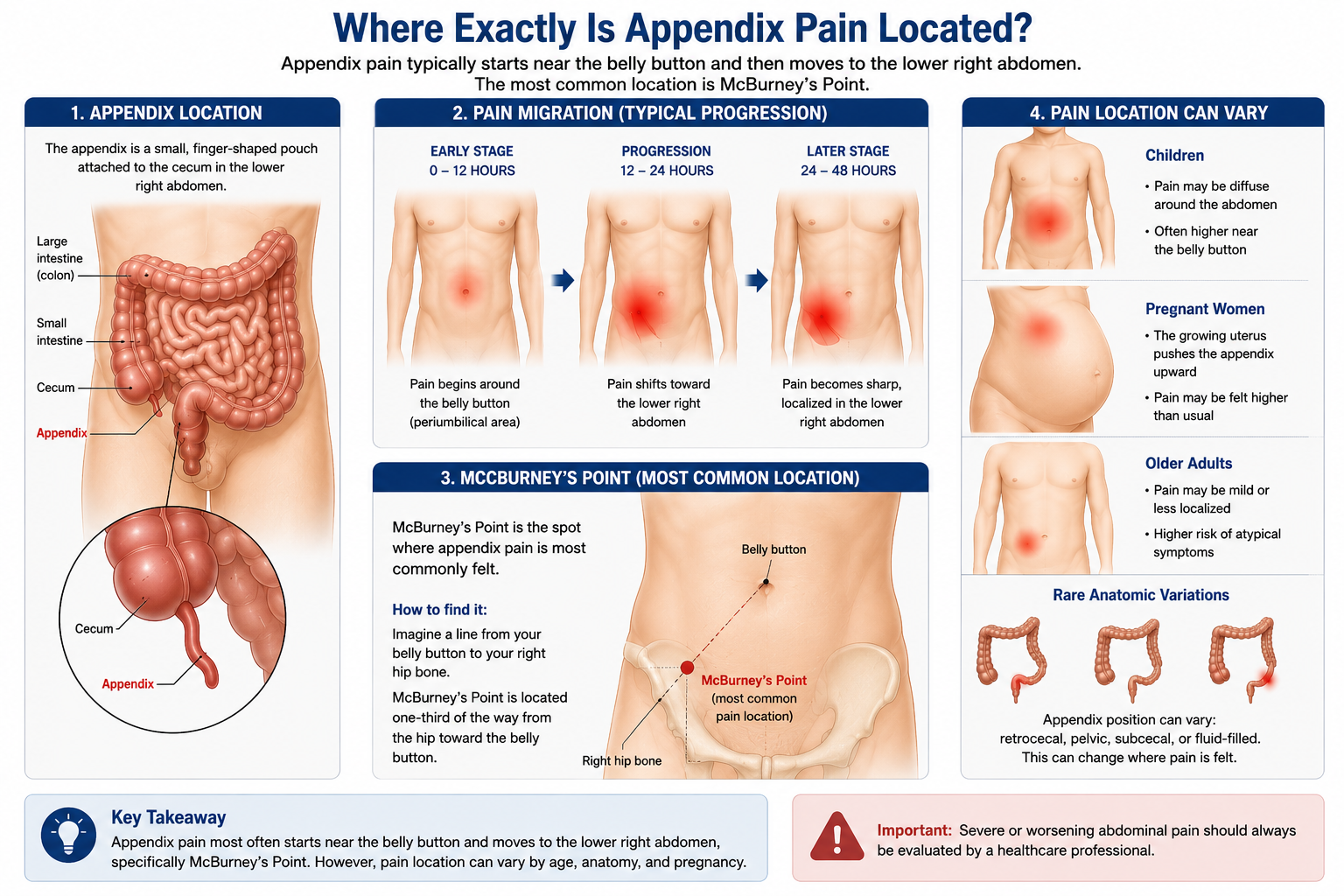
During the earliest stage of appendicitis, pain often begins near the belly button area, medically known as the periumbilical region. At this point, inflammation is limited to the inner lining of the appendix, which affects nerves connected to the middle abdomen rather than the exact location of the organ itself.
The discomfort may feel:
- Dull or aching
- Cramp-like
- Similar to trapped gas
- Comparable to mild indigestion
Because the pain is often generalized instead of sharply localized, many people initially ignore it or assume it is related to something they ate.
Other early symptoms commonly appear alongside the abdominal discomfort, including:
- Loss of appetite
- Mild nausea
- Low-grade fever
- Bloating
- General fatigue
- Mild digestive upset
Some patients may also experience a subtle sense that “something feels wrong” before the pain becomes severe. Unlike ordinary stomach discomfort, appendicitis symptoms often continue to worsen over several hours instead of resolving naturally.
Another important feature is that movement may gradually become uncomfortable. Activities such as walking, coughing, sneezing, or riding in a car over bumps may increase the pain as inflammation spreads.
Because these symptoms overlap with many less serious illnesses, appendicitis can be difficult to recognize in its earliest phase. This is one reason why delayed diagnosis is relatively common, especially in young adults and teenagers who may try to “wait it out” at home.
The Classic Shift: Pain in the Lower Right Quadrant (McBurney’s Point)
As inflammation progresses and begins irritating the outer lining of the appendix and nearby abdominal tissue, the pain typically shifts toward the lower right side of the abdomen. This movement is known as the classic “pain migration” pattern associated with appendicitis.
The area most commonly affected is called McBurney’s Point, located roughly halfway between the belly button and the right hip bone.
At this stage, the pain often becomes:
- Sharper and more intense
- Constant rather than intermittent
- Easier to pinpoint with one finger
- Worse during movement or coughing
- More noticeable while walking or standing upright
Many patients describe the pain as feeling significantly more severe within a relatively short period of time. Even simple movements such as turning in bed or taking deep breaths may become uncomfortable.
Healthcare providers also look for a symptom called guarding, where the abdominal muscles automatically tighten in response to pain and inflammation. Guarding can be a sign that the body is trying to protect irritated internal tissues.
As appendicitis advances, additional symptoms may develop, including:
- Fever
- Vomiting
- Chills
- Constipation or diarrhea
- Abdominal swelling
If the appendix begins to rupture, some patients may briefly feel temporary pain relief as pressure inside the appendix decreases. However, this is often followed by sudden worsening pain throughout the abdomen as infection spreads into the abdominal cavity. This stage requires immediate emergency treatment.
Atypical Symptoms in Children, Seniors, and Pregnant Women
Not everyone experiences the “classic” appendicitis pattern. Age, pregnancy, anatomy, and other health conditions can change how symptoms appear, sometimes making diagnosis more difficult.
Children
Children often have less specific symptoms than adults. Instead of clearly localized pain, they may complain of general stomach pain or simply appear ill and uncomfortable.
Common symptoms in children include:
- Irritability
- Vomiting
- Fever
- Loss of appetite
- Difficulty walking
- Diffuse abdominal pain instead of lower-right pain
Younger children may not be able to explain exactly where the pain is located, which can delay recognition.
Older Adults
Older adults sometimes develop milder symptoms even when appendicitis is severe. Fever, nausea, and strong abdominal tenderness may be less obvious than expected.
Because symptoms can appear subtle, diagnosis in seniors is occasionally delayed until complications such as rupture or abscess formation occur. Older adults also tend to have a higher risk of serious complications once infection spreads.
Pregnant Women
During pregnancy, the growing uterus can gradually shift the appendix upward. As a result, pain may develop higher in the abdomen rather than in the lower right quadrant.
Nausea and abdominal discomfort can also overlap with common pregnancy-related symptoms, making appendicitis harder to identify. Imaging choices may differ as well, with ultrasound often preferred initially to reduce radiation exposure.
Conditions That Can Mimic Appendicitis
Several medical conditions can produce symptoms similar to appendicitis, including:
- Crohn's disease
- Ovarian cysts
- Kidney stones
- Pelvic Inflammatory Disease
- Urinary tract infections
- Gastroenteritis
Because abdominal pain can have many causes, medical evaluation is important whenever symptoms are severe, persistent, or rapidly worsening.
Complications: The Danger of a Ruptured Appendix
A ruptured appendix is one of the most serious complications of appendicitis and represents a true medical emergency. Although many people initially think of appendicitis as “just stomach pain,” the condition can rapidly become life-threatening if the inflamed appendix bursts before treatment is received.
As inflammation inside the appendix worsens, pressure continues to build. Blood flow to the tissue may decrease, weakening the wall of the appendix over time. Eventually, the organ can tear or rupture, allowing bacteria, infected fluid, and intestinal contents to spill into the abdominal cavity.
Once this happens, infection can spread quickly throughout the abdomen and trigger a condition known as peritonitis, which is inflammation and infection of the peritoneum, the thin membrane lining the abdominal cavity and surrounding internal organs. Peritonitis can cause widespread inflammation, severe pain, dehydration, and potentially dangerous complications involving multiple organs if not treated promptly.
Another major complication is the formation of an abdominal abscess. This occurs when the body attempts to contain the infection by forming a pocket of pus around the ruptured appendix. Abscesses may require drainage procedures, intravenous antibiotics, and longer hospital stays. In some cases, surgery may need to be delayed until the infection is brought under control.
Why Timing Matters
Appendicitis is highly time-sensitive. In many patients, the risk of rupture increases as inflammation continues untreated. While the exact timeline varies from person to person, symptoms can worsen significantly within 24 to 72 hours after pain begins.
Early diagnosis and treatment are important because a ruptured appendix is generally associated with:
- More complex surgery
- Longer recovery times
- Increased infection risk
- Greater need for antibiotics
- Higher hospitalization rates
Children, older adults, and people with weakened immune systems may face an even higher risk of severe complications because diagnosis is sometimes delayed in these groups.
Warning Signs of Possible Rupture
A ruptured appendix may cause symptoms to suddenly become much more severe. In some cases, patients experience a temporary decrease in pain just before rupture occurs because pressure inside the appendix is released. However, this relief is often short-lived and followed by widespread abdominal pain as infection spreads.
Seek immediate emergency medical care if symptoms include:
- Sudden worsening abdominal pain
- Pain spreading across the abdomen
- High fever or chills
- Severe bloating or abdominal swelling
- Persistent vomiting
- Rapid heart rate
- Shortness of breath
- Confusion or unusual weakness
- Inability to walk comfortably
As infection spreads, even small movements such as coughing, walking, or changing position may become extremely painful.
Long-Term Risks After Rupture
Although most patients recover well with proper treatment, complications after rupture can sometimes include:
- Post-surgical infections
- Scar tissue formation
- Bowel obstruction
- Prolonged fatigue
- Recurrent abscesses
Because of these risks, doctors generally emphasize rapid evaluation whenever appendicitis is suspected rather than waiting for symptoms to “go away on their own.”
In appendicitis, timing can significantly affect both treatment complexity and recovery outcomes. Prompt medical attention remains the safest approach when symptoms strongly suggest appendicitis.
FAQ
Can appendicitis go away on its own?
In some uncommon situations, symptoms of appendicitis may temporarily improve without immediate surgery. This can happen if the inflammation decreases or if the blocked appendix partially reopens. However, symptom improvement does not always mean the condition has fully resolved.
Appendicitis can still return or continue progressing silently, increasing the risk of rupture and serious infection later on. Because it is difficult to predict which cases may worsen, healthcare professionals generally recommend medical evaluation for persistent or worsening abdominal pain, especially when symptoms include nausea, fever, or pain migrating to the lower right abdomen.
Some patients with uncomplicated appendicitis may be treated initially with antibiotics under close medical supervision. However, this approach is not appropriate for everyone, and recurrence remains possible.
Where exactly is appendix pain located?
Appendix pain most commonly begins near the belly button before gradually shifting to the lower right side of the abdomen. This movement pattern is often called “pain migration” and is considered one of the classic signs of appendicitis.
The area where pain usually settles is known as McBurney’s Point, located between the belly button and the right hip bone.
However, pain location is not always identical in every patient. Several factors can change where the discomfort is felt, including:
- Age
- Pregnancy
- Body anatomy
- Position of the appendix inside the abdomen
For example:
- Pregnant women may feel pain higher in the abdomen
- Children may complain of generalized stomach pain
- Older adults sometimes experience only mild tenderness
Because abdominal pain can overlap with many other medical conditions, diagnosis should always be based on a full medical evaluation rather than pain location alone.
Can you have appendicitis without a fever?
Yes. Although fever is common in appendicitis, not everyone develops an elevated temperature.
In the early stages, some patients may only experience abdominal pain, nausea, or loss of appetite without fever. Older adults and people with weakened immune systems may also develop fewer obvious signs of infection despite having serious inflammation.
A low-grade fever may appear later as the condition progresses. If the appendix ruptures, fever often becomes more pronounced and may be accompanied by chills, rapid heart rate, and worsening abdominal pain.
Because fever is not always present, doctors consider the overall pattern of symptoms, physical examination findings, blood tests, and imaging results when evaluating possible appendicitis.
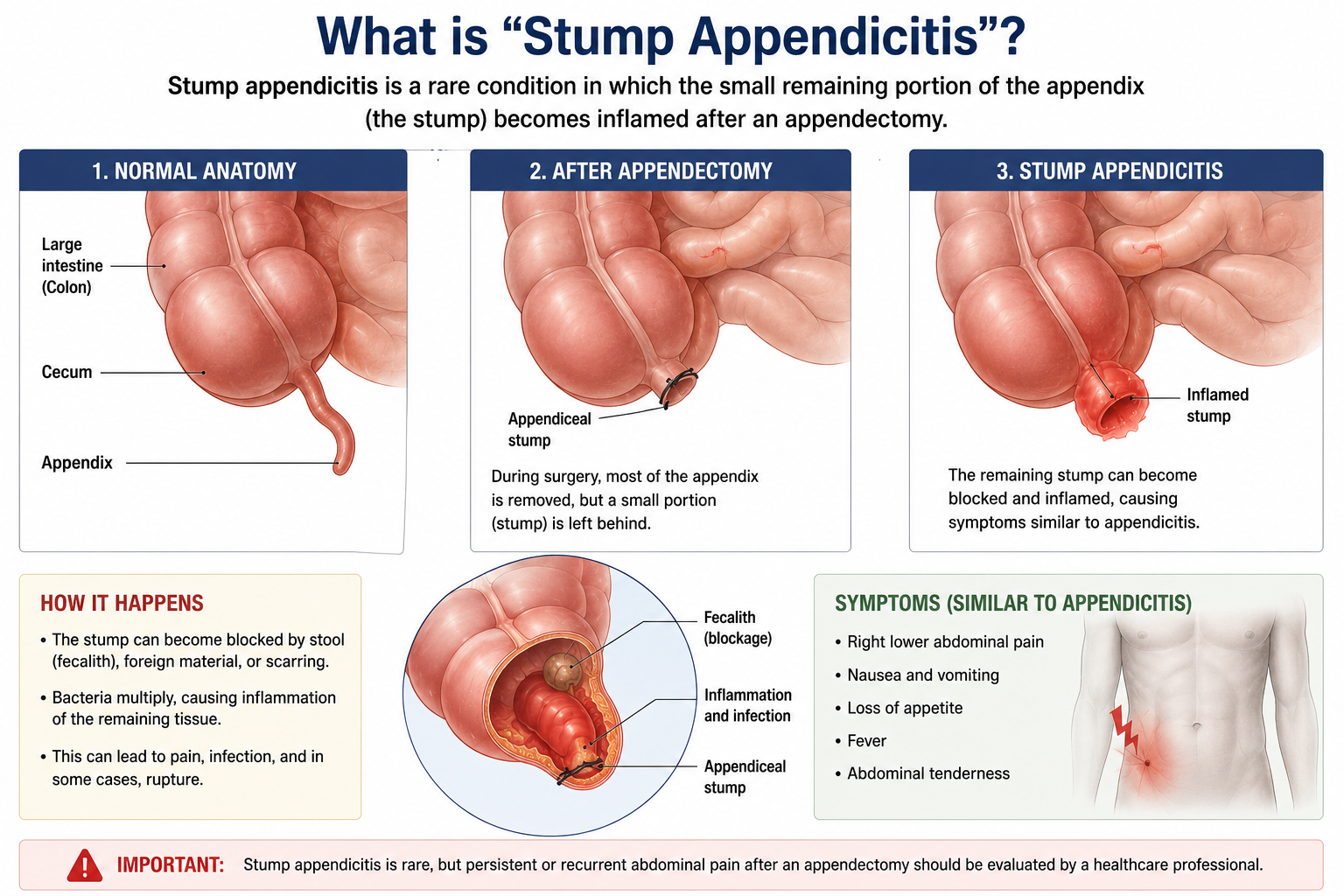
What does “Stump Appendicitis” mean?
Stump appendicitis is a rare but recognized condition that occurs when inflammation develops in a small remaining portion of the appendix after an appendectomy.
During appendix removal surgery, surgeons carefully remove the inflamed organ while leaving a tiny sealed section attached to the colon. In rare cases, this remaining tissue — called the appendiceal stump — can later become blocked and inflamed again.
Symptoms of stump appendicitis can resemble regular appendicitis and may include:
- Right lower abdominal pain
- Fever
- Nausea
- Vomiting
- Loss of appetite
Because many patients assume appendicitis is impossible after surgery, diagnosis may sometimes be delayed. Healthcare providers may use CT scans or ultrasound imaging to confirm the condition.
Although stump appendicitis is uncommon, it highlights the importance of evaluating persistent abdominal pain even in people who previously underwent appendectomy surgery.
Conclusion
Appendicitis is a condition that many people initially underestimate because its earliest symptoms can appear mild and nonspecific. What may begin as vague stomach discomfort, bloating, nausea, or pain around the belly button can quickly evolve into a true surgical emergency within hours. This rapid progression is one of the reasons appendicitis continues to be one of the most important causes of emergency abdominal surgery worldwide.
Although modern medicine has greatly improved the diagnosis and treatment of appendicitis, delayed recognition still remains a major concern. Many patients mistake the symptoms for indigestion, food poisoning, constipation, or a temporary stomach virus, especially during the early phase when pain is still generalized rather than sharply localized. Others may avoid seeking medical care because the pain comes and goes at first, creating the false impression that the condition is improving. Unfortunately, appendicitis does not always follow a predictable pattern, and waiting too long can significantly increase the risk of complications.
One of the most important lessons about appendicitis is that symptoms often evolve over time rather than appearing all at once. The classic progression usually starts with dull pain around the belly button before shifting toward the lower right abdomen as inflammation worsens. This “pain migration” pattern remains one of the most recognizable warning signs. However, not every patient experiences textbook symptoms. Children may have diffuse abdominal pain and irritability instead of localized tenderness. Older adults sometimes develop only mild discomfort despite severe infection. Pregnant women may experience pain higher in the abdomen because the growing uterus changes the position of the appendix.
Because symptoms can vary widely, diagnosing appendicitis often requires a combination of medical history, physical examination, blood tests, and imaging studies. Healthcare providers carefully evaluate signs such as guarding, rebound tenderness, fever, leukocytosis, and abdominal rigidity while also ruling out other conditions that may mimic appendicitis. Kidney stones, urinary tract infections, ovarian cysts, Crohn’s disease, and pelvic inflammatory disease can all produce similar symptoms, which is why self-diagnosis is never reliable.
Advances in diagnostic imaging have improved the ability of doctors to detect appendicitis earlier and more accurately. Ultrasound remains especially valuable for children and pregnant patients because it avoids radiation exposure, while CT scans continue to provide highly detailed images in more complicated or uncertain cases. In recent years, medical guidelines have increasingly emphasized minimizing unnecessary radiation exposure whenever possible, particularly in pediatric patients. This reflects a broader shift toward more individualized and patient-centered care.
Treatment approaches for appendicitis have also evolved considerably. For decades, surgery was considered the only effective option in nearly all cases. Today, minimally invasive laparoscopic appendectomy has become the preferred surgical approach for many patients because it often results in smaller scars, reduced postoperative pain, shorter hospital stays, and faster recovery times compared to traditional open surgery.
At the same time, researchers continue exploring the role of antibiotics in carefully selected cases of uncomplicated appendicitis. Some patients may improve with non-surgical treatment under close medical supervision, potentially avoiding immediate surgery. However, this approach is not suitable for everyone, and recurrence remains a possibility. Because appendicitis can change rapidly, treatment decisions should always be made with qualified healthcare professionals who can evaluate the severity of inflammation and the overall health of the patient.
Despite improvements in treatment, the most dangerous complication of appendicitis remains rupture of the appendix. Once the appendix bursts, bacteria and infected fluid can spread into the abdominal cavity, causing peritonitis or abscess formation. These complications often require more aggressive treatment, longer hospitalization, stronger antibiotics, and more extensive recovery periods. In severe cases, infection can spread throughout the body and become life-threatening.
This is why timing plays such a critical role in appendicitis outcomes. Early medical evaluation can often prevent complications before they occur. The difference between uncomplicated appendicitis and a ruptured appendix may be only a matter of hours in some patients. Recognizing warning signs early and seeking prompt care can significantly improve recovery and reduce risks.
Recovery after appendicitis treatment is generally very good for most patients, especially when the condition is treated before rupture occurs. Many people who undergo laparoscopic surgery are able to return to normal activities within a few weeks. However, recovery timelines can vary depending on factors such as age, overall health, the presence of complications, and the type of surgery performed.
Post-operative care remains an important part of the healing process. Patients are usually advised to stay hydrated, gradually increase physical activity, monitor surgical incisions carefully, and avoid heavy lifting until cleared by their healthcare provider. Warning signs such as worsening pain, fever, redness around the incision, persistent vomiting, or unusual drainage should always be evaluated promptly.
Beyond the medical aspects, appendicitis can also be emotionally stressful for patients and families because symptoms often appear suddenly and require urgent decisions. Emergency surgery, hospitalization, and recovery can create anxiety, especially for parents of young children or older adults with additional health concerns. Having clear, reliable information about appendicitis can help reduce uncertainty and encourage earlier action when symptoms appear.
Public awareness remains extremely important because many people are unfamiliar with how appendicitis actually develops. Some still assume the condition always causes dramatic pain from the beginning, while others believe symptoms must include high fever or severe vomiting. In reality, appendicitis can begin quietly and become dangerous before patients fully realize what is happening.
Understanding the condition also helps people recognize when abdominal pain should not simply be ignored or self-treated at home. While many stomach-related illnesses improve with rest and hydration, appendicitis tends to worsen progressively over time. The persistence and migration of pain are often key clues that medical evaluation may be necessary.
As medical research continues advancing, future appendicitis management may become even more personalized, with improved imaging techniques, refined antibiotic strategies, and less invasive surgical methods. Emerging technologies such as Natural Orifice Transluminal Endoscopic Surgery (NOTES) are already being explored in specialized centers as possible alternatives designed to reduce visible scarring and recovery time. Although these approaches are not yet standard practice, they reflect the ongoing evolution of emergency surgical care.
Still, despite all technological advances, one principle remains unchanged: appendicitis should never be ignored. No online article, symptom checker, or home remedy can reliably determine whether abdominal pain is harmless or potentially life-threatening. Professional medical assessment remains the safest and most responsible step whenever symptoms strongly suggest appendicitis.
If severe or persistent abdominal pain develops — especially when accompanied by nausea, vomiting, fever, bloating, loss of appetite, or pain moving toward the lower right side of the abdomen — prompt medical evaluation is strongly recommended. Early recognition and timely treatment remain the most effective ways to prevent serious complications and support a safe recovery.
Appendicitis Symptoms and Emergency Warning Signs
Learn the early symptoms of appendicitis, how appendix pain changes over time, common causes, emergency warning signs, diagnosis methods, and modern treatment options including laparoscopic surgery and antibiotics.
appendicitis, appendix pain, abdominal pain, appendectomy, digestive health, emergency symptoms, ruptured appendix, lower right abdominal pain, laparoscopic surgery, medical emergency, stomach pain, acute appendicitis, chronic appendicitis, appendicitis symptoms, surgical recovery, emergency care, digestive system, health tips, abdominal infection, peritonitis