Appendicitis Pain: How to Identify the Warning Signs and When to Seek Emergency Care

Appendicitis pain is one of the most common reasons people require emergency abdominal surgery in the United States, yet it is also one of the most frequently misunderstood causes of stomach pain. One reason appendicitis can be difficult to recognize early is that the discomfort does not always begin where most people expect. Instead of starting sharply in the lower right abdomen, the pain often begins as a vague, dull ache around the belly button. Because these early symptoms can resemble indigestion, trapped gas, food poisoning, or a mild stomach virus, many patients delay seeking medical attention during the first several hours.
In the beginning, the discomfort may feel mild and inconsistent. Some people describe it as a strange pressure sensation deep inside the abdomen rather than a clearly defined pain. Others report feeling bloated, slightly nauseated, or generally “unwell” without immediately realizing something serious may be developing. During this early phase, many individuals continue with normal daily activities, assuming the discomfort will pass on its own. Unfortunately, appendicitis pain often becomes progressively more intense as inflammation inside the appendix worsens.
Recognizing the early signs of appendicitis can be extremely important because delayed treatment increases the risk of complications. As the appendix becomes more inflamed and swollen, blood flow to the organ may decrease, potentially leading to tissue damage or rupture. If the appendix bursts, bacteria and infected material can spread into the abdominal cavity, increasing the risk of a dangerous infection known as peritonitis. Understanding where appendicitis hurts, how the pain evolves over time, and which symptoms should prompt emergency evaluation may help patients seek care before the condition becomes life-threatening.
Where Does Appendicitis Pain Start? (The Classic Progression)
The “Belly Button” Phase (Visceral Pain)
In the earliest stage of appendicitis, pain usually begins near the belly button, medically known as the umbilicus. Doctors often refer to this as “visceral pain,” meaning the discomfort originates from irritation of the internal organs rather than the outer abdominal lining. Because the nerves connected to the appendix are initially deeper and less precise, the brain has difficulty identifying the exact location of the problem. As a result, patients typically experience a generalized ache in the center of the abdomen rather than sharp pain on one side.
This early discomfort is commonly described as:
- A dull ache
- Mild abdominal cramping
- Pressure around the navel
- A heavy or bloated feeling
- Pain that is difficult to pinpoint exactly
Unlike sudden severe pain caused by kidney stones or gallbladder attacks, early appendicitis symptoms may develop gradually over several hours. Some patients notice the discomfort comes and goes at first, while others experience a constant but mild ache that slowly intensifies throughout the day.
At this stage, the symptoms can easily mimic common digestive issues. People may assume they simply ate too quickly, consumed greasy food, or are developing a stomach bug. Because the pain feels generalized rather than localized, many individuals attempt to manage symptoms at home with rest, antacids, or over-the-counter medications.
Alongside the abdominal discomfort, subtle digestive symptoms may begin appearing, including:
- Mild nausea
- Loss of appetite
- Feeling unusually full
- Fatigue or weakness
- Mild stomach upset
Loss of appetite is especially common and is considered one of the early warning signs of appendicitis. Some patients notice they suddenly have little interest in eating, even before severe pain develops.
As inflammation inside the appendix continues to worsen, the body’s immune response becomes more active. Over time, irritation spreads beyond the appendix itself and begins affecting nearby tissues in the abdomen. This is usually when the pain changes dramatically in both intensity and location.
The Shift to the Lower Right Quadrant (Somatic Pain)
As appendicitis progresses, the pain typically migrates from the center of the abdomen to the lower right side. This change is considered one of the classic features of appendicitis pain and often helps healthcare providers distinguish it from other digestive conditions.
Once inflammation reaches the outer lining of the abdomen — called the peritoneum — the pain becomes more localized and easier to identify. This stage is known as “somatic pain,” which tends to feel sharper, more intense, and more precise compared to the earlier dull ache.
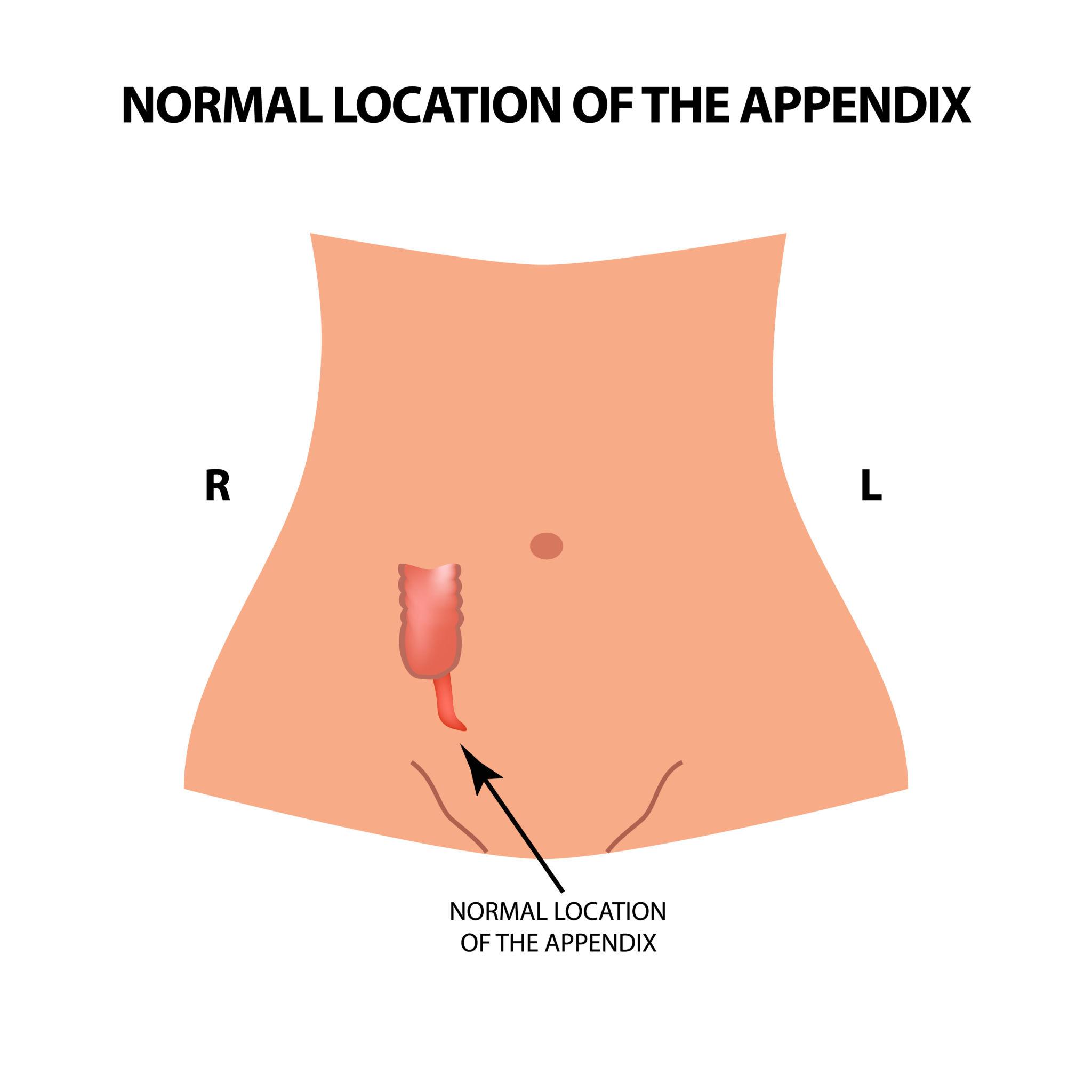
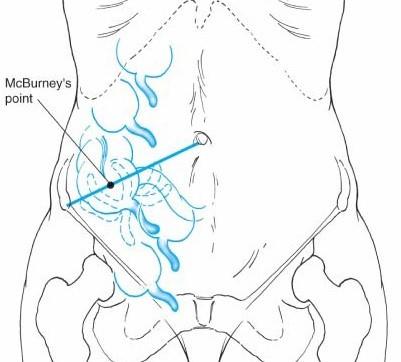
The most common appendix pain location is an area known as McBurney’s point, located roughly halfway between the belly button and the right hip bone. Tenderness in this area is frequently associated with acute appendicitis.
During this phase, patients often describe the pain as:
- Sharp or stabbing
- Constant rather than intermittent
- More severe with movement
- Easier to point to with one finger
Increasing steadily over time
Many people notice the pain becomes significantly worse during normal physical activity. Simple movements that stretch or jolt the abdomen can suddenly feel very uncomfortable. Patients commonly report worsening pain while:
- Walking quickly
- Standing upright
- Climbing stairs
- Rolling over in bed
- Coughing or sneezing
- Riding in a car over bumps
- Laughing or making sudden movements
Because movement aggravates the inflamed abdominal lining, some individuals instinctively avoid moving too much or begin walking slightly hunched over to reduce discomfort.
As the inflammation worsens, additional symptoms often become more noticeable. These may include:
- Low-grade fever
- Nausea or vomiting
- Increased abdominal tenderness
- Constipation or diarrhea
- Difficulty passing gas
- Abdominal bloating
The pain also tends to become persistent. Unlike gas pain, which may improve after using the bathroom or changing position, appendicitis pain usually continues to intensify over time.
This progression — beginning as vague pain around the belly button before shifting into sharp right lower abdominal pain — is considered one of the hallmark signs of appendicitis. However, not every patient follows the exact same pattern. Factors such as age, pregnancy, or the position of the appendix inside the body can sometimes change where the pain is felt.
Atypical Signs: When the Pain Isn’t “Standard”
One of the biggest challenges with diagnosing appendicitis is that not every patient experiences the “classic” symptoms. While many medical descriptions focus on pain that begins near the belly button and later shifts to the lower right abdomen, real-life cases are not always so predictable. In certain groups — including pregnant women, young children, older adults, and people with unusual appendix anatomy — appendicitis pain may appear in different areas of the body or present with less obvious warning signs.
Because of these variations, appendicitis is sometimes mistaken for urinary tract infections, stomach viruses, muscle strain, gynecological conditions, or even back pain. Atypical symptoms can delay diagnosis, increasing the risk of complications such as appendix rupture or widespread abdominal infection.
Understanding these less typical presentations may help patients recognize when abdominal symptoms deserve urgent medical attention, even if the pain does not perfectly match the “textbook” description.
Appendicitis in Pregnancy
Pregnancy can significantly change how appendicitis symptoms appear. As the uterus expands during pregnancy, especially in the second and third trimesters, it gradually pushes nearby abdominal organs upward. This means the appendix may no longer remain in its usual lower right abdominal position.
Instead of classic right lower quadrant pain, pregnant patients may experience discomfort:
- Higher on the right side of the abdomen
- Near the ribs
- Along the flank
- In the mid-abdomen
- Occasionally near the back
Because nausea, bloating, fatigue, and appetite changes are also common during pregnancy, the early signs of appendicitis can easily blend into normal pregnancy-related discomforts. Some women initially assume the symptoms are caused by indigestion, ligament pain, constipation, or worsening morning sickness.
However, appendicitis during pregnancy can become serious if diagnosis is delayed. Inflammation or rupture may increase health risks for both the mother and fetus. For this reason, persistent abdominal pain accompanied by fever, vomiting, or worsening tenderness should always be evaluated carefully during pregnancy.
Pregnant individuals with appendicitis may report symptoms such as:
- Persistent abdominal pain that worsens over time
- Pain triggered by movement or coughing
- Fever or chills
- Nausea beyond usual pregnancy nausea
- Abdominal guarding or sensitivity
- Difficulty walking comfortably
Doctors may use ultrasound or magnetic resonance imaging (MRI) to help evaluate abdominal pain during pregnancy while minimizing radiation exposure whenever possible.
Symptoms in Children and the Elderly
Appendicitis can be especially difficult to recognize in young children because they may struggle to explain exactly what they are feeling. Rather than pointing to one specific location, children often describe generalized stomach pain or simply appear irritable and uncomfortable.
In some cases, the first noticeable changes are behavioral rather than physical. Parents may observe that a child suddenly becomes unusually quiet, refuses food, avoids movement, or wants to lie still for long periods.
Common appendicitis symptoms in children may include:
- Irritability
- Crying during movement
- Refusal to eat
- Fever
- Vomiting
- Fatigue
- Swollen abdomen
- Reduced activity level
Young children also tend to develop complications more quickly than adults because the condition may be harder to recognize in its earliest stages.
Older adults, on the other hand, may experience the opposite problem: symptoms that appear surprisingly mild despite a serious underlying infection. Instead of severe sharp pain, elderly patients may primarily report:
- Weakness
- Confusion
- Mild abdominal discomfort
- Loss of appetite
- Fatigue
- Difficulty walking
- General illness without clear pain
Some older adults never develop a significant fever at all. Because the immune system may respond differently with age, symptoms can appear subtle even when the appendix is severely inflamed.
This muted presentation sometimes delays emergency evaluation, increasing the likelihood of rupture, abscess formation, or peritonitis before diagnosis occurs.
Healthcare providers often maintain a lower threshold for imaging studies such as a CT scan in elderly patients because physical examination findings may not be as obvious.
Retrocecal Appendicitis: When the Pain Is in Your Back or Pelvis
Another reason appendicitis symptoms vary is that the appendix itself does not sit in exactly the same position in every person. Although it is commonly located in the lower right abdomen, anatomical variations are fairly common.
One important variation is called retrocecal appendicitis, where the appendix lies behind the cecum — the beginning portion of the large intestine. Because the inflamed appendix is partially hidden behind bowel structures, irritation may affect different nerves and tissues than usual.
Instead of classic lower right abdominal pain, retrocecal appendicitis may cause:
- Lower back pain
- Deep flank discomfort
- Pelvic pressure
- Groin pain
- Pain during urination
- Pain radiating toward the hip
- Less noticeable abdominal tenderness
Some patients describe the discomfort as a deep internal ache rather than sharp surface pain. Others report worsening pain while walking or extending the right leg backward.
Because the inflamed appendix is positioned farther from the front abdominal wall, pressing on the stomach may not trigger severe tenderness early on. This can make diagnosis more difficult during routine physical examination.
Pelvic appendicitis — another anatomical variation — may also produce unusual symptoms such as:
- Frequent urination
- Rectal pressure
- Pain during bowel movements
- Diarrhea
- Lower pelvic discomfort
In these cases, appendicitis may initially resemble bladder infections, gynecological disorders, or intestinal illness rather than a surgical emergency.
For this reason, doctors often combine physical examination findings with blood tests and imaging studies when symptoms are unclear or atypical.
Appendicitis vs. “Something Else” (Differential Diagnosis)
Abdominal pain is one of the most common reasons people visit urgent care centers and emergency rooms. The challenge is that appendicitis shares symptoms with many other conditions affecting the digestive system, urinary tract, and reproductive organs. Early appendicitis may begin with vague stomach discomfort, bloating, nausea, or cramping that resembles far less serious illnesses.
Because of this overlap, many patients delay seeking medical attention, assuming they are experiencing food poisoning, trapped gas, constipation, or a stomach virus. Distinguishing appendicitis from other causes of abdominal pain often depends on how the symptoms evolve over time, where the pain is located, and whether additional warning signs begin appearing.
Is It Gas, Kidney Stones, or Appendicitis?
Gas pain is one of the most common conditions mistaken for appendicitis. Both can cause bloating, abdominal discomfort, and cramping. However, gas pain often shifts locations, improves after passing gas or using the bathroom, and usually does not steadily worsen over many hours.
Appendicitis pain, in contrast, tends to become progressively more intense. The discomfort usually localizes to one area and often worsens with movement, coughing, or walking.
Kidney stones can also mimic appendicitis, particularly when pain develops on the right side of the abdomen. However, kidney stone pain typically begins suddenly and is often described as severe, wave-like pain that radiates from the back or flank toward the groin.
Additional kidney stone symptoms may include:
- Blood in the urine
- Burning during urination
- Frequent urination
- Restlessness from pain
Patients with appendicitis are often more likely to lie still because movement aggravates abdominal inflammation.
Stomach viruses, or viral gastroenteritis, frequently cause nausea, vomiting, diarrhea, and abdominal cramps. Unlike appendicitis, the pain is usually more generalized across the abdomen rather than focused in the lower right quadrant.
Doctors evaluating suspected appendicitis may use several diagnostic tools, including:
- Physical examination
- Blood testing
- Urinalysis
- Ultrasound imaging
- Computed Tomography (CT scan)
Blood tests may reveal leukocytosis, meaning an elevated white blood cell count, which can suggest infection or inflammation. Imaging studies help determine whether the appendix appears swollen, blocked, or ruptured while also ruling out other conditions.
For Women: Distinguishing from Ovulation or Pelvic Inflammatory Disease (PID)
Diagnosing appendicitis in women can sometimes be more complicated because several gynecological conditions produce similar symptoms.
Ovulation pain, also called mittelschmerz, may cause temporary discomfort on one side of the lower abdomen around the middle of the menstrual cycle. Unlike appendicitis, ovulation pain is usually short-lived and does not progressively worsen over time.
Other conditions that may resemble appendicitis include:
- Ovarian cysts
- Endometriosis
- Ectopic pregnancy
- Pelvic inflammatory disease (PID)
- Ovarian torsion
Pelvic inflammatory disease is an infection involving the reproductive organs and may cause:
- Lower abdominal pain
- Fever
- Vaginal discharge
- Pain during intercourse
- Irregular bleeding
Because reproductive organs share nearby nerve pathways with the appendix, pain signals can overlap and become difficult to distinguish based on symptoms alone.
During evaluation, healthcare providers often ask detailed questions about:
- Menstrual cycle timing
- Pregnancy possibility
- Vaginal symptoms
- Pain duration
- Urinary symptoms
- Sexual health history
These details help narrow the list of possible causes and guide decisions regarding imaging or further testing.
Although many abdominal conditions are ultimately not appendicitis, persistent or worsening pain — especially when combined with fever, vomiting, or movement-related tenderness — should never be ignored.
Conclusion
Appendicitis pain is one of the most important abdominal warning signs people should understand because the condition can progress rapidly if left untreated. In many cases, the pain follows a recognizable pattern, beginning as a vague ache near the belly button before gradually shifting into the lower right side of the abdomen. What may initially feel like mild indigestion, bloating, gas, or a temporary stomach upset can evolve into severe inflammation within only a matter of hours.
One reason appendicitis is often misunderstood is that the symptoms do not always appear dramatically at the beginning. Early discomfort may feel mild, generalized, or difficult to describe. Some people notice only a dull pressure sensation around the navel, reduced appetite, or mild nausea before sharper pain develops later. Because the symptoms can resemble common digestive problems, many patients delay seeking medical care until the pain becomes intense or movement becomes difficult.
As inflammation spreads beyond the appendix itself and begins irritating the surrounding abdominal lining, the pain usually becomes more localized and severe. Activities such as walking, coughing, standing upright, or riding over bumps in a car may suddenly become extremely uncomfortable. Additional symptoms including fever, vomiting, bloating, fatigue, constipation, diarrhea, or difficulty passing gas may also begin appearing as the condition worsens.
However, appendicitis does not always follow the classic textbook presentation. Children may appear irritable or unusually tired instead of clearly describing abdominal pain. Older adults sometimes experience surprisingly mild symptoms despite serious infection, while pregnant individuals may develop pain higher in the abdomen because the growing uterus changes the appendix position. Certain anatomical variations, such as retrocecal appendicitis, can even cause pain in the back, pelvis, or flank rather than the lower right abdomen.
Understanding these variations is important because delayed diagnosis increases the risk of complications. If the appendix ruptures, bacteria and infected material can spread throughout the abdominal cavity, potentially causing peritonitis — a dangerous infection that may require more extensive treatment and hospitalization. In some cases, patients report a temporary decrease in pain immediately after rupture, only to become significantly sicker afterward as widespread infection develops.
Recognizing the early warning signs of appendicitis may help patients seek emergency evaluation before complications occur. Persistent abdominal pain that steadily worsens, especially when combined with nausea, fever, tenderness, vomiting, or movement-related pain, should never be ignored. Although many abdominal conditions are ultimately not appendicitis, it is generally safer to have severe or progressive pain evaluated promptly rather than assume it will resolve on its own.
Modern diagnostic tools such as blood tests, ultrasound imaging, and Computed Tomography (CT scan) have improved doctors’ ability to identify appendicitis earlier and more accurately. Treatments such as laparoscopic appendectomy are now commonly performed using minimally invasive techniques, allowing many patients to recover more quickly than in the past.
Ultimately, understanding where appendicitis hurts, how appendicitis pain changes over time, and which symptoms may signal a medical emergency can help individuals make informed decisions about when to seek care. Early recognition and timely medical attention remain the most important steps in reducing the risk of rupture, improving recovery outcomes, and preventing potentially life-threatening complications.