Bowel Blockage Symptoms: What Your Body Is Trying to Tell You
2026-05-1110 views5 min read
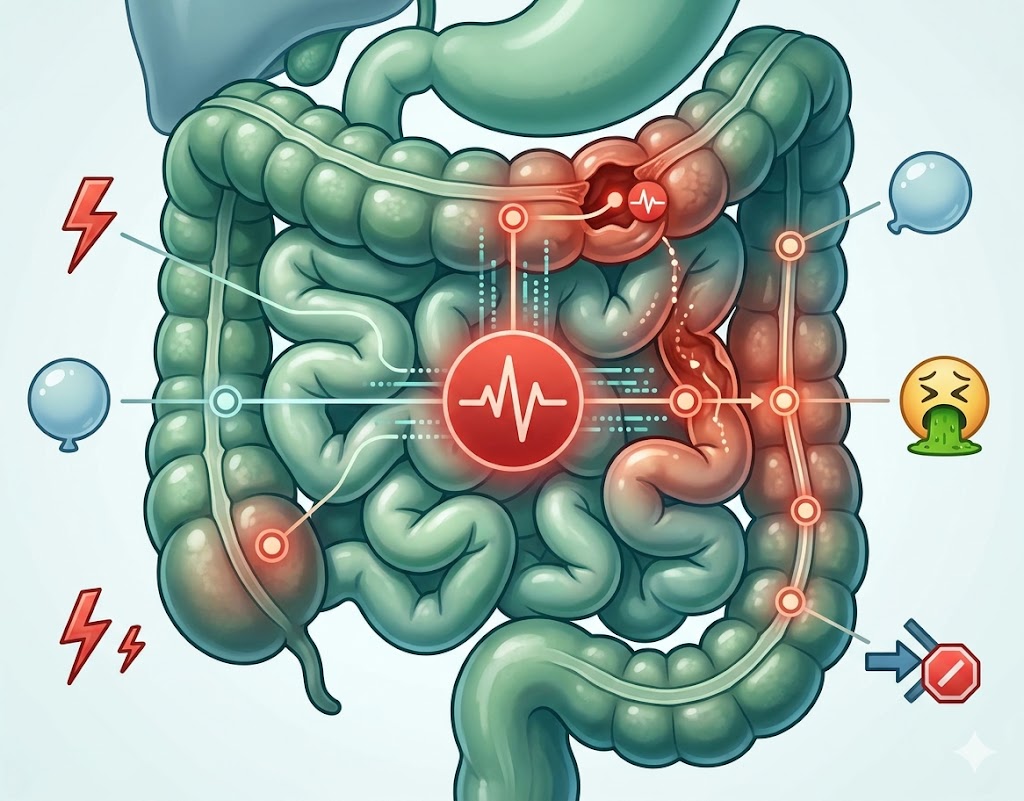
Bowel Blockage Symptoms: What Your Body Is Trying to Tell You
Every year, hundreds of thousands of people are hospitalized due to bowel blockages — a condition that can range from uncomfortable to life-threatening within hours. Yet many people dismiss the early warning signs, mistaking them for ordinary digestive discomfort. Understanding bowel blockage symptoms in detail could be the difference between a routine medical visit and an emergency surgery.
This comprehensive guide walks you through every major symptom of a bowel blockage, explains what is happening inside your body, outlines the different types and causes, and tells you exactly when to call for emergency help.
What Is a Bowel Blockage?
A bowel blockage — medically known as intestinal obstruction — occurs when something partially or completely stops the normal flow of contents (food, fluid, and gas) through the small or large intestine. When this flow is disrupted, pressure builds up behind the blockage, the intestinal wall can become starved of blood, and the consequences can escalate rapidly.
Blockages can be mechanical (a physical object or structure blocking the passage) or functional (the bowel muscles stop working properly, called ileus or pseudo-obstruction). Both types share many overlapping symptoms, but they have different causes and may require different treatments.
The severity of symptoms often depends on whether the obstruction is partial or complete, and whether it involves the small intestine or the large intestine. Small bowel obstructions are more common and often more urgent; large bowel obstructions tend to develop more gradually but are equally serious.
The Core Bowel Blockage Symptoms You Should Know
1. Abdominal Pain and Cramping
The most universal and often the first symptom people notice is abdominal pain. This is not the mild discomfort of bloating or gas — it is typically described as waves of intense, cramping pain that come and go. The pain corresponds to peristaltic contractions, where the intestinal muscles keep trying to push contents past the obstruction and failing.
In a small bowel obstruction, the pain tends to be located around the navel (periumbilical area) and may radiate outward. In a large bowel obstruction, the pain is often felt lower in the abdomen and may be more diffuse. As the obstruction progresses, the pain can shift from intermittent cramps to constant, severe pain — a red flag that the bowel wall may be losing its blood supply (strangulation).
Key characteristics of obstruction-related pain:
- Comes in waves initially, then becomes constant
- Does not improve with passing gas or a bowel movement
- Worsens when you press on the abdomen (tenderness)
- May cause you to curl up or hold very still to minimize it
2. Nausea and Vomiting
When the intestine is blocked, contents cannot move forward. Instead, the body reverses direction — and that means vomiting. Nausea and vomiting are particularly prominent in small intestinal blockages because contents have less room to accumulate before they start backing up toward the stomach.
In a high small bowel obstruction (near the stomach), vomiting begins quickly and may contain partially digested food or bile (greenish-yellow fluid). In a lower obstruction, vomiting may be delayed but eventually produces a characteristic dark, foul-smelling material that resembles fecal matter — a symptom called feculent vomiting that is a serious warning sign.
In large bowel obstructions, vomiting may not appear until late in the course of illness. However, severe nausea without vomiting is still common and should not be ignored.
3. Abdominal Distension (Bloating and Swelling)
As gas and fluid accumulate behind the blockage, the abdomen visibly swells. This is called abdominal distension, and it can be dramatic in severe cases — the belly may appear rounded, tight, and drum-like to the touch. Patients often describe feeling like they cannot "get air out" of their abdomen.
Distension is especially prominent in large bowel obstructions and in cases where the blockage has been present for some time. The degree of swelling generally correlates with how far the blockage is from the upper end of the digestive tract — the further down the obstruction, the more bowel is involved and the greater the distension.
4. Inability to Pass Gas or Have a Bowel Movement
One of the most telling bowel blockage symptoms is the complete inability to pass gas (flatus) or stool. In a complete obstruction, nothing gets through — no gas, no stool. This is called obstipation, and it is a cardinal sign of complete bowel obstruction.
It is important to note that in a partial obstruction, some gas or stool may still pass, giving a false sense of security. The bowel movements, if they occur, may be small, thin, or accompanied by significant pain.
If you have not passed gas or had a bowel movement in 24–48 hours along with other symptoms, that is a major warning sign that warrants immediate medical evaluation.
5. High-Pitched or Absent Bowel Sounds
Under normal circumstances, the intestines make quiet gurgling sounds as they move contents along. In an early obstruction, these sounds become hyperactive — loud, high-pitched, and frequent — as the bowel strains to push past the blockage. A healthcare provider using a stethoscope may hear "borborygmi," which are the loud rushing sounds of fluid and gas being forced through a narrowed segment.
As the obstruction progresses and the intestine becomes more distended and fatigued, bowel sounds may diminish and eventually disappear entirely — a sign of severe obstruction or peritonitis (infection of the abdominal cavity).
6. Loss of Appetite
Virtually everyone with a bowel blockage experiences a significant loss of appetite. Even thinking about food may trigger nausea. This is the body's protective mechanism — eating would only add more material to a backed-up system, increasing pain and the risk of vomiting.
Do not force yourself to eat if you suspect a bowel blockage. Seek medical help instead.
7. Fever
Fever is not always present in the early stages of a bowel blockage, but its appearance is a serious red flag. A temperature above 38°C (100.4°F) suggests that bacteria from the blocked, distended bowel may be leaking into the bloodstream (bacterial translocation) or that the bowel wall has perforated (ruptured).
A perforated bowel allows intestinal contents — including billions of bacteria — to spill into the sterile abdominal cavity, causing peritonitis. This is a life-threatening emergency requiring immediate surgery.
8. Dehydration Signs
Persistent vomiting and the inability to keep fluids down lead rapidly to dehydration. Symptoms include:
- Dry mouth and extreme thirst
- Dark-colored urine or inability to urinate
- Dizziness and lightheadedness
- Rapid heart rate (tachycardia)
- Sunken eyes and decreased skin turgor
Dehydration worsens the electrolyte imbalances that can disrupt heart rhythm and organ function, making prompt treatment essential.
Types of Bowel Blockages and Their Specific Symptoms
Small Bowel Obstruction (SBO)
The small intestine is responsible for most of the digestive work in the body, absorbing nutrients from digested food. When it is blocked, the symptoms tend to come on quickly and intensely.
Characteristic symptoms of SBO:
- Sudden onset of crampy abdominal pain around the navel
- Rapid onset of nausea and vomiting, often with bile
- High-pitched bowel sounds initially
- Abdominal distension that may be mild at first
- Rapid dehydration due to vomiting
The most common causes of small bowel obstruction include adhesions (scar tissue from prior abdominal surgeries), hernias, and, less commonly, tumors or Crohn's disease.
Large Bowel Obstruction (LBO)
The large intestine (colon) moves waste toward the rectum. Blockages here tend to develop more gradually, and the symptoms reflect that slower timeline.
Characteristic symptoms of LBO:
- Gradual onset of lower abdominal pain and cramping
- Progressive constipation worsening over days
- Increasingly severe abdominal distension
- Possible rectal bleeding in some causes (e.g., colorectal cancer)
- Vomiting appearing later than in SBO
- Obstipation (complete inability to pass stool or gas)
The most common causes of large bowel obstruction are colorectal cancer, diverticular disease, and volvulus (twisting of the colon).
Functional Obstruction (Ileus)
Ileus is a condition where the bowel essentially "goes to sleep" — the muscles stop contracting even though there is no physical blockage. It commonly occurs after abdominal surgery, during serious illness, or due to certain medications.
Symptoms of ileus are similar to mechanical obstruction but often more diffuse:
- Generalized abdominal discomfort without severe cramps
- Abdominal distension
- Reduced or absent bowel sounds
- Constipation and inability to pass gas
- Mild nausea
Ileus often resolves on its own once the underlying cause is addressed, but it still requires medical monitoring.
Warning Signs That Mean You Need Emergency Care Now
Some bowel blockage symptoms indicate that the situation has become immediately life-threatening. Call emergency services (911 or your local equivalent) or go to the nearest emergency room without delay if you experience:
- Severe, constant abdominal pain that does not let up
- Vomiting that smells like feces (feculent vomiting)
- Rigid, board-like abdomen that is extremely tender to the touch
- Fever above 38.5°C (101.3°F) combined with abdominal pain
- Signs of shock: pale skin, rapid weak pulse, confusion, cold and clammy hands
- Bloody stools or significant rectal bleeding
- Complete inability to pass gas or stool for more than 24 hours with escalating pain
These signs suggest perforation, strangulation, or peritonitis — all of which require emergency surgical intervention.
Who Is Most at Risk for Bowel Blockages?
Understanding risk factors helps you monitor your health proactively. You are at higher risk if you:
- Have had prior abdominal or pelvic surgery (adhesions are the leading cause of SBO)
- Have been diagnosed with Crohn's disease, ulcerative colitis, or other inflammatory bowel diseases
- Have colorectal cancer or a history of abdominal tumors
- Have a hernia (particularly one that has never been repaired)
- Are elderly (at higher risk for volvulus and colorectal cancer)
- Take opioid pain medications (which slow gut motility)
- Have hypothyroidism or diabetes with autonomic neuropathy
- Have a family history of colon cancer or polyps
How Bowel Blockage Symptoms Are Evaluated by Doctors
When you arrive at the emergency department with bowel blockage symptoms, expect the following evaluation process:
Physical examination: The doctor will press on your abdomen to assess pain, rigidity, and distension. They will also use a stethoscope to listen for bowel sounds.
Blood tests: A complete blood count (CBC) can reveal elevated white blood cells (suggesting infection or strangulation). A metabolic panel assesses electrolytes and kidney function. Lactate levels may be checked to assess for bowel ischemia.
Imaging studies: An abdominal X-ray is often the first test ordered — it can show dilated loops of bowel and air-fluid levels that are hallmark findings of obstruction. A CT scan of the abdomen and pelvis with contrast is the gold-standard imaging test, providing detailed information about the location, cause, and severity of the blockage.
Water-soluble contrast enema: In some large bowel obstruction cases, a contrast enema may be both diagnostic and therapeutic.
Treatment of Bowel Blockages
Treatment depends on the type, location, and severity of the obstruction:
Conservative management: Many partial small bowel obstructions can be treated without surgery. This involves:
- Hospitalization and bowel rest (nothing by mouth)
- Nasogastric (NG) tube insertion to decompress the stomach
- IV fluids and electrolyte replacement
- Close monitoring for deterioration
Surgical treatment: Complete obstructions, strangulations, perforations, and obstructions that do not resolve with conservative management require surgery. The procedure may involve:
- Removing the blockage
- Resecting (cutting out) the damaged segment of bowel
- Repairing a hernia
- Treating the underlying cause (e.g., tumor removal)
Endoscopic treatment: In some large bowel obstructions caused by colorectal cancer, a stent can be placed endoscopically to relieve the obstruction as a bridge to surgery or as palliative treatment.
Long-Term Outlook and Prevention
Recovery from a bowel blockage varies widely based on the cause and treatment. After surgical treatment, patients typically spend several days to weeks in recovery. The risk of recurrence depends heavily on the underlying cause — adhesion-related obstructions, for instance, have a significant recurrence rate.
Prevention strategies include:
- Staying well-hydrated to keep stools soft
- Eating a fiber-rich diet to promote regular bowel movements
- Managing underlying conditions like Crohn's disease or colon cancer risk
- Discussing hernia repair if you have an unrepaired hernia
- Informing your surgeon about any history of obstruction before future abdominal surgeries
Conclusion: Take Bowel Blockage Symptoms Seriously
Bowel blockage symptoms are your body's urgent communication that something is seriously wrong. The combination of crampy abdominal pain, vomiting, inability to pass gas, and abdominal distension should never be written off as "just a stomach bug." If these symptoms appear together — especially if they are worsening — seek medical attention promptly.
Early recognition and treatment of bowel blockages dramatically improves outcomes. The difference between a managed hospitalization and emergency surgery can come down to how quickly you act. Trust your body, know the signs, and do not hesitate to get help when you need it.