Emergency Warning Signs: When Gallbladder Symptoms Become Dangerous
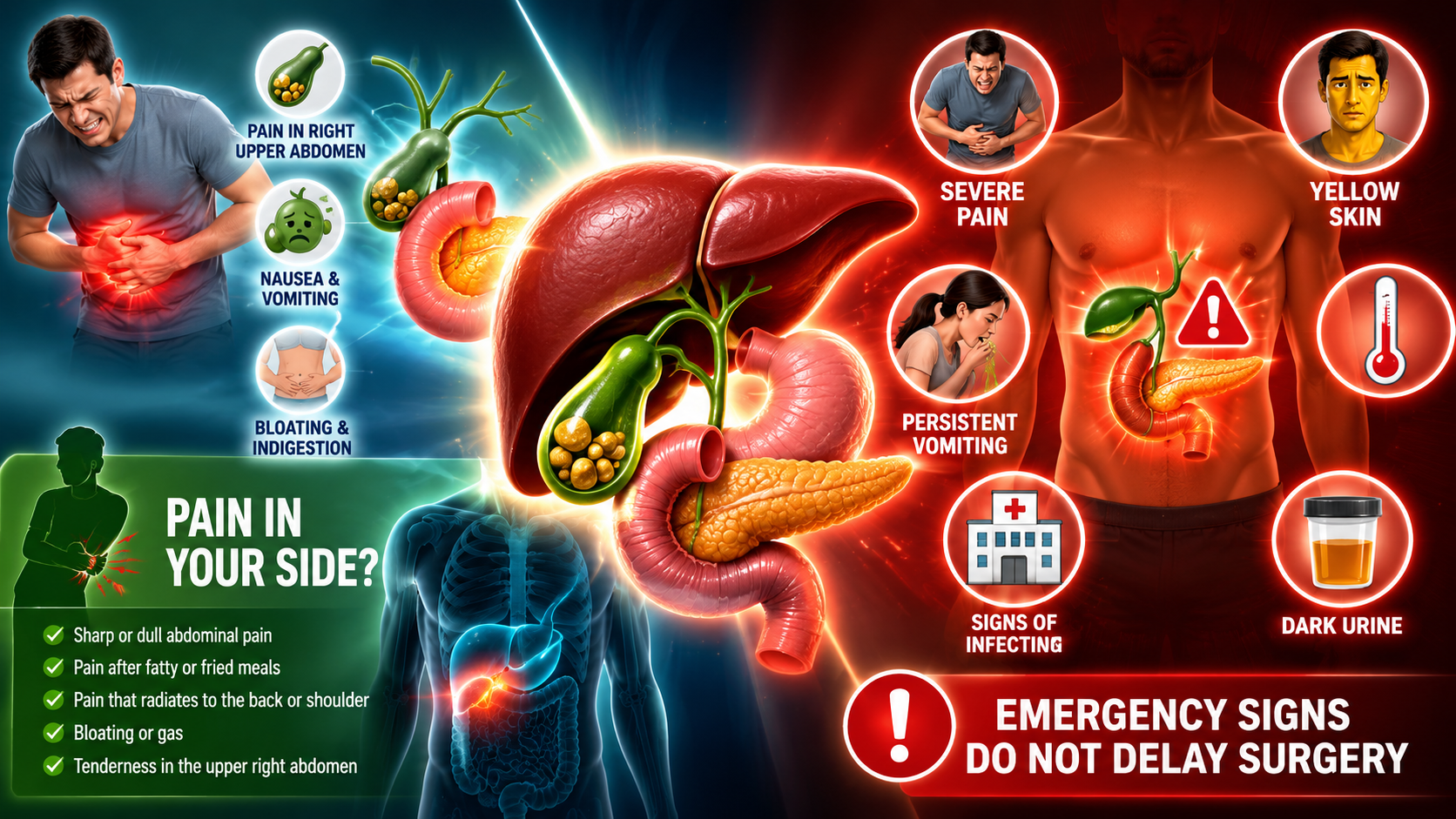
Seek emergency medical attention immediately if symptoms include:
- Severe abdominal pain lasting longer than 5–6 hours
- Fever with chills
- Yellowing of the eyes or skin (jaundice)
- Dark urine
- Pale or clay-colored stools
- Persistent vomiting
- Chest pressure with breathing difficulty
- Confusion, dizziness, or fainting
These symptoms may indicate:
- Acute cholecystitis
- Choledocholithiasis
- Ascending cholangitis
- Gallstone pancreatitis
- Biliary obstruction
Prompt treatment is important because advanced gallbladder infections can sometimes spread rapidly into the bloodstream.
Understanding the Gallbladder: What This Organ Actually Does
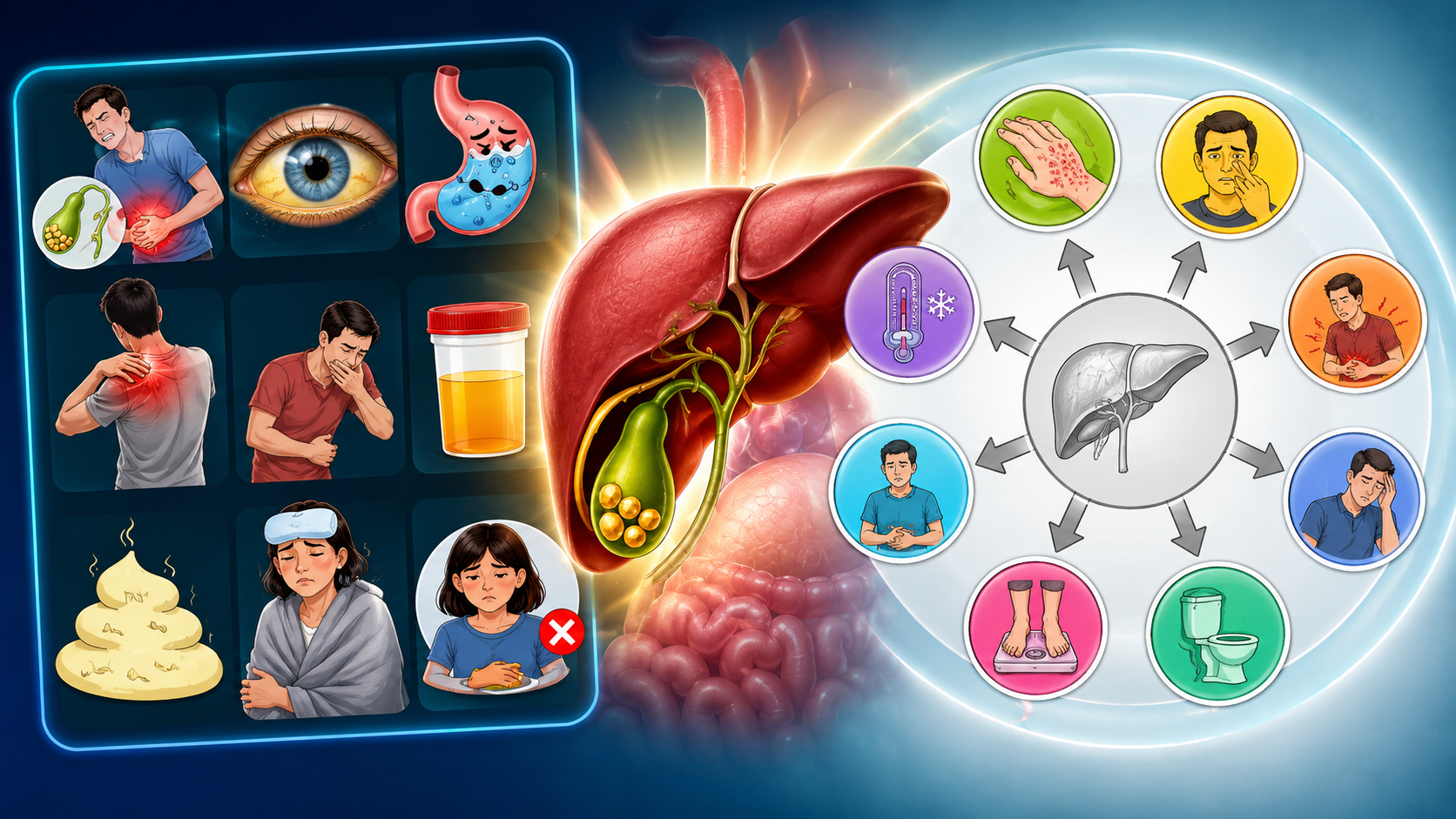
Many people know the gallbladder exists, but few understand its role in digestion.
The liver continuously produces bile, a yellow-green digestive fluid containing:
- Bile salts
- Cholesterol
- Bilirubin
- Water
- Electrolytes
The gallbladder acts as a storage reservoir for this fluid. Instead of releasing bile continuously, it concentrates and stores bile until food — especially fatty food — enters the digestive tract.
When fats reach the small intestine, the body releases a hormone called cholecystokinin (CCK). This hormone tells the gallbladder to contract and squeeze bile into the intestines.
Bile works similarly to dish soap:
- It breaks large fat droplets into smaller particles
- This allows digestive enzymes to process fats more efficiently
When this process becomes disrupted because of inflammation, stones, bile stasis, or impaired motility, a wide variety of digestive symptoms may appear.
The Universal Symptoms of Gallbladder Issues
Although gallbladder diseases vary considerably, many share a recognizable pattern of digestive and abdominal symptoms.
Understanding these overlapping symptoms helps explain why gallbladder disorders are commonly mistaken for unrelated digestive conditions.
Right Upper Quadrant (RUQ) Pain
The most classic gallbladder symptom is discomfort located in the upper right side of the abdomen beneath the rib cage.
Doctors refer to this region as the right upper quadrant (RUQ).
The pain may feel:
- Sharp
- Deep
- Tight
- Squeezing
- Cramping
- Burning
- Pressure-like
Some patients describe it as:
“A fist gripping underneath my ribs.”
Others compare it to:
“A deep internal ache that won’t let go.”
Unlike muscular pain, gallbladder pain often feels internal and difficult to pinpoint with one finger.
Pain in the Center of the Upper Abdomen
Not all patients feel pain strictly on the right side.
The gallbladder also shares nerve pathways with the upper middle abdomen (epigastric region).
Because of this overlap, symptoms may mimic:
- Acid reflux
- Gastritis
- Peptic ulcers
- Pancreatitis
- Cardiac chest pressure
This overlap is one reason gallbladder disease can sometimes delay accurate diagnosis.
Referred Pain to the Back and Shoulder
One of the most confusing gallbladder issues symptoms is referred pain.
Instead of remaining under the ribs, discomfort may radiate toward:
- The right shoulder blade
- Between the shoulder blades
- The upper middle back
- The right shoulder tip
Why Gallbladder Pain Travels
This occurs because inflammation near the gallbladder irritates the diaphragm and nearby phrenic nerve.
The phrenic nerve shares neurological pathways with the shoulder region through spinal cord segments C3–C5.
As a result, the brain sometimes misinterprets deep abdominal inflammation as pain located in the back or shoulder.
Many patients initially believe they pulled a muscle before realizing the discomfort worsens after eating fatty foods.
Bloating, Gas, and Digestive Heaviness
Gallbladder disease does not always begin with severe pain.
For many people, symptoms start gradually through digestive dysfunction.
Common complaints include:
- Persistent bloating
- Excess burping
- Gas
- Fullness after meals
- Slow digestion
- Upper abdominal pressure
Some patients feel uncomfortable even after eating small portions.
Nausea After Fatty Meals
One of the strongest clues pointing toward gallbladder disease is nausea after greasy or high-fat foods.
Common triggers include:
- Fried chicken
- Pizza
- Burgers
- Cream sauces
- Bacon
- Butter-heavy meals
- Fast food
When the gallbladder attempts to contract against inflammation or blockage, nausea can appear suddenly and intensely.
Some individuals describe a “greasy sick feeling” shortly after dinner.
Changes in Stool and Urine Color
Gallbladder disease can sometimes interfere with normal bile flow.
When bile cannot reach the intestines properly:
- Stools may become pale or clay-colored
- Urine may darken into a tea-like color
This happens because bilirubin, a bile pigment, backs up into the bloodstream instead of entering the intestines normally.
Dark urine and pale stools should never be ignored, especially if jaundice appears simultaneously.
The Gallbladder Symptoms Matcher Matrix
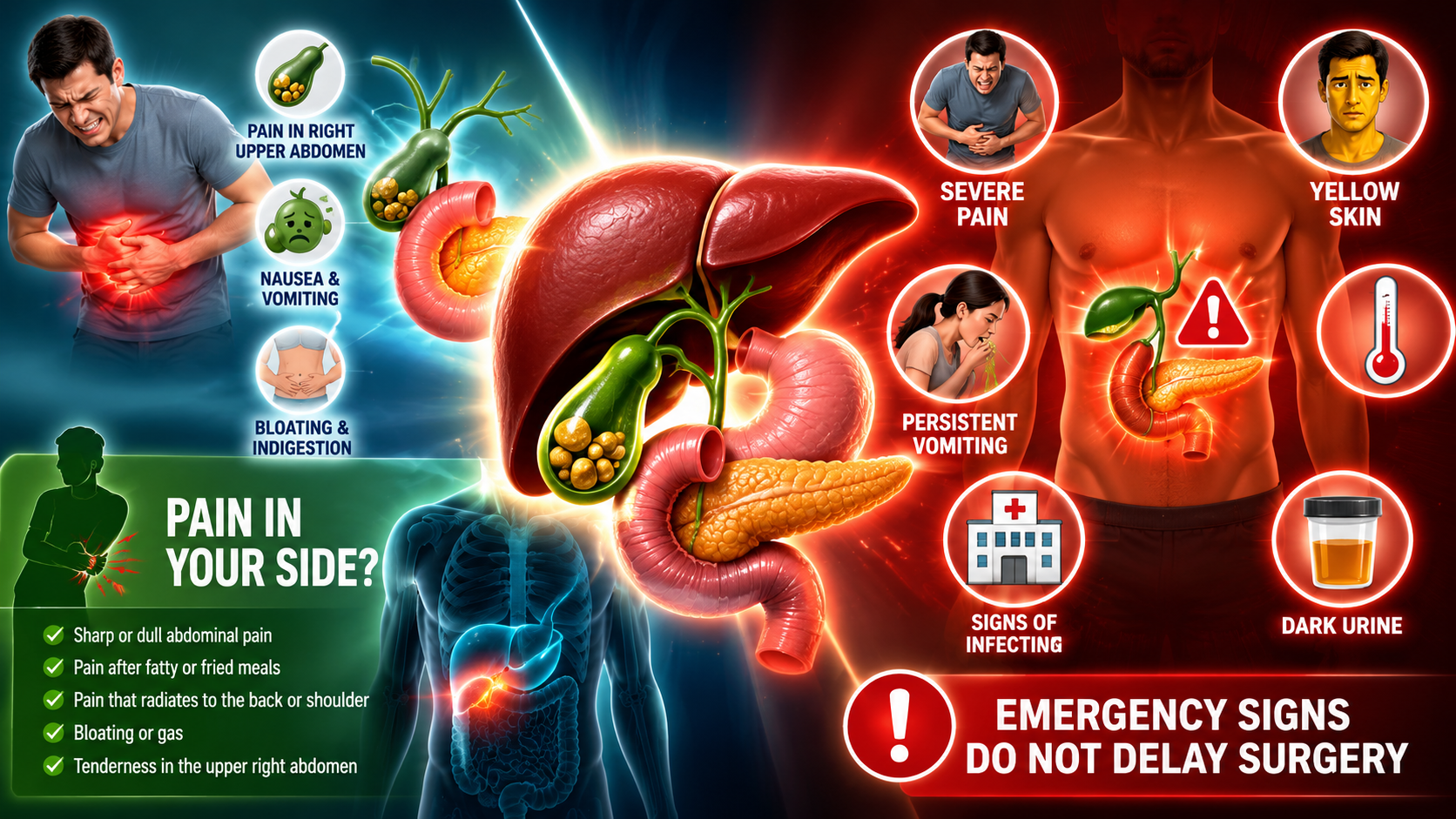
Different gallbladder disorders create very different symptom patterns.
Understanding these differences may help explain why some people develop explosive attacks while others experience long-term digestive discomfort.
| Condition | Common Symptoms | Typical Pattern |
| Gallstones (Cholelithiasis) | Severe pain after fatty meals | Attacks lasting 1–5 hours |
| Acute Cholecystitis | Constant pain, fever, vomiting | Pain lasting over 6 hours |
| Chronic Cholecystitis | Bloating, nausea, fat intolerance | Persistent low-grade symptoms |
| Biliary Dyskinesia | Gallstone-like pain with clean ultrasound | Functional disorder |
| Bile Duct Obstruction | Jaundice, dark urine, pale stools | Bile backup symptoms |
| Gallbladder Polyps | Often silent | Usually found incidentally |
| Early Gallbladder Cancer | Minimal symptoms initially | Symptoms appear late |
Gallstones (Cholelithiasis): The Most Common Gallbladder Disease
Gallstones are hardened deposits that form inside the gallbladder.
They may range in size from tiny grains of sand to large stones resembling golf balls.
The Two Main Types of Gallstones
Cholesterol Stones
These are the most common type in developed countries.
They usually appear:
- Yellow-green
- Smooth or crystalline
- Cholesterol-rich
Pigment Stones
These stones are darker and linked to excess bilirubin production.
They may appear:
- Dark brown
- Black
- Irregular
- Brittle
Pigment stones are more commonly associated with:
- Liver disease
- Blood disorders
- Chronic hemolysis
- Certain infections
Why Gallstones Form
Gallstones develop because of chemical imbalance within bile.
The “Sugar Water” Analogy
Imagine continuously adding sugar into a glass of water.
Eventually:
- The liquid can no longer dissolve additional sugar
- Crystals settle at the bottom
Gallstones form similarly.
When bile contains more cholesterol than bile salts can safely dissolve:
- Microscopic crystals appear
- Crystals clump together
- Stones slowly enlarge over time
Gallbladder Stasis: When the Pump Stops Working Properly
The gallbladder is not simply a storage bag.
It is also a muscular pump.
If the gallbladder fails to empty completely:
- Bile sits stagnant
- Sludge thickens
- Crystals grow more easily
This process is called bile stasis.
What a Gallbladder Attack Feels Like
A classic gallbladder attack is medically known as biliary colic.
The attack usually begins suddenly and escalates rapidly.
The Nature of Biliary Colic
Patients commonly describe:
- Tight squeezing pressure
- Crushing pain
- Deep cramping
- Intense internal pressure
Unlike intestinal cramps, gallbladder pain is often steady rather than wave-like.
The attack may:
- Peak within 30–60 minutes
- Last several hours
- Gradually fade once the blockage releases
The Fatty Food Trigger
After eating fat, the intestines release cholecystokinin (CCK), forcing the gallbladder to contract.
If a stone blocks bile flow:
- Pressure rapidly builds
- The gallbladder squeezes harder
- Pain intensifies dramatically
This explains why attacks often occur after:
- Restaurant meals
- Holiday dinners
- Fried foods
- Late-night snacks
Why Gallbladder Attacks Often Happen at Night
Many patients report attacks beginning around midnight or early morning.
Several physiological mechanisms may explain this pattern.
Heavy Evening Meals
Dinner is frequently the largest and richest meal of the day.
This creates stronger gallbladder stimulation.
Slower Overnight Digestion
Digestion naturally slows during sleep.
This may prolong gallbladder contraction and bile pressure.
The Gravity and Positioning Effect
One of the most overlooked explanations involves body positioning.
When standing upright:
- Gallstones may remain harmlessly pooled within the gallbladder
When lying flat:
- The gallbladder shifts into a more horizontal position
- Stones may roll toward the gallbladder neck
- Temporary obstruction becomes more likely
This mechanical shift may explain why some patients awaken suddenly with severe nighttime pain after feeling normal earlier in the evening.
Acute Cholecystitis: When Inflammation Becomes Dangerous
Acute cholecystitis occurs when blockage persists long enough to trigger significant inflammation and infection.
This condition requires urgent medical evaluation.
Symptoms of Acute Cholecystitis
Compared with ordinary gallstone attacks, symptoms become:
- More severe
- More persistent
- More systemic
Common findings include:
- Constant right-sided pain
- Fever
- Chills
- Severe tenderness
- Vomiting
- Loss of appetite
Pain often worsens during movement or deep breathing.
Important Safety Note About Murphy’s Sign
Doctors sometimes evaluate gallbladder inflammation using Murphy’s sign.
During the exam, a clinician checks whether inhalation suddenly worsens pain beneath the right ribs.
Important Safety Note: Murphy’s sign should only be performed by trained healthcare professionals. Patients should never push deeply into their own abdomen during severe pain episodes because forceful pressure may worsen inflammation.
Chronic Gallbladder Disease (Chronic Cholecystitis)
Not all gallbladder disorders produce dramatic attacks.
Some people develop chronic low-grade inflammation over many years.
Symptoms May Be Subtle
Common symptoms include:
- Daily bloating
- Chronic indigestion
- Mild nausea
- Burping
- Food intolerance
- Persistent upper abdominal discomfort
Many patients mistakenly believe they have:
- GERD
- Functional dyspepsia
- Stress-related stomach problems
- IBS
before gallbladder disease is recognized.
Why Chronic Inflammation Alters Digestion
Repeated inflammation may gradually damage gallbladder function.
This can lead to:
- Scarring
- Wall thickening
- Sluggish emptying
- Chronic bile dysfunction
Over time, digestion becomes increasingly inefficient.
Biliary Dyskinesia: Gallbladder Symptoms Without Stones
One of the most misunderstood gallbladder disorders is biliary dyskinesia.
When Ultrasounds Show Nothing
Patients may experience classic gallbladder attacks even though scans reveal no stones.
This happens because the disorder is functional rather than structural.
The gallbladder muscles may:
- Contract weakly
- Contract abnormally
- Empty too slowly
- Fail to coordinate correctly
As pressure builds, symptoms can perfectly imitate gallstones.
The Role of the HIDA Scan
A HIDA scan evaluates gallbladder emptying efficiency.
Doctors calculate the gallbladder ejection fraction (EF) to measure how well bile is released.
Low EF values may suggest impaired gallbladder motility.
Gallbladder Symptoms in Special Populations
Symptoms do not appear the same in every person.
Certain groups may experience unusual or less obvious warning signs.
Older Adults and People With Diabetes
Older adults and individuals with diabetic neuropathy sometimes develop atypical symptoms.
Instead of sharp pain, they may experience:
- Fatigue
- Weakness
- Confusion
- Appetite loss
- Mild fever
- General illness
Because pain perception can become altered, dangerous infections may progress silently.
Pregnancy and Hormonal Effects
Pregnancy increases gallstone risk because hormones such as estrogen and progesterone can:
- Slow gallbladder emptying
- Increase cholesterol concentration in bile
As the uterus expands during pregnancy, the liver and gallbladder may also shift upward.
This means pregnant individuals sometimes feel gallbladder pain:
- Higher beneath the ribs
- Near the chest wall
- Along the side ribs
rather than in the classic upper right abdomen.
Gallbladder Symptoms vs Other Conditions
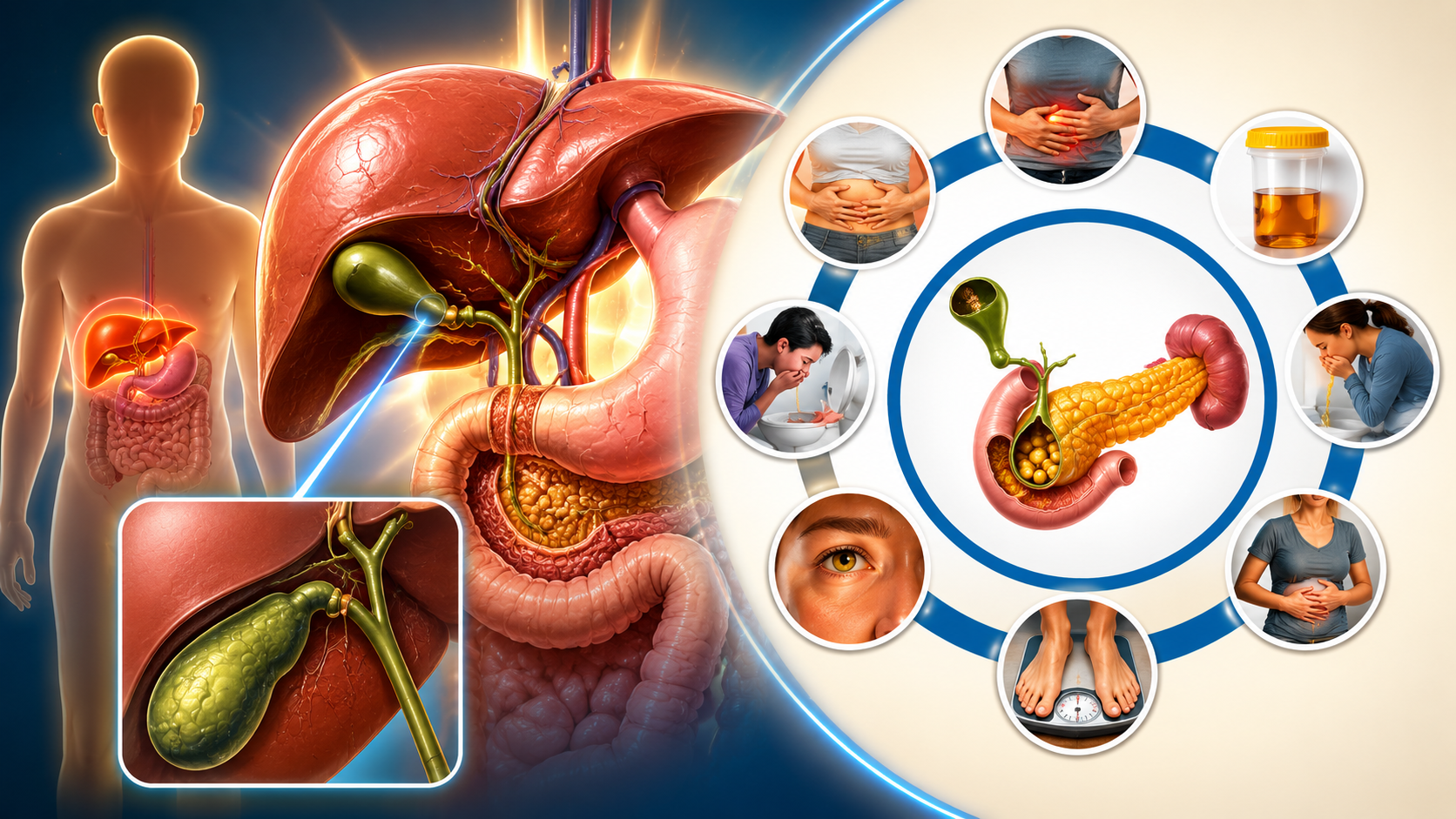
Gallbladder disease overlaps with many unrelated disorders.
Gallbladder vs Acid Reflux (GERD)
| Gallbladder Disease | GERD |
| Often triggered by fatty foods | Often triggered by lying down |
| Pain beneath right ribs | Burning behind breastbone |
| Pain may radiate to back | Sour taste common |
| Nausea common | Acid regurgitation common |
Gallbladder vs Kidney Stones
Gallstones and kidney stones are completely different conditions.
| Gallstones | Kidney Stones |
| Upper right abdomen | Lower back/flank |
| Digestive system | Urinary system |
| Triggered after meals | Often urinary symptoms |
| May cause jaundice | May cause blood in urine |
Gallbladder Pain vs Heart Attack
This distinction is extremely important because symptoms can overlap.
Women, older adults, and diabetic patients may experience unusual heart attack symptoms involving:
- Upper abdominal pressure
- Nausea
- Sweating
- Back pain
- Chest heaviness
Seek emergency evaluation if symptoms involve:
- Chest pressure
- Shortness of breath
- Dizziness
- Arm or jaw pain
- Sudden weakness
Table data synthesized from general clinical diagnostic principles commonly used in gastroenterology and cardiology emergency evaluation frameworks.
Life After Gallbladder Removal
Some people continue experiencing symptoms even after gallbladder surgery.
Post-Cholecystectomy Syndrome (PCS)
PCS refers to persistent digestive symptoms after gallbladder removal.
Possible symptoms include:
- Bloating
- Diarrhea
- Right-sided pain
- Nausea
- Fat intolerance
- Gas
Why Symptoms May Continue
Potential explanations include:
- Retained bile duct stones
- Bile acid diarrhea
- Functional bowel disorders
- Sphincter of Oddi dysfunction
- Altered bile flow
Without the gallbladder acting as a storage chamber, bile continuously drips into the intestines instead of being released in concentrated bursts.
This change may affect digestion in some individuals.
Lifestyle Patterns That May Increase Gallbladder Risk
Several modern lifestyle habits appear linked to gallbladder dysfunction.
Rapid Weight Loss and Crash Diets
Very rapid weight loss may increase gallstone risk.
When fat breaks down quickly:
- The liver releases excess cholesterol into bile
- Gallbladder emptying slows
- Crystals form more easily
Many experts recommend gradual, sustainable weight loss instead of extreme dieting patterns.
Intermittent Fasting and Meal Skipping
Some researchers believe prolonged fasting windows may contribute to bile stasis in susceptible individuals.
During long fasting periods:
- The gallbladder receives fewer contraction signals
- Bile remains stagnant longer
- Sludge may develop
Research is still evolving, and responses may vary significantly between individuals.
The Gut-Gallbladder Connection
Emerging research continues exploring the relationship between gut bacteria and bile metabolism.
Scientists sometimes call this relationship the gut-gallbladder axis.
Disruptions in gut microbiome balance may influence:
- Bile salt recycling
- Cholesterol metabolism
- Inflammation
- Gallstone formation
This remains an active area of ongoing clinical research.
When to Seek Medical Evaluation
Occasional indigestion is common.
However, recurring upper abdominal symptoms deserve professional evaluation — especially when patterns repeatedly occur after meals.
Symptoms Worth Discussing With a Doctor
Medical evaluation may be appropriate if symptoms include:
- Recurring right upper abdominal pain
- Persistent bloating
- Frequent nausea
- Fat intolerance
- Nighttime abdominal attacks
- Back pain after meals
- Chronic digestive heaviness
Diagnostic Tests Doctors Commonly Use
Evaluation may include:
- Abdominal ultrasound
- Blood testing
- Liver enzyme panels
- Bilirubin testing
- HIDA scans
- CT imaging
- MRI/MRCP imaging
Ultrasound is often considered the first-line imaging test for gallbladder disease.
Frequently Asked Questions (FAQ)
What are the earliest signs of gallbladder problems?
Early symptoms often include bloating, nausea, fullness after meals, mild upper abdominal discomfort, or intolerance to greasy foods.
Can you have gallbladder disease without pain?
Yes. Some people develop silent gallstones with few or no symptoms. Others may only experience fatigue, bloating, or digestive discomfort.
Can gallbladder pain radiate into the back?
Yes. Gallbladder inflammation may trigger referred pain through the phrenic nerve pathway, especially beneath the right shoulder blade.
Why do fatty foods trigger gallbladder attacks?
Fatty meals stimulate the release of cholecystokinin (CCK), forcing the gallbladder to contract strongly. If bile flow is blocked, painful pressure may rapidly build.
Can gallbladder symptoms mimic acid reflux?
Absolutely. Gallbladder disease may cause bloating, nausea, chest discomfort, indigestion, and upper abdominal burning that resembles GERD.
Why do some people still have symptoms after gallbladder surgery?
Persistent symptoms may relate to bile duct dysfunction, retained stones, altered bile flow, or unrelated digestive disorders.
Conclusion
Gallbladder issues symptoms can vary dramatically depending on whether the problem involves stones, chronic inflammation, bile duct blockage, or functional motility disorders.
Some people experience explosive attacks of severe pain after fatty meals, while others quietly develop months of bloating, indigestion, nausea, and digestive heaviness before realizing the gallbladder may be involved.
Because gallbladder disease overlaps with acid reflux, ulcers, pancreatitis, muscle strain, and even heart conditions, symptoms should never be self-diagnosed based solely on internet information.
Persistent upper abdominal discomfort — especially when associated with fever, jaundice, vomiting, or chest pressure — deserves prompt medical evaluation to reduce the risk of serious complications.