Gallbladder Stones (Cholelithiasis): Symptoms, Chemical Causes, Emergency Warning Signs, and Modern Treatment Options
Medical Disclaimer: This article is for educational purposes only and should not replace professional medical advice, diagnosis, or treatment. Severe abdominal pain, fever, jaundice, chest pressure, persistent vomiting, or breathing difficulty should always be evaluated by a licensed healthcare professional.
Gallbladder stones affect millions of people worldwide, yet many individuals never realize they have them until a painful attack suddenly interrupts their normal lives. Some stones remain completely silent for decades without causing any medical problems, while others migrate into delicate bile ducts and trigger dangerous complications involving infection, pancreatitis, or severe obstruction of bile flow.
One reason gallbladder stones are frequently misunderstood is because they are not actually “rocks” in the traditional sense. They are hardened crystalline deposits formed from chemical imbalances inside bile - the digestive fluid responsible for helping the body process fats. Depending on their size, mobility, and composition, gallstones may behave very differently from one patient to another.
Many people also confuse gallbladder pain with acid reflux, gastritis, ulcers, muscle strain, or even cardiac chest pain because the symptoms often overlap. Some patients spend months treating “indigestion” before discovering that the true source of their discomfort originates from the biliary system.
This medically reviewed guide explains how gallstones form, why some remain harmless while others become dangerous, how symptoms evolve, when medical intervention becomes necessary, and what modern treatment options may involve.
Emergency Red Flags: When Gallbladder Stones Become Dangerous
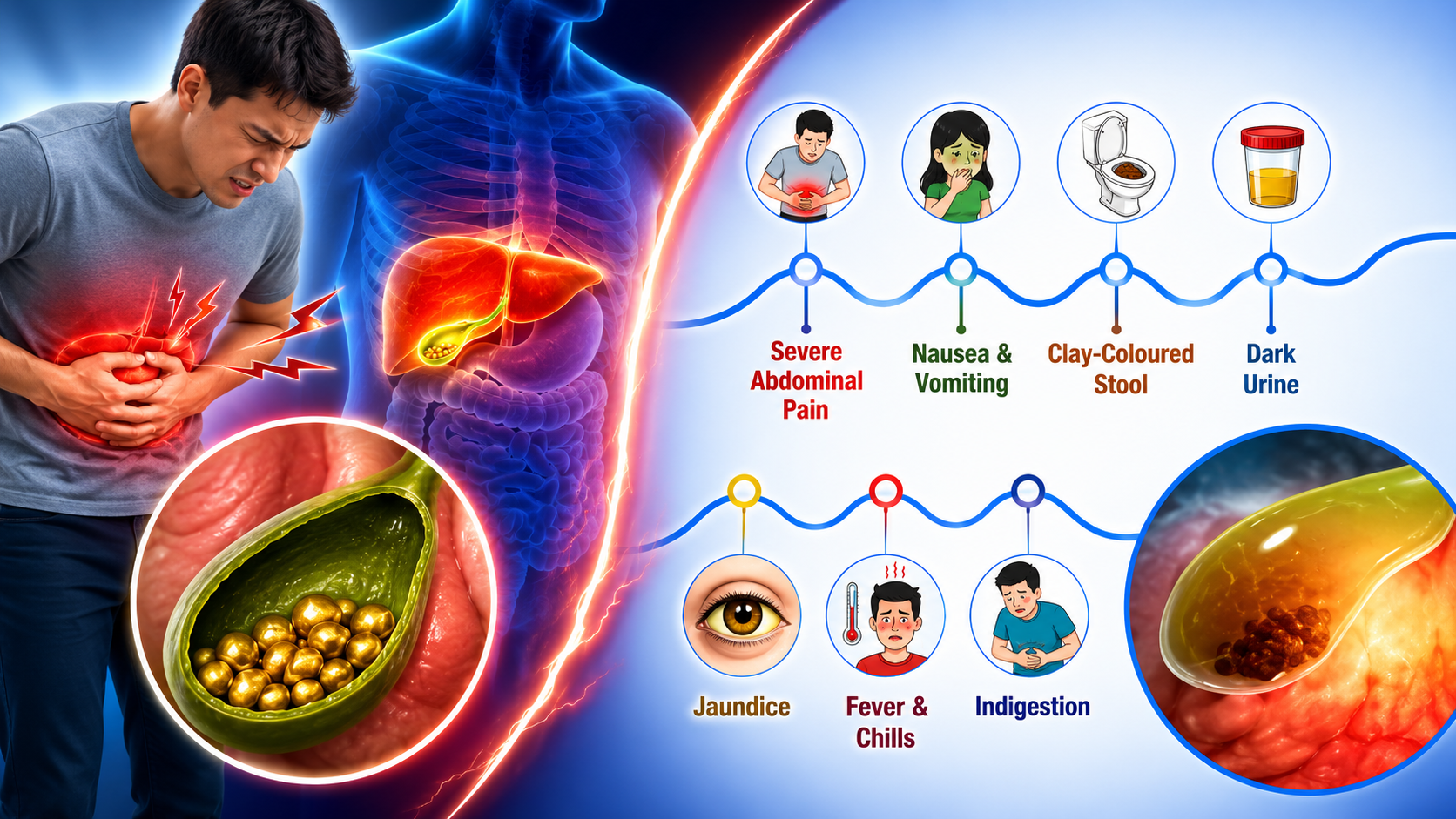
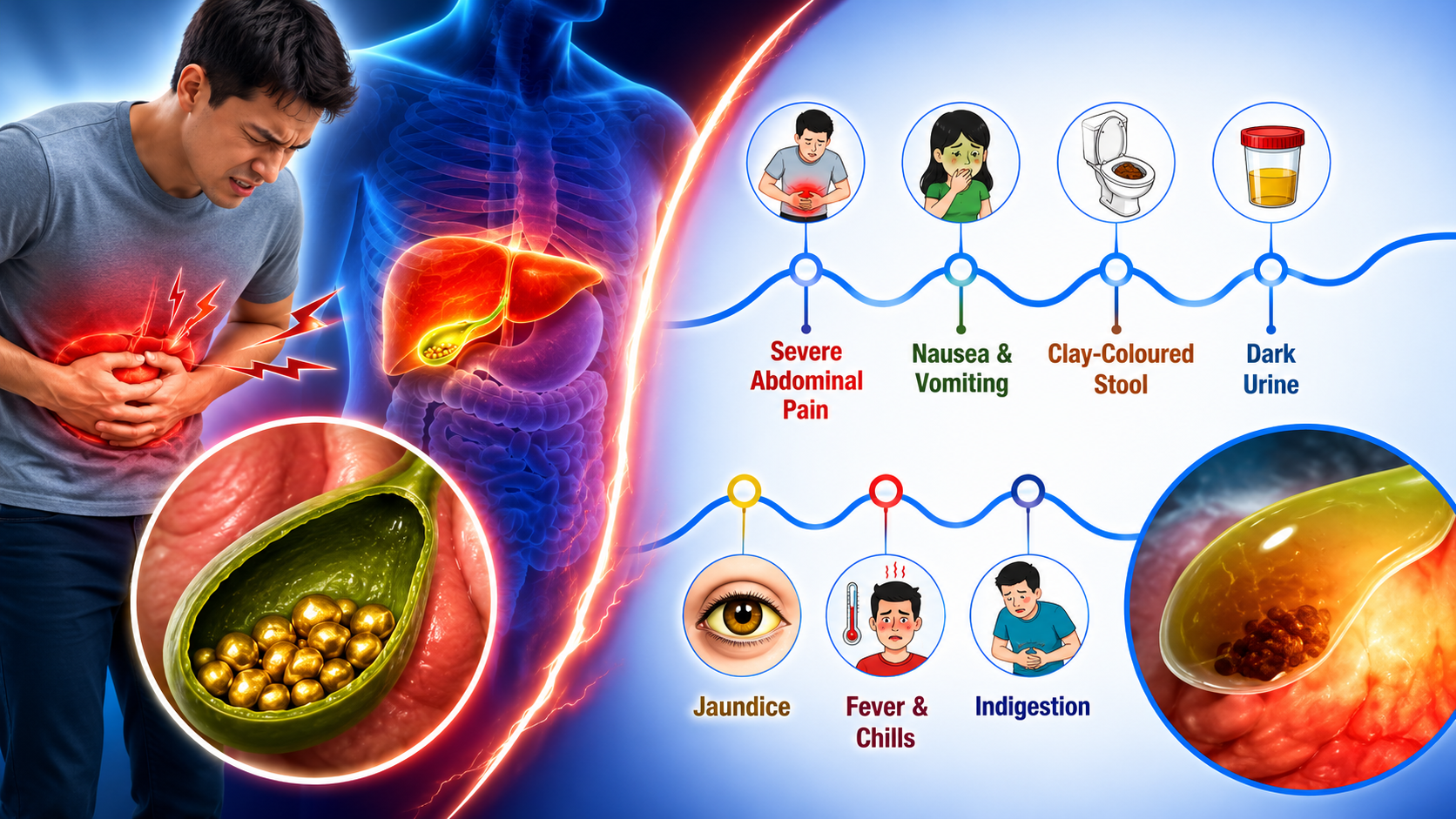
Seek emergency medical attention immediately if symptoms occur with:
- Fever or shaking chills
- Yellowing of the eyes or skin (jaundice)
- Dark tea-colored urine
- Pale or clay-colored stools
- Persistent vomiting
- Chest pressure or shortness of breath
- Severe abdominal pain lasting longer than 5–6 hours
- Confusion, dizziness, or fainting
These symptoms may indicate:
- Acute cholecystitis
- Choledocholithiasis
- Ascending cholangitis
- Gallstone pancreatitis
- Severe biliary obstruction
These complications may rapidly become life-threatening without urgent medical care.
What Are Gallbladder Stones?
Gallbladder stones, medically known as cholelithiasis, are hardened crystalline deposits that form inside the gallbladder.
The gallbladder is a small pear-shaped organ located beneath the liver. Its primary role is to store and concentrate bile between meals.
Bile contains:
- Cholesterol
- Bile acids
- Lecithin
- Bilirubin
- Water
- Electrolytes
Under healthy conditions, these substances remain dissolved in a balanced liquid mixture.
However, when this balance changes, microscopic crystals may begin forming inside the gallbladder.
Over time:
- Crystals enlarge
- Sludge thickens
- Deposits harden
- Gallstones develop
Gallstones Are Not Like Kidney Stones
Many people mistakenly assume gallstones behave similarly to kidney stones.
Although both involve solid deposits, they form through entirely different biological systems.
Gallstones originate from digestive bile chemistry rather than urinary mineral buildup.
Depending on their chemical composition, gallstones may appear:
- Waxy
- Crumbly
- Soft
- Brittle
- Mud-like
- Crystal-like
Their appearance varies considerably depending on the bile environment in which they formed.
Cholesterol Stones vs Pigment Stones
There are two major categories of gallstones.
Cholesterol Stones
Cholesterol stones account for the majority of gallbladder stones diagnosed in developed countries.
They are usually:
- Yellow-green
- Smooth
- Waxy
- Cholesterol-rich
These stones form when the liver excretes more cholesterol into bile than bile acids can safely dissolve.
The “Sugar Water” Analogy
Imagine repeatedly adding spoonfuls of sugar into a glass of iced tea.
Eventually:
- The liquid becomes saturated
- Additional sugar can no longer dissolve
- Crystals begin settling at the bottom
Gallstones form through a very similar process.
When bile becomes oversaturated with cholesterol monohydrate crystals:
- Tiny crystals precipitate
- Crystals clump together
- Stones gradually enlarge over time
Pigment Stones
Pigment stones are darker and composed primarily of calcium bilirubinate and bilirubin polymers.
They often appear:
- Dark brown
- Jet black
- Fragile
- Irregular
Pigment stones are more commonly associated with:
- Liver cirrhosis
- Chronic biliary infections
- Hemolytic anemia
- Excessive red blood cell breakdown
- Certain hereditary blood disorders
The Gallbladder Stone Size and Risk Matrix
One of the biggest myths surrounding gallstones is the assumption that “smaller means safer.”
In reality, stone size dramatically changes how dangerous a gallstone may become.
Micro-Stones and Biliary Sludge (Under 5 mm)
Tiny stones and thick biliary sludge may actually represent the most mechanically dangerous form of gallstone disease.
Why Small Stones Create Bigger Emergencies
Micro-stones possess extremely high mobility.
Because of their tiny size, they can:
- Exit the gallbladder easily
- Enter narrow bile ducts
- Become trapped inside the common bile duct
- Block the pancreatic duct
This may trigger:
- Acute biliary pancreatitis
- Severe jaundice
- Ascending cholangitis
- Life-threatening biliary obstruction
Understanding Biliary Sludge
Biliary sludge is a thick mixture of:
- Cholesterol crystals
- Calcium salts
- Concentrated mucus
- Dense bile sediment
Although sludge appears less dramatic than large stones on imaging studies, it may still obstruct bile flow and trigger inflammation.
Macro-Stones (Over 20 mm)
Large stones behave differently because they are often too large to escape into the ducts.
However, remaining trapped inside the gallbladder creates separate long-term problems.
Chronic Mechanical Friction
Massive stones may repeatedly rub against the gallbladder wall.
Over time, this chronic irritation may contribute to:
- Gallbladder wall thickening
- Chronic inflammation
- Tissue scarring
- Chronic cholecystitis
- Increased surgical complexity later in life
Some giant stones eventually become comparable in size to golf balls.
What Causes Gallbladder Stones?
Gallstones typically develop because of overlapping metabolic, hormonal, and mechanical factors.
The “4 Fs” Epidemiological Framework
Gastroenterologists sometimes summarize classic risk factors using the “4 Fs” framework:
- Female
- Forty
- Fertile
- Fat
This framework reflects broad population trends rather than rigid medical rules.
Female: Hormonal Cholesterol Effects
Estrogen increases cholesterol concentration inside bile.
This helps explain why gallstones occur more frequently in:
- Women
- Pregnancy
- Hormonal therapy users
Forty: Metabolic Changes With Aging
Gallstone risk generally rises with age because metabolic regulation and gallbladder motility gradually change over time.
Fertile: Pregnancy and Biliary Stasis
Pregnancy hormones — especially progesterone — slow gallbladder emptying.
This creates biliary stasis, meaning bile remains stagnant longer than normal.
When bile stagnates:
- Cholesterol concentration rises
- Sludge forms more easily
- Crystals precipitate faster
Fat: Obesity and Cholesterol Oversaturation
Obesity increases cholesterol secretion into bile.
Higher body fat levels are associated with greater cholesterol oversaturation and higher gallstone risk.
The Crash Diet and Rapid Weight Loss Trigger
Rapid weight loss is one of the most important modern gallstone triggers.
Why Aggressive Dieting Raises Gallstone Risk
When body fat breaks down too quickly:
- The liver releases excess cholesterol into bile
- Gallbladder emptying slows
- Cholesterol precipitation accelerates
Clinical digestive guidelines commonly associate increased gallstone risk with sustained weight loss exceeding approximately 1.5 kg (3.3 pounds) per week.
This is one reason physicians often recommend gradual, sustainable weight reduction rather than extreme dieting approaches.
Intermittent Fasting and Biliary Stasis
Some individuals report worsening gallbladder symptoms during prolonged fasting schedules.
The “Gallbladder Freeze” Mechanism
When fasting extends beyond approximately 16–20 hours:
- The digestive tract receives little or no fat stimulation
- Cholecystokinin (CCK) release decreases
- The gallbladder barely contracts
- Bile becomes stagnant
This prolonged biliary stasis alters bile chemistry and may accelerate cholesterol crystal precipitation in susceptible individuals.
Research in this area continues evolving, and responses vary considerably between patients.
Why Fatty Meals Trigger Gallbladder Pain
Many patients notice attacks occur shortly after eating fried or greasy foods.
This connection is not accidental.
The Role of Cholecystokinin (CCK)
When fat enters the small intestine:
- The body releases the hormone cholecystokinin (CCK)
- CCK stimulates the gallbladder to contract forcefully
- Concentrated bile is pushed into the digestive tract
If a gallstone blocks the cystic duct during contraction:
- Pressure rapidly builds inside the gallbladder
- The gallbladder wall stretches painfully
- A biliary colic attack may begin
This explains why meals rich in fried foods, cream sauces, sausage, or fast food commonly trigger symptoms.
When Do Gallbladder Stones Require Medical Action?
Not all gallstones require surgery or medication.
Treatment decisions depend heavily on symptoms and complication risk.
Silent Gallstones (Asymptomatic Cholelithiasis)
Many gallstones are discovered accidentally during imaging studies performed for unrelated reasons.
These are called silent gallstones.
Do Silent Gallstones Need Treatment?
Usually not.
If stones are not causing:
- Pain
- Obstruction
- Infection
- Inflammation
medical guidelines generally recommend watchful waiting rather than preventive surgery.
Some individuals live their entire lives with silent gallstones without developing symptoms.
Symptomatic Gallstones and Biliary Colic
When stones temporarily block bile flow, patients may experience a classic gallbladder attack called biliary colic.
What a Gallbladder Attack Feels Like
Patients commonly describe:
- Severe squeezing pressure
- Deep pain beneath the right ribs
- Pain between the shoulder blades
- Nausea
- Sweating
- Restlessness
Unlike intestinal cramps, gallbladder pain usually remains steady rather than wave-like.
Attacks often last:
- 1–5 hours
before gradually improving if the obstruction temporarily resolves.
Why Gallbladder Attacks Often Happen at Night
Many patients report waking suddenly around midnight or early morning with severe pain.
Several physiological mechanisms may explain this pattern.
Heavy Evening Meals
Dinner is often the largest and richest meal of the day, creating stronger gallbladder contractions.
Slower Overnight Digestion
Digestive motility naturally slows during sleep, prolonging bile pressure.
The Gravity and Positioning Effect
One of the most overlooked explanations involves anatomy and gravity.
When standing upright:
- Stones may remain pooled harmlessly at the bottom of the gallbladder
When lying flat:
- The gallbladder shifts into a more horizontal position
- Stones may roll toward the gallbladder neck
- Temporary obstruction becomes more likely
This mechanical shift may explain why attacks frequently begin during the night after heavy dinners.
Acute Cholecystitis: When Inflammation Becomes Dangerous
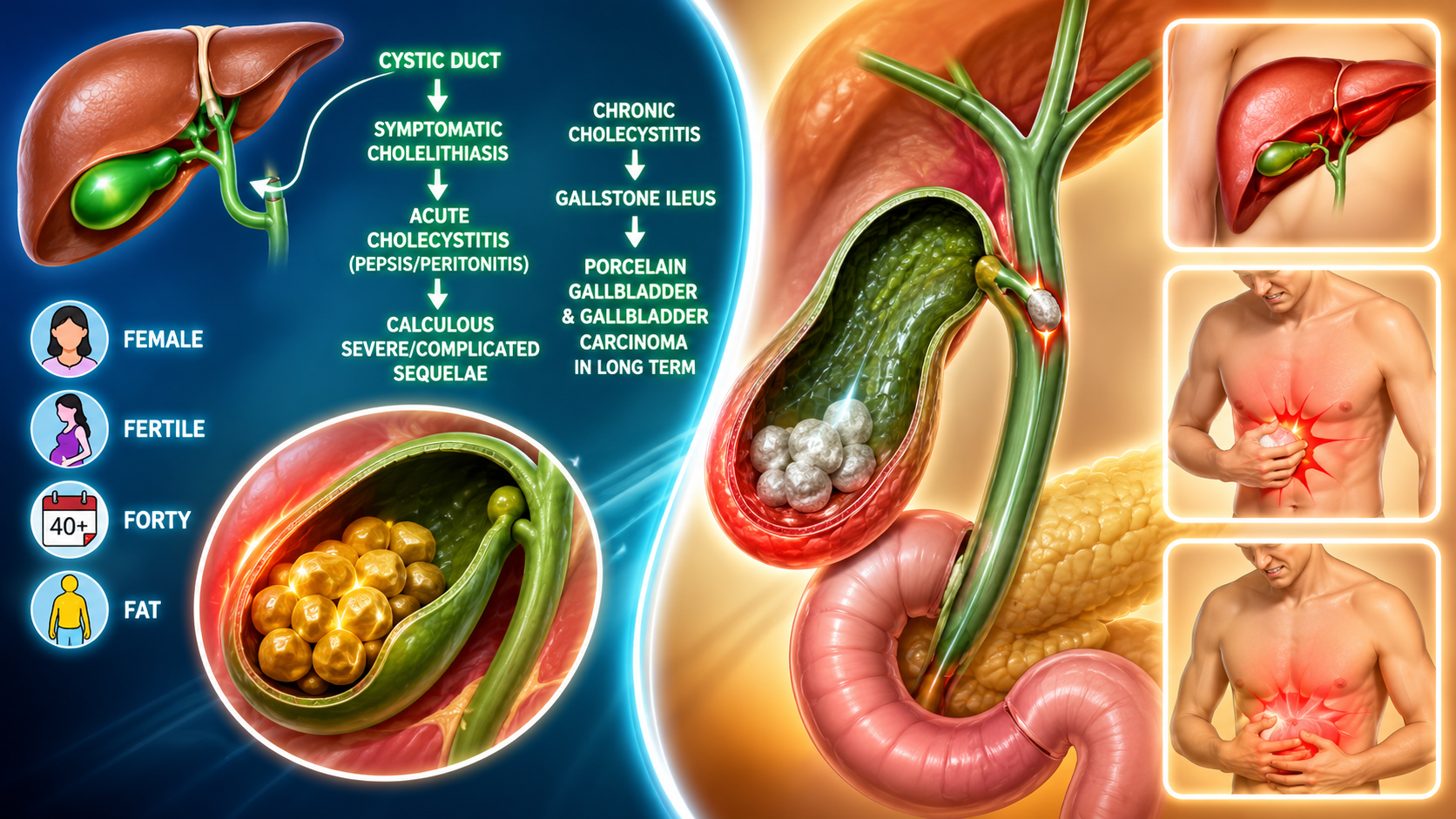
Acute cholecystitis occurs when prolonged blockage causes significant inflammation and possible infection.
This condition requires urgent medical evaluation.
Symptoms of Acute Cholecystitis
Compared with ordinary gallstone attacks, symptoms become:
- More severe
- More constant
- More systemic
Common findings include:
- Fever
- Chills
- Persistent right-sided pain
- Vomiting
- Severe tenderness
- Appetite loss
Pain often worsens during movement or deep breathing.
Important Safety Note About Murphy’s Sign
Doctors sometimes evaluate Murphy’s sign during abdominal examination.
This involves assessing whether inhalation suddenly worsens pain beneath the right ribs.
Important Safety Note: Murphy’s sign should only be evaluated by trained healthcare professionals. Patients should never press deeply into their own abdomen during severe pain episodes.
The Danger Zone for Patients With Diabetes
This is one of the most important safety discussions involving gallbladder disease.
Long-standing diabetes may damage visceral pain pathways through autonomic neuropathy.
As a result:
- Severe infections may produce surprisingly little pain
- Gallbladder necrosis may progress silently
- Dangerous inflammation may present only with nausea or weakness
Critical Safety Warning
Diabetic patients should never assume mild symptoms equal mild disease.
A severe gallbladder infection may present only with:
- Fatigue
- Malaise
- Mild nausea
- Low-grade fever
- Appetite loss
without dramatic abdominal pain.
Choledocholithiasis: When Stones Enter the Bile Ducts
Sometimes gallstones escape the gallbladder and become trapped inside the common bile duct.
This condition is called choledocholithiasis.
Why Bile Duct Obstruction Is Dangerous
The bile ducts function like drainage pipes carrying bile into the intestines.
When blockage occurs:
- Bile backs up
- Bilirubin accumulates
- Infection risk rises
- Pancreatitis may develop
Symptoms may include:
- Jaundice
- Dark urine
- Pale stools
- Fever
- Severe abdominal pain
Gallstone Pancreatitis: A Life-Threatening Emergency
One of the most dangerous gallstone complications occurs when a stone blocks the pancreatic duct.
Digestive enzymes become trapped inside the pancreas and begin damaging pancreatic tissue itself.
This condition may cause:
- Severe abdominal pain
- Persistent vomiting
- Organ dysfunction
- Systemic inflammation
Gallstone pancreatitis requires emergency medical treatment.
Gallstones vs Acid Reflux vs Heart Attack
Upper abdominal pain can overlap dangerously with other medical conditions.
Gallbladder Pain
Typical gallbladder pain often involves:
- Right upper abdominal pain
- Pain after fatty meals
- Shoulder blade discomfort
- Nausea
- Attacks lasting several hours
Acid Reflux (GERD)
Acid reflux commonly causes:
- Burning chest discomfort
- Sour taste
- Symptoms worsening when lying down
- Relief with antacids
Heart Attack Warning Signs
Cardiac symptoms may include:
- Chest heaviness
- Cold sweats
- Dizziness
- Shortness of breath
- Jaw or arm pain
Critical Clinical Note
In older adults, women, and patients with long-standing diabetes, a heart attack may sometimes present atypically as isolated upper abdominal or epigastric pain shortly after a heavy meal.
If abdominal discomfort occurs with sudden sweating, dizziness, weakness, or breathing difficulty, do not assume the issue is digestive. Seek emergency medical care immediately.
Modern Medical Treatments: Surgery vs Non-Surgical Options
Treatment decisions depend on:
- Stone size
- Symptoms
- Duct involvement
- Overall health status
Laparoscopic Cholecystectomy (The Gold Standard)
Modern gallbladder surgery is usually performed laparoscopically using small keyhole incisions.
Why Doctors Remove the Entire Gallbladder
Many patients ask:
“Why not simply remove the stones?”
Because the gallbladder itself is often dysfunctional.
If stones are removed while leaving the diseased organ behind:
- New stones commonly reform
- Gallbladder dysfunction persists
Removing the gallbladder prevents recurrent stone formation.
Typical Recovery Timeline
Many patients:
- Return home within 1–2 days
- Resume light activity within several days
- Return to work within 1–2 weeks
Recovery speed varies depending on surgical complexity and overall health.
Can You Live Normally Without a Gallbladder?
Yes.
The liver continues producing bile after surgery.
Without the gallbladder acting as a storage chamber:
- Bile drips continuously into the small intestine
Some patients temporarily experience:
- Loose stools
- Gas
- Bloating
- Fat sensitivity
However, most individuals gradually adapt successfully.
Non-Surgical Stone Dissolution (Oral Bile Acids)
Doctors sometimes use medications such as ursodeoxycholic acid (Ursodiol) to dissolve cholesterol stones.
However, these therapies have important limitations.
Why Medication Often Works Poorly
Oral bile acid therapy:
- Mainly works on tiny cholesterol stones
- Does not work well on calcified stones
- Requires months or years
- Carries high recurrence rates once medication stops
This is one reason surgery remains the standard treatment for symptomatic gallstones.
A Warning Against Internet “Gallbladder Flushes”
Viral detoxes involving olive oil and lemon juice remain extremely popular online.
However, these cleanses are medically misleading.
The “Fake Stones” Problem
The soft green clumps passed after these cleanses are usually not real gallstones.
Instead, they are often fatty soap-like complexes formed through chemical reactions involving:
- Oil
- Acid
- Digestive enzymes
This resembles partial gastric saponification.
Why Gallbladder Flushes May Be Dangerous
If genuine gallstones are present, aggressive oil loading may force a stone into:
- The common bile duct
- The pancreatic duct
This can trigger:
- Severe pancreatitis
- Infection
- Obstruction
- Emergency surgery
Patients should avoid attempting internet “gallbladder flushes” without professional medical guidance.
The Gallbladder Stones Diet: Preventing Attacks
1
Diet alone usually cannot dissolve established gallstones, but it may help reduce symptom triggers.
Foods to Strictly Limit
High-fat foods strongly stimulate gallbladder contraction.
Common triggers include:
- Deep-fried foods
- Bacon
- Sausage
- Heavy cream sauces
- Fast food
- Processed pastries
- Large late-night meals
Protective Dietary Habits
Certain dietary habits may support healthier bile flow.
Helpful strategies may include:
- Soluble fiber
- Oats
- Legumes
- Moderate healthy fats
- Avocados
- Olive oil in moderation
- Adequate hydration
- Vitamin C-rich foods
Healthy fats may encourage gentler gallbladder emptying compared with heavily processed fats.
Frequently Asked Questions (FAQ)
Can gallbladder stones disappear naturally?
Established gallstones generally do not spontaneously dissolve on their own. Silent stones may remain harmless for years without requiring treatment.
What happens if gallstones are left untreated?
Silent gallstones are often safely monitored. However, symptomatic stones may eventually trigger infection, bile duct obstruction, pancreatitis, or severe inflammation.
Can I live normally without a gallbladder?
Yes. Most people live normal lives after surgery because the liver continues producing bile continuously.
Why are small gallstones sometimes more dangerous than large stones?
Tiny stones possess greater mobility and can more easily migrate into narrow ducts where they may trigger pancreatitis or bile duct obstruction.
Are internet gallbladder flushes scientifically proven?
No. Medical experts generally do not consider olive oil flushes scientifically proven methods for removing true gallstones.
Conclusion
Gallbladder stones can range from silent incidental findings to dangerous medical emergencies depending on their size, mobility, and location within the biliary system.
While some stones remain harmless for decades, others migrate into narrow ducts and trigger severe inflammation, jaundice, pancreatitis, or life-threatening infection.
Understanding the chemistry behind gallstone formation, the risks associated with tiny mobile stones, and the warning signs of obstruction may help patients seek medical care before complications escalate.
Because upper abdominal pain overlaps with digestive, pancreatic, and cardiovascular conditions, persistent or severe symptoms should never be self-diagnosed solely through internet information.