Gallbladder Stones Symptoms: How to Identify and Triage Your Pain
Meta Description:
Gallbladder stones symptoms can range from mild indigestion to severe biliary colic and emergency abdominal pain. Learn how to identify gallbladder pain location, distinguish gallstones from heartburn, and recognize dangerous warning signs.
Gallbladder stones symptoms can feel confusing because they often imitate common digestive problems like acid reflux, bloating, gastritis, or even muscle strain. Some people notice only mild discomfort after meals, while others experience intense “gallbladder attacks” involving severe right-sided abdominal pain, nausea, sweating, and vomiting. In certain cases, symptoms may escalate into dangerous complications requiring emergency medical care.
This medically reviewed guide explains how gallbladder pain typically feels, why symptoms often radiate into the shoulder or back, how to distinguish gallstones from heartburn or cardiac problems, and when symptoms become serious enough to require immediate evaluation.
Understanding the “Classic” Gallbladder Stone Symptoms
Gallstones, medically called cholelithiasis, are hardened deposits that form inside the gallbladder. The gallbladder is a small digestive organ located beneath the liver that stores bile, a fluid that helps digest fats.
Bile contains:
- Cholesterol
- Bile salts
- Bilirubin
- Lecithin
- Water
When bile becomes chemically unbalanced or remains stagnant for prolonged periods, microscopic crystals may begin forming. Over time, these crystals can harden into gallstones.
Some stones remain completely silent for years. Others move into narrow ducts and trigger pain, inflammation, or obstruction.
The Anatomy of a Gallbladder Attack (Biliary Colic)
The classic gallbladder attack is known medically as biliary colic.
Despite the word “colic,” the pain is usually not intermittent or cramp-like. Instead, patients often describe it as:
- Deep
- Pressure-like
- Squeezing
- Heavy
- Difficult to ignore
The pain most commonly develops in the Upper Right Quadrant (RUQ) of the abdomen beneath the right rib cage.
Many patients describe the sensation as:
“A fist pushing underneath my ribs.”
Gallbladder attacks frequently begin:
- After fatty meals
- Late at night
- After restaurant food
- Following large holiday dinners
This happens because fatty foods stimulate release of the digestive hormone cholecystokinin (CCK), which signals the gallbladder to contract and release bile.
If a stone temporarily blocks the cystic duct during contraction:
- Pressure rapidly builds
- The gallbladder stretches painfully
- Inflammation increases
- Severe discomfort develops
Typical biliary colic often:
- Peaks within 30–60 minutes
- Lasts between 1–5 hours
- Remains steady rather than wave-like
- Causes nausea or sweating
Pain lasting beyond approximately 5–6 hours may indicate a more serious condition such as acute cholecystitis (gallbladder inflammation).
Visual Recommendation: Pain Mapping Infographic showing deep RUQ pain beneath the right rib cage.
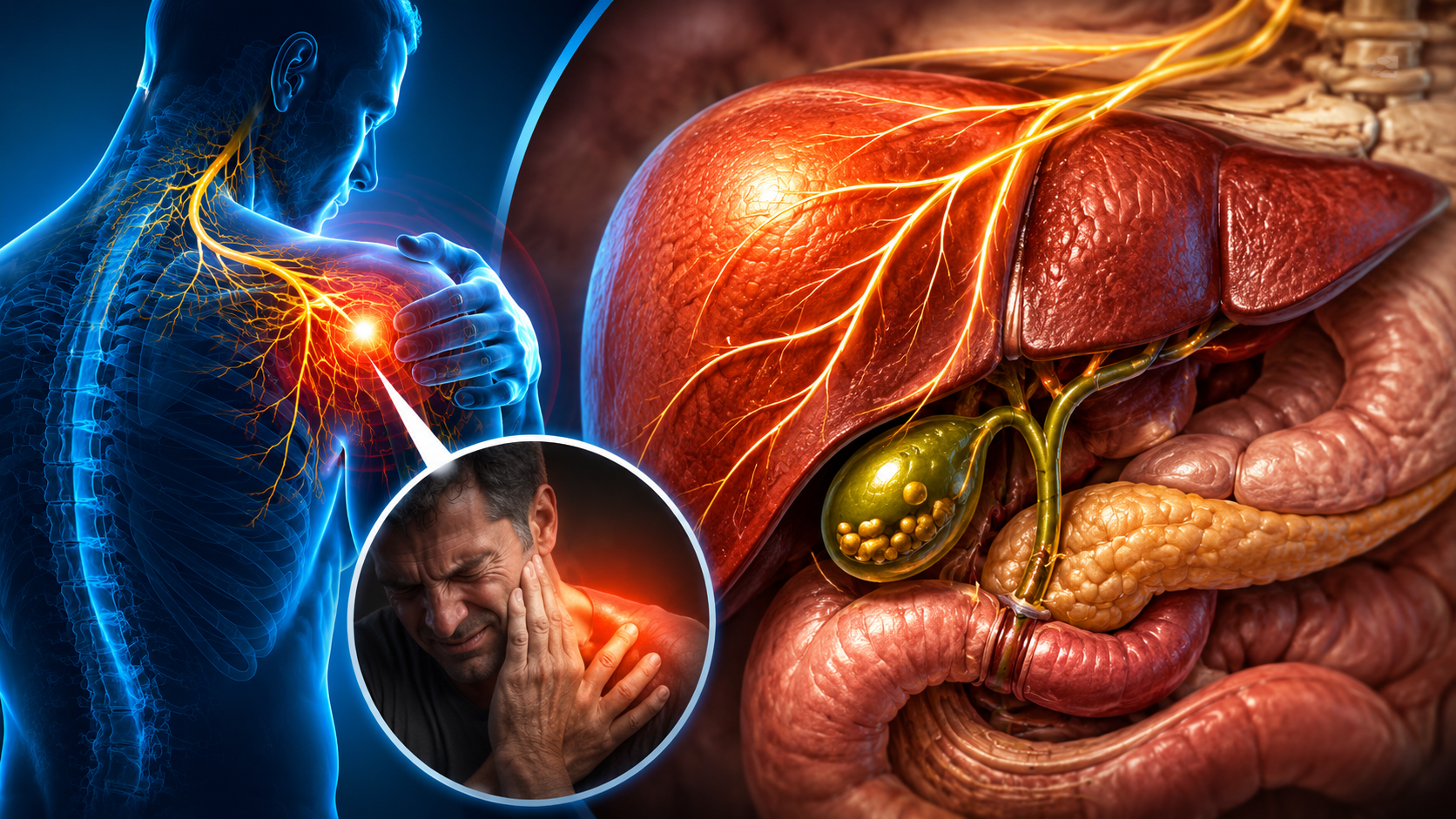
Why the Pain Radiates to Your Back and Shoulder
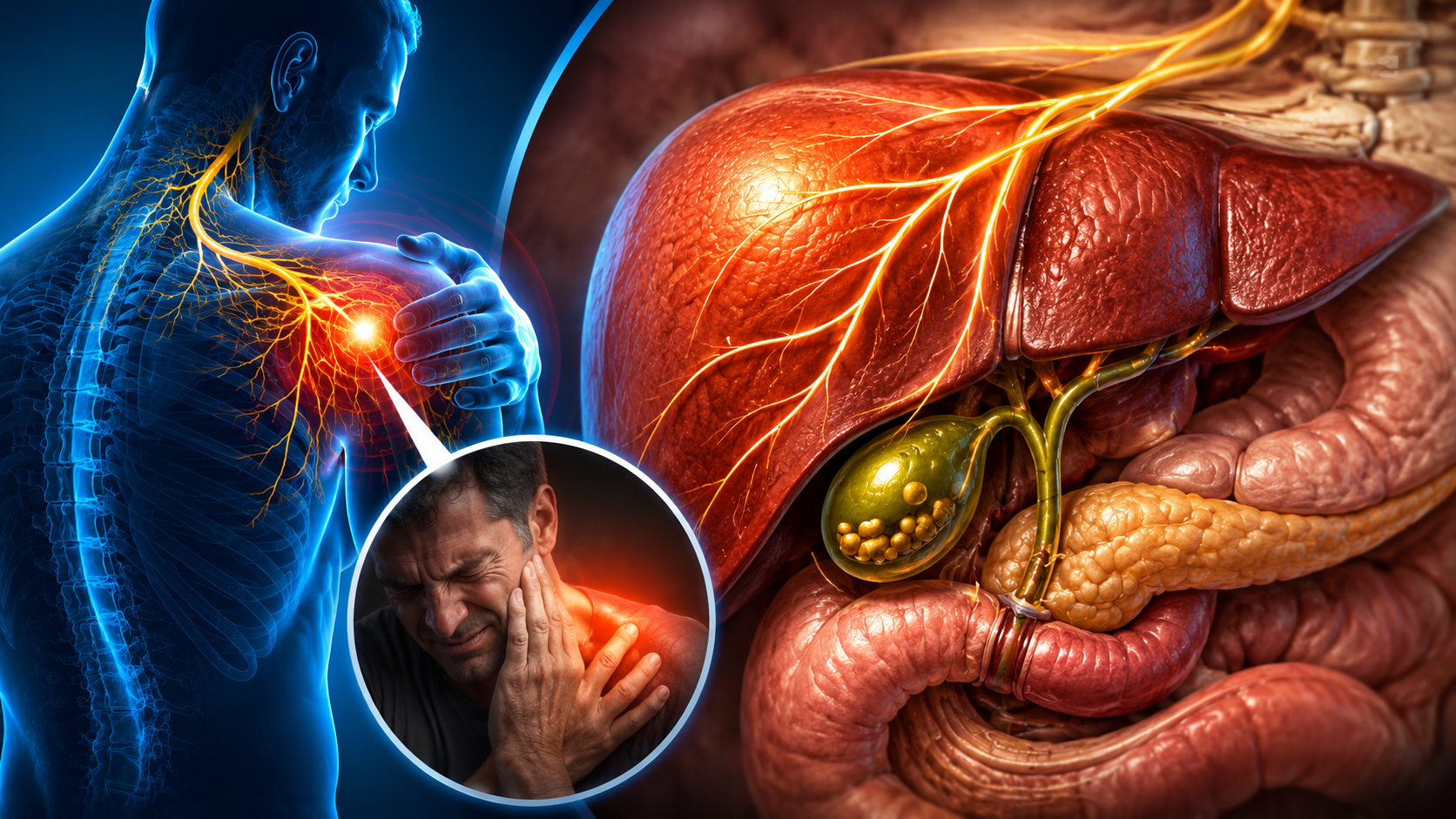
One of the most alarming gallbladder stones symptoms is pain spreading into the:
- Right shoulder blade
- Upper back
- Right shoulder
- Area between the shoulder blades
This is called referred pain.
It occurs because inflammation near the diaphragm irritates the phrenic nerve, which shares neurological pathways with the shoulder region.
The brain interprets the signal incorrectly and “projects” discomfort into nearby areas.
This is why many people initially believe they injured a muscle or slept awkwardly before discovering gallstones are responsible.
Visual Recommendation: Radiation Arc Graphic showing pain extending from the RUQ toward the right scapula.
Internal Link Opportunity: “Gallbladder Pain vs. Muscle Strain: A Simple Comparison”
Why Gallbladder Attacks Often Happen at Night
Many patients wake suddenly around midnight with severe symptoms.
Several physiological factors may explain this pattern.
Heavy Evening Meals
Dinner is often the largest and fattiest meal of the day, creating stronger gallbladder contractions for several hours afterward.
Slower Overnight Digestion
Digestive motility naturally slows during sleep, potentially increasing bile stagnation.
The “Gravity Effect”
One of the most clinically interesting explanations involves body positioning.
While standing upright:
- Stones may rest harmlessly at the bottom of the gallbladder
When lying flat:
- The gallbladder shifts orientation
- Loose stones drift toward the narrow neck
- Temporary blockage becomes more likely
This explanation closely matches many patient experiences and helps explain why attacks commonly begin after going to bed.
Differential Diagnosis: Is It Gallstones or Something Else?
Gallbladder symptoms overlap heavily with several other medical conditions, including:
- GERD (acid reflux)
- Gastritis
- Muscle strain
- Peptic ulcer disease
- Pancreatitis
- Cardiac conditions
This overlap often delays diagnosis.
Gallstones vs. Heartburn (GERD)
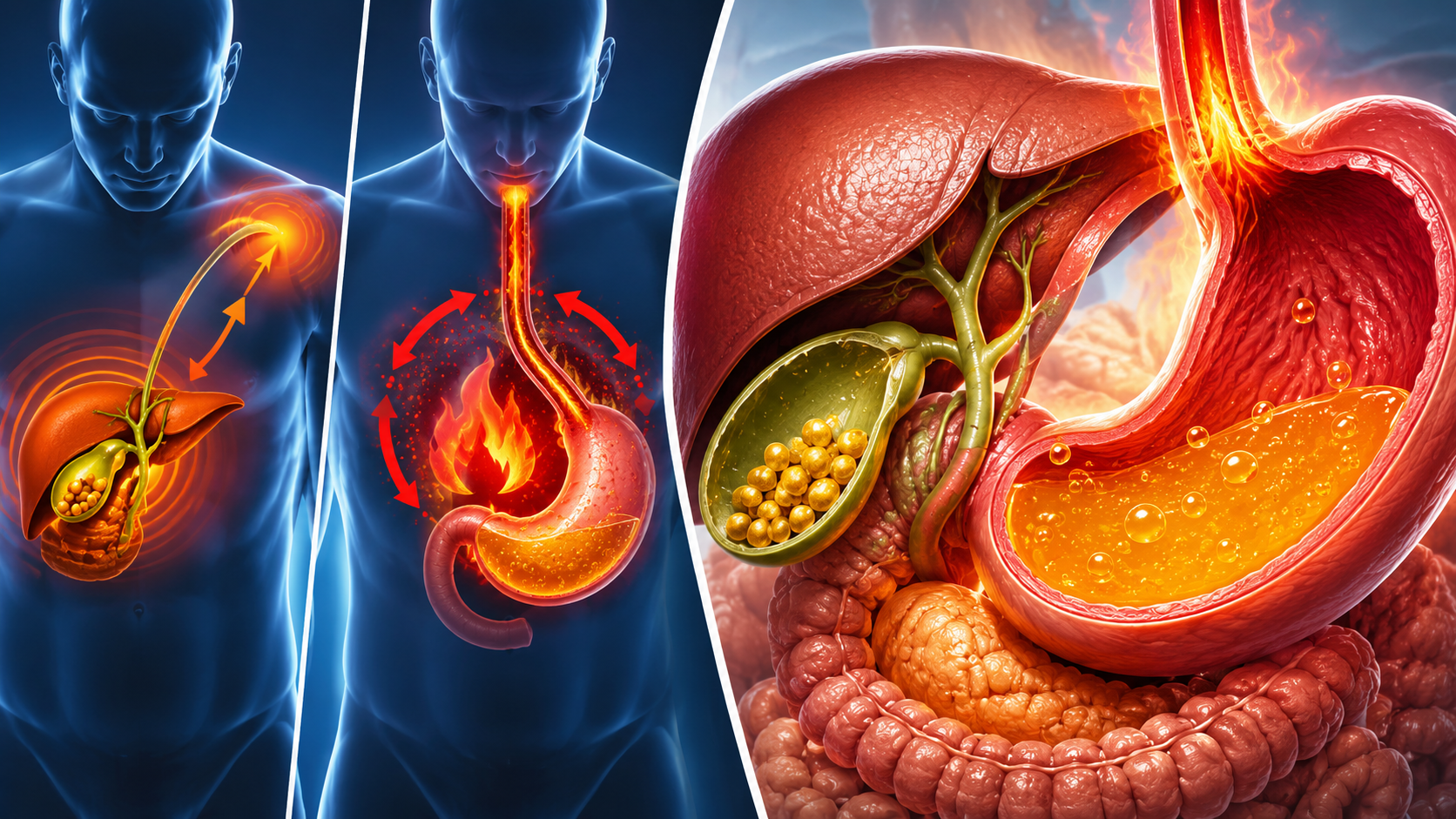
Gallstones and acid reflux are frequently confused because both may worsen after meals.
However, the sensations are usually different.
| Gallstones | GERD / Heartburn |
| Deep squeezing pressure | Burning sensation |
| Usually beneath right ribs | Usually behind breastbone |
| Pain may radiate to shoulder/back | Sour taste or acid reflux |
| Often triggered by fatty meals | Often triggered by acidic/spicy foods |
| Symptoms may last hours | Symptoms may improve with antacids |
| Often associated with nausea | Often associated with regurgitation |
Gallbladder pain generally feels deeper and more internal, while GERD typically produces surface burning.
Visual Recommendation: Triage Matrix comparing GERD vs Gallstones vs Muscle Strain.
Gallstones vs. Heart Attack
This distinction is medically critical.
Heart attacks do not always present as classic crushing chest pain.
Older adults, women, and diabetic patients may instead experience:
- Upper abdominal pressure
- Nausea
- Sweating
- Weakness
- Breathlessness
- Indigestion-like discomfort
Because gallbladder attacks also occur after meals, many patients mistakenly assume the problem is digestive.
Critical Clinical Warning
A large, high-fat meal increases circulatory demands throughout the digestive system and may unintentionally trigger severe angina or a cardiac event in individuals with underlying heart disease.
Upper abdominal pressure after eating should never automatically be assumed to be “just gallstones.”
Seek emergency evaluation immediately if symptoms occur alongside:
- Chest tightness
- Sweating
- Jaw pain
- Dizziness
- Shortness of breath
- Sudden weakness
Important Safety Reminder
In older adults and diabetic patients, heart attacks may present primarily as abdominal discomfort rather than chest pain.
When symptoms are uncertain, emergency evaluation is safer than self-diagnosis.
Visual Recommendation: Emergency Comparison Chart - Gallstones vs Heart Attack Symptoms.
Emergency Warning Signs (The Red Flags)
Most uncomplicated gallbladder attacks eventually improve.
Certain symptoms, however, suggest dangerous complications requiring immediate medical attention.
When to Head to the Emergency Room
Go to the emergency room immediately if symptoms include:
- Fever
- Shaking chills
- Yellowing of the skin or eyes (jaundice)
- Severe vomiting
- Confusion
- Dark urine
- Pale or clay-colored stools
- Severe pain lasting more than 5–6 hours
These symptoms may indicate:
- Acute cholecystitis
- Bile duct obstruction
- Ascending cholangitis
- Gallstone pancreatitis
- Serious infection
Doctors sometimes refer to fever, jaundice, and abdominal pain together as part of the “Triad of Infection” in biliary disease.
Visual Recommendation: Stop-Light Triage Graphic
- Green = Mild symptoms / monitor
- Yellow = Call doctor
- Red = ER immediately
The Complication Risk: Pancreatitis and Duct Obstruction
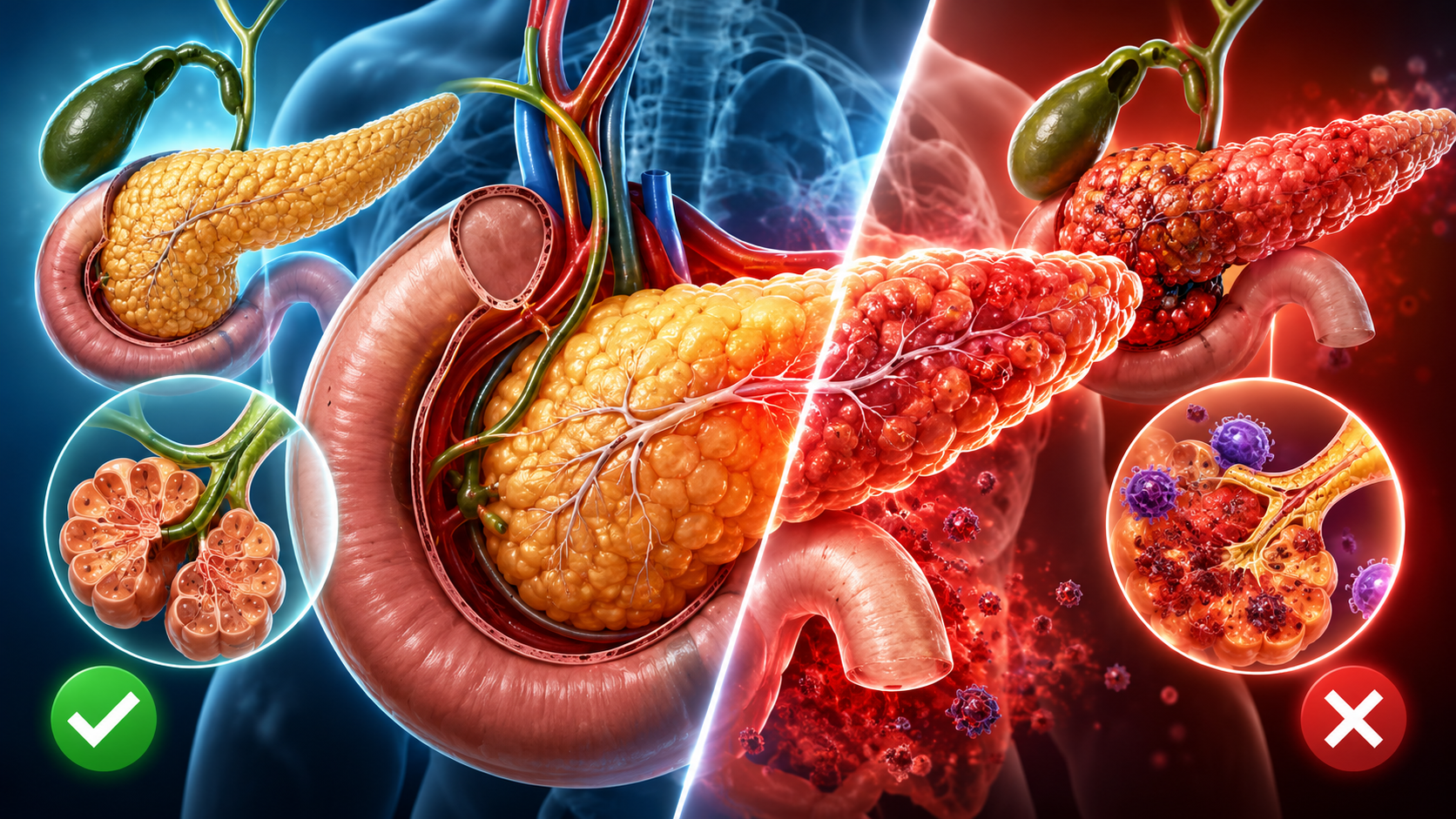
Small gallstones can sometimes become especially dangerous because they may migrate into narrow ducts.
When a stone blocks the common bile duct:
- Bile flow stops
- Bilirubin accumulates
- Jaundice develops
When a stone blocks the pancreatic drainage system:
- Digestive enzymes become trapped
- Pancreatic inflammation develops
- Severe pancreatitis may occur
Symptoms of gallstone pancreatitis may include:
- Intense upper abdominal pain
- Pain radiating into the back
- Persistent vomiting
- Sweating
- Rapid worsening illness
This condition requires emergency medical care.
Internal Link Opportunity: “When to Visit the ER for Abdominal Pain”
Risk Factors: Understanding Why You Have Symptoms
Gallstones develop because of a combination of:
- Hormonal influences
- Genetics
- Gallbladder motility problems
- Metabolic factors
- Dietary patterns
The “4 Fs” of Gallstone Risk
Doctors sometimes summarize classic gallstone risk trends using the “4 Fs”:
- Female
- Forty
- Fertile
- Fat
These are broad epidemiological trends rather than strict medical rules.
Female
Estrogen increases cholesterol concentration inside bile.
Forty
Risk generally rises with age.
Fertile
Pregnancy hormones may slow gallbladder emptying.
Fat
Obesity and metabolic dysfunction increase cholesterol saturation.
Gallstones can still occur in:
- Men
- Younger adults
- People with normal body weight
The “4 Fs” framework should be viewed as a simplified educational tool rather than a judgment.
Trigger Events: Dietary Changes and Fasting
Rapid dietary shifts may increase gallstone symptoms in susceptible individuals.
Examples include:
- Crash dieting
- Extreme calorie restriction
- Rapid weight loss
- Long fasting periods
- Certain bariatric surgery programs
The “Gallbladder Stasis” Mechanism
When the gallbladder does not contract regularly, bile may remain stagnant for prolonged periods.
This may encourage:
- Cholesterol crystal formation
- Thickened biliary sludge
- Stone development
Clinical digestive observations suggest prolonged fasting without adequate fat intake may reduce release of CCK, limiting normal gallbladder emptying in susceptible patients.
Importantly, intermittent fasting does not automatically cause gallstones in healthy individuals. The relationship is more relevant in patients who already have sludge, pre-existing stones, or gallbladder motility problems.
Individuals with a history of gallbladder disease should consult a healthcare professional before beginning aggressive fasting programs.
Moderate healthy fats such as:
- Olive oil
- Nuts
- Avocado
- Fatty fish
may help support normal gallbladder contraction.
How Doctors Diagnose Gallbladder Stones
Many patients feel anxious about diagnostic testing.
Fortunately, most evaluations begin with simple, non-invasive imaging.
Ultrasound: The First-Line Test
Ultrasound is usually the first imaging study used to evaluate suspected gallstones.
Benefits include:
- No radiation
- Minimal discomfort
- Fast results
- Non-invasive testing
Gallstones often appear as dense structures producing an acoustic shadow behind them.
Ultrasound may detect:
- Gallstones
- Gallbladder wall thickening
- Sludge
- Signs of inflammation
Preparing for an Ultrasound
Doctors commonly recommend avoiding food for approximately 6–8 hours before a gallbladder ultrasound because fasting allows the gallbladder to remain full and easier to visualize.
Patients should follow the preparation instructions provided by their healthcare facility for the most accurate imaging results.
HIDA Scan: Evaluating Gallbladder Function
A HIDA scan evaluates how effectively the gallbladder empties rather than simply looking for stones.
This test may help diagnose:
- Gallbladder dysfunction
- Biliary dyskinesia
- Poor gallbladder motility
During the scan:
- A tracer is injected
- Imaging tracks bile movement
- Gallbladder ejection fraction is measured
This helps doctors determine whether the gallbladder is functioning properly.
Visual Recommendation: Side-by-side infographic comparing ultrasound vs HIDA scan.
Outbound Reference Suggestions:
- Mayo Clinic
- National Institute of Diabetes and Digestive and Kidney Diseases (NIDDK)
- American College of Gastroenterology (ACG)
Living With Silent Gallstones
Not all gallstones require surgery.
Many people discover “silent gallstones” accidentally during imaging performed for unrelated reasons.
If stones cause:
- No pain
- No inflammation
- No obstruction
many physicians recommend watchful waiting rather than immediate surgery.
Treatment decisions depend on:
- Symptom severity
- Complication risk
- Stone characteristics
- Overall health status
Frequently Asked Questions (FAQ)
Can gallbladder stones cause chest pain?
Yes. Gallbladder pain can radiate into the center of the chest or shoulder region, which sometimes creates confusion with cardiac pain. Because chest pain may also indicate serious heart disease, professional medical evaluation is important.
How do I stop a gallbladder attack at home?
There is no guaranteed home cure for a gallbladder attack. Avoiding fatty foods and contacting a healthcare provider promptly is important. If pain becomes severe, persistent, or accompanied by fever or jaundice, emergency medical evaluation is recommended.
Do I need surgery if I have silent gallstones?
Not always. Many patients with asymptomatic gallstones are monitored over time without surgery unless symptoms or complications develop.
Conclusion
Gallbladder stones symptoms can range from mild digestive discomfort to dangerous emergencies involving infection, bile duct obstruction, or pancreatitis.
Because symptoms frequently imitate:
- Acid reflux
- Gastritis
- Muscle strain
- Indigestion
- Even heart attacks
many patients delay appropriate medical evaluation.
Understanding:
- Where gallbladder pain is usually located
- What biliary colic feels like
- Why pain radiates into the shoulder blade
- Which warning signs signal danger
- When emergency care becomes necessary
can help patients seek safer and more timely medical attention.
Persistent abdominal pain, jaundice, vomiting, fever, chest pressure, or breathing difficulty should always be evaluated by a qualified healthcare professional rather than self-diagnosed online.