Gallbladder Stones: Why Some People Never Notice Them While Others End Up in the ER
Medical Disclaimer: This article is for educational purposes only and should not replace professional medical evaluation, diagnosis, or treatment. Severe abdominal pain, fever, jaundice, vomiting, chest pressure, or breathing difficulty requires urgent medical attention.
Gallbladder stones are one of the most common digestive disorders worldwide, yet many people do not realize they have them until a painful attack suddenly interrupts daily life. A person may spend years eating normally without symptoms, while another individual develops intense upper abdominal pain after a single heavy meal.
This unpredictable behavior is what makes gallbladder disease so confusing.
Some stones remain harmless inside the gallbladder forever. Others migrate into delicate bile ducts and create dangerous complications involving infection, pancreatitis, or severe inflammation.
In recent years, researchers have gained a much deeper understanding of why gallstones develop, why modern lifestyles increase risk, and why certain symptoms should never be ignored.
This guide explains the hidden biology behind gallbladder stones, the early warning signs many people miss, modern diagnostic tools, treatment options, and the emergency symptoms that require immediate medical evaluation.
Emergency Symptoms That Should Never Be Ignored
Seek emergency care immediately if gallbladder symptoms occur with:
- Fever or chills
- Yellowing of the eyes or skin
- Severe vomiting
- Dark urine
- Pale stools
- Chest pressure
- Difficulty breathing
- Severe pain lasting longer than 5–6 hours
- Fainting or confusion
These symptoms may signal:
- Acute gallbladder infection
- Bile duct obstruction
- Gallstone pancreatitis
- Ascending cholangitis
- Sepsis-related complications
These conditions can become life-threatening without urgent treatment.
Important Patient Safety Note
During a severe gallbladder attack:
- Do not apply strong heating pads directly to the abdomen
- Avoid internet “gallbladder cleanse” methods
- Avoid excessive self-medication with strong painkillers
- Do not ignore symptoms assuming they are “just gas”
Masking symptoms can delay emergency diagnosis.
Understanding the Gallbladder: The Organ Most People Forget Exists
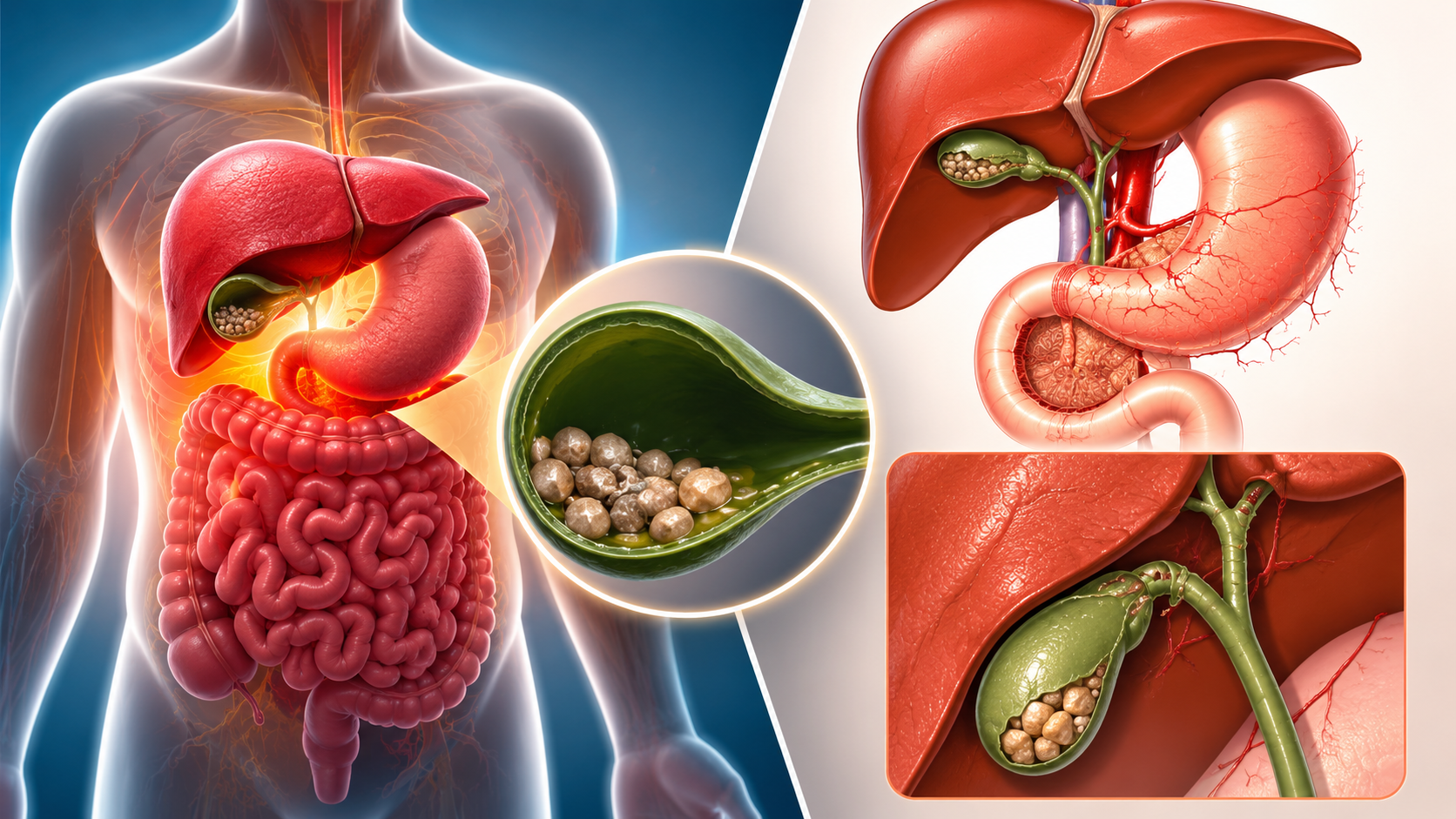
The gallbladder is a small pouch-shaped organ located beneath the liver.
Although tiny, it plays a major role in fat digestion.
Its job is to:
- Store bile
- Concentrate bile
- Release bile after meals
Bile itself is produced by the liver and contains:
- Cholesterol
- Bile salts
- Bilirubin
- Water
- Lecithin
- Digestive compounds
When functioning normally, bile remains chemically balanced.
When this balance becomes unstable, crystals begin forming inside the gallbladder.
How Gallstones Actually Form
Many people imagine gallstones as tiny pebbles that randomly appear inside the body.
In reality, gallstone formation is a slow biochemical process.
The Bile Saturation Problem
Bile works like a chemical solution.
Under healthy conditions:
- Cholesterol stays dissolved
- Bile salts stabilize the mixture
- Fluid flows smoothly
However, when cholesterol levels become too high:
- Bile becomes oversaturated
- Cholesterol crystals precipitate
- Microscopic particles begin clustering together
Over time:
- Sludge develops
- Crystals enlarge
- Stones gradually form
This process may take years.
The “Cold Sweet Tea” Analogy
Imagine stirring sugar into iced tea.
At first, the sugar dissolves normally.
But eventually:
- The liquid becomes overloaded
- Additional sugar can no longer dissolve
- Crystals begin settling at the bottom
Gallstones form through a similar mechanism.
The gallbladder essentially becomes an environment where cholesterol crystals slowly accumulate.
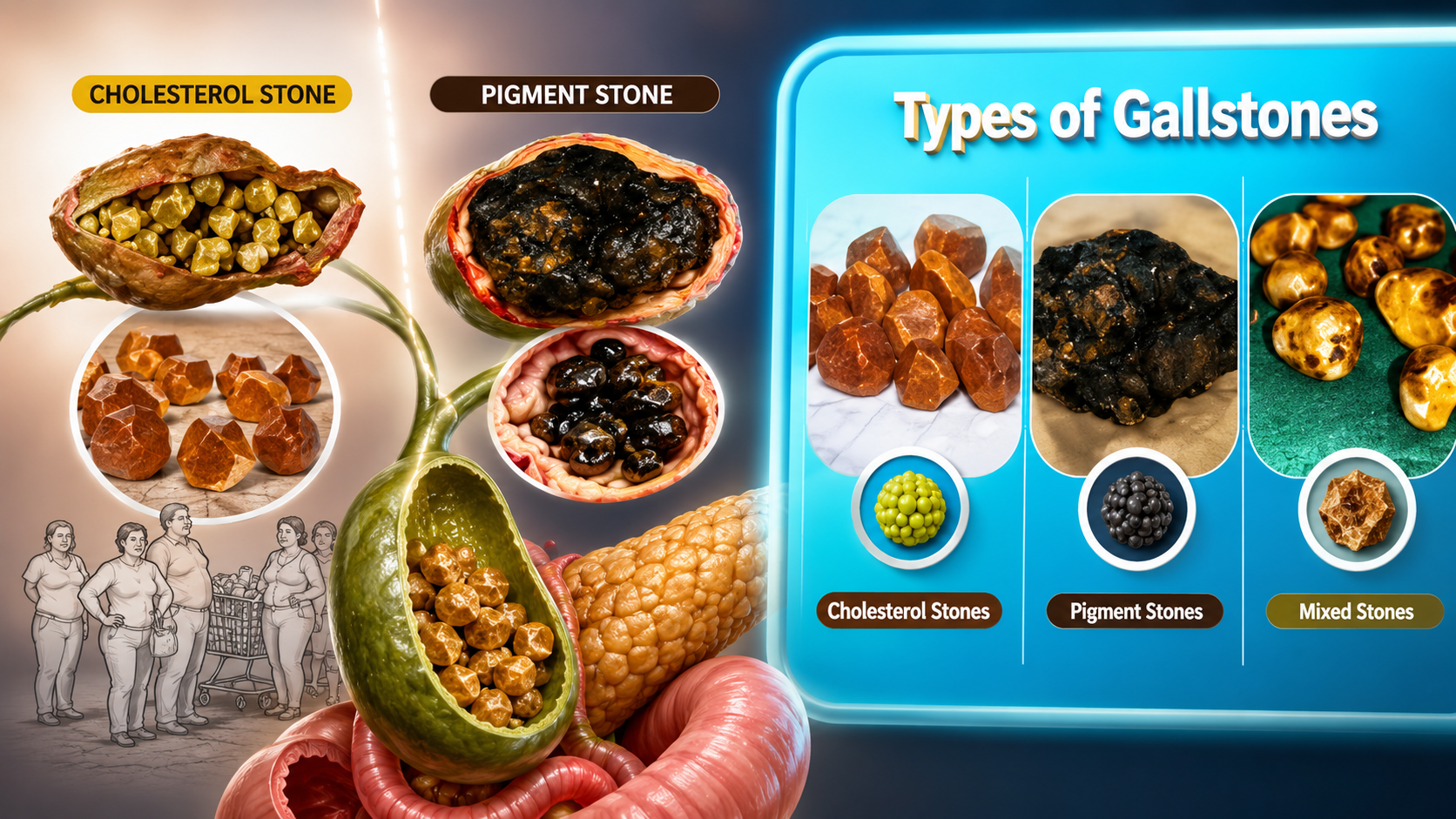
Cholesterol Stones vs Pigment Stones
Doctors classify gallstones into two major categories.
Cholesterol Stones
These are the most common type in the United States and other developed countries.
They are usually:
- Yellow-green
- Smooth
- Waxy
- Cholesterol-rich
These stones are strongly linked to:
- Obesity
- Hormonal changes
- Rapid weight loss
- Metabolic syndrome
Pigment Stones
Pigment stones are darker and composed mainly of bilirubin compounds.
They are more commonly associated with:
- Liver disease
- Chronic infections
- Blood disorders
- Cirrhosis
- Excessive red blood cell breakdown
These stones often appear:
- Dark brown
- Black
- Fragile
- Irregular
Why Gallstones Affect Women More Often
One of the clearest trends in gallbladder disease is the higher rate among women.
Hormones play a major role.
Estrogen and Cholesterol Imbalance
Estrogen increases cholesterol secretion into bile.
Higher cholesterol concentration increases the likelihood of crystal formation.
This helps explain why gallstones occur more commonly during:
- Pregnancy
- Hormone replacement therapy
- Certain birth control use
- Rapid postpartum weight changes
Pregnancy and Gallbladder Slowdown
Pregnancy hormones also slow gallbladder contractions.
This creates biliary stasis, meaning bile remains stagnant for longer periods.
When bile sits still:
- Cholesterol crystals form more easily
- Sludge develops faster
- Stones enlarge more quickly
Pregnancy therefore creates both chemical and mechanical risk factors simultaneously.
The Modern Lifestyle Connection
Modern eating patterns have significantly changed gallbladder disease risk.
Ultra-Processed Foods and Fat Overload
Highly processed diets often contain:
- Refined oils
- Excess saturated fats
- Large calorie loads
- Low fiber levels
These dietary patterns increase cholesterol saturation inside bile.
Large greasy meals also force the gallbladder to contract aggressively.
If a stone blocks the duct during contraction:
- Pressure rapidly builds
- Severe pain develops
- A gallbladder attack begins
Rapid Weight Loss and Crash Dieting
Ironically, extreme dieting may also increase gallstone risk.
When body fat breaks down rapidly:
- The liver dumps excess cholesterol into bile
- Bile chemistry becomes unstable
- Stones form more quickly
Clinical digestive guidelines commonly associate higher risk with weight loss exceeding approximately 1.5 kg (3.3 pounds) weekly over sustained periods.
This explains why gallstones sometimes appear after aggressive dieting programs or bariatric surgery.
Intermittent Fasting and “Gallbladder Inactivity”
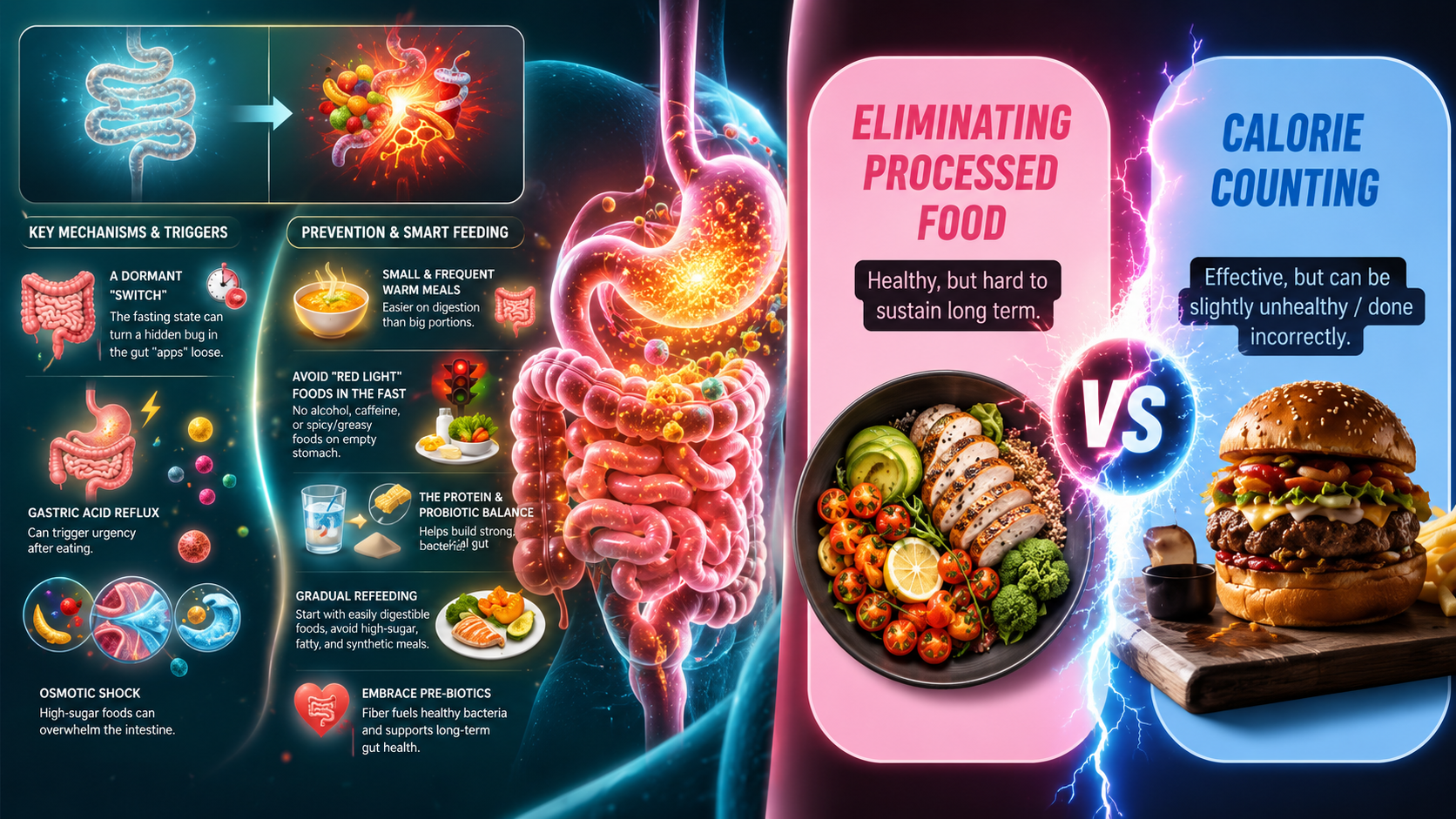
Long fasting periods may reduce gallbladder contractions significantly.
When the digestive tract receives little fat:
- Very little cholecystokinin (CCK) is released
- The gallbladder barely empties
- Bile becomes stagnant
Some specialists believe prolonged inactivity may accelerate sludge formation in susceptible individuals.
Research continues evolving in this area.
Why Some Gallstones Never Cause Symptoms
One of the most confusing aspects of gallbladder disease is that many people never develop symptoms.
These are called silent gallstones.
Silent Stones vs Symptomatic Stones
Silent stones usually:
- Remain trapped inside the gallbladder
- Do not block bile flow
- Cause little inflammation
As a result, people may live for decades without knowing the stones exist.
Symptomatic stones behave differently.
They move.
Mobility Is Often More Dangerous Than Size
Smaller stones may actually create more emergencies because they can travel into narrow ducts.
Tiny stones can:
- Escape the gallbladder
- Enter the common bile duct
- Block pancreatic drainage
This may trigger:
- Severe jaundice
- Pancreatitis
- Biliary infection
- Dangerous obstruction
Visual Recommendation: Insert a diagram showing a tiny gallstone moving from the gallbladder into the bile duct and blocking flow.
What a Gallbladder Attack Really Feels Like
Patients often struggle to describe gallbladder pain accurately.
Many initially believe they have:
- Acid reflux
- Food poisoning
- Muscle strain
- Indigestion
The Classic Pain Pattern
Gallbladder attacks usually involve:
- Deep pressure beneath the right ribs
- Pain in the upper middle abdomen
- Tight squeezing sensations
- Pain between the shoulder blades
- Nausea
- Sweating
Unlike intestinal cramping, gallbladder pain often feels:
- Deep
- Internal
- Constant
- Difficult to relieve by changing position
Many patients describe the sensation as:
“Something trapped inside trying to push outward.”
Why Gallbladder Pain Travels Into the Shoulder
This phenomenon is called referred pain.
Inflammation near the diaphragm irritates nerve pathways connected to the shoulder and upper back.
As a result, pain may spread:
- Beneath the right shoulder blade
- Into the upper back
- Across the shoulder area
Visual Recommendation: Insert a body pain map highlighting the right upper abdomen and right shoulder blade.
Why Gallbladder Attacks Often Happen at Night
Many patients wake suddenly around midnight with severe pain.
Several mechanisms likely contribute.
Heavy Evening Meals
Dinner is commonly the largest and fattiest meal of the day.
Hours later, powerful gallbladder contractions may still occur during sleep.
The Gravity Effect
When standing upright:
- Stones may rest harmlessly at the bottom of the gallbladder
When lying flat:
- The gallbladder shifts position
- Stones roll toward the narrow exit neck
- Temporary obstruction becomes more likely
This mechanical effect matches many real-world patient experiences.
Gallstones vs Acid Reflux vs Heart Attack
Upper abdominal pain can overlap with several dangerous conditions.
Gallbladder Attack
Typical signs include:
- Right-sided upper abdominal pain
- Pain after fatty meals
- Shoulder blade discomfort
- Nausea
- Constant squeezing pain
Acid Reflux (GERD)
GERD more commonly causes:
- Burning chest discomfort
- Sour taste
- Symptoms worsening while lying down
- Temporary relief with antacids
Heart Attack
Cardiac symptoms may include:
- Chest heaviness
- Jaw pain
- Arm discomfort
- Cold sweats
- Shortness of breath
- Epigastric pressure
Critical Clinical Alert
In older adults, women, and diabetic patients, heart attacks may present primarily as upper abdominal pressure rather than classic chest pain.
Never automatically assume severe upper abdominal pain is “just gallstones.”
Seek emergency evaluation if symptoms are intense or unusual.
Diagnosing Gallbladder Stones
Doctors use several tools to evaluate gallbladder disease.
Ultrasound
Ultrasound is the first-line imaging study for gallstones.
It can identify:
- Stones
- Sludge
- Gallbladder wall thickening
- Bile duct enlargement
Gallstones often produce a dark ultrasound effect called acoustic shadowing.
HIDA Scan
A HIDA scan evaluates how well the gallbladder empties bile.
Doctors often order this test when:
- Symptoms strongly suggest gallbladder disease
- Ultrasounds appear normal
The test measures gallbladder ejection fraction (EF).
A low EF may indicate:
- Biliary dyskinesia
- Functional gallbladder dysfunction
ERCP
ERCP allows specialists to:
- Visualize bile ducts
- Remove trapped stones
- Relieve dangerous obstruction
This procedure may become life-saving during emergencies.
Treatment Options for Gallstones
Treatment depends on:
- Symptoms
- Stone location
- Infection risk
- Obstruction severity
- Overall patient health
Watchful Waiting for Silent Gallstones
Most silent stones require no immediate treatment.
If stones are not causing:
- Pain
- Infection
- Inflammation
- Obstruction
doctors usually recommend observation rather than surgery.
Laparoscopic Gallbladder Removal
Modern gallbladder surgery is usually minimally invasive.
Surgeons typically use small laparoscopic incisions rather than large open cuts.
Most patients:
- Return home within 1–2 days
- Resume light activities within several days
- Return to work within 1–2 weeks
Why Doctors Remove the Entire Gallbladder
Many patients ask:
“Why not simply remove the stones?”
Because the gallbladder itself often functions abnormally.
If only stones are removed:
- New stones commonly return
- Dysfunction persists
Removing the gallbladder prevents future stone formation.
Living Without a Gallbladder
Yes, most people can live normally without a gallbladder.
The liver continues producing bile continuously after surgery.
Without the gallbladder:
- Bile drips steadily into the intestine
Some people temporarily experience:
- Loose stools
- Bloating
- Gas
- Fat sensitivity
Most gradually adapt over time.
The Truth About “Gallbladder Cleanses”
Online gallbladder flushes involving olive oil and lemon juice remain popular online.
However, these methods are medically controversial and potentially risky.
The “Fake Stones” Problem
The green clumps passed after these cleanses are usually not true gallstones.
Instead, they are often soft fatty soap-like complexes formed through chemical reactions involving:
- Oil
- Acid
- Digestive compounds
Why Flushes Can Become Dangerous
If true gallstones exist, aggressive oil loading may force a stone into:
- The bile duct
- The pancreatic duct
This may trigger:
- Pancreatitis
- Severe obstruction
- Infection
- Emergency surgery
Patients should avoid relying on internet cleanses instead of evidence-based medical evaluation.
Foods That Commonly Trigger Gallbladder Attacks
Certain foods stimulate powerful gallbladder contractions.
Common triggers include:
- Fried foods
- Heavy cream sauces
- Bacon
- Sausage
- Fast food
- Processed pastries
- Large late-night meals
Reducing these foods may help decrease attack frequency in some individuals.
Frequently Asked Questions (FAQ)
Can gallstones disappear naturally?
Most established gallstones do not spontaneously dissolve. However, silent stones may remain harmless for years.
Why do gallbladder attacks happen after fatty meals?
Fat triggers cholecystokinin (CCK), which forces the gallbladder to contract. If a stone blocks bile flow, pressure rapidly builds and pain develops.
Are small gallstones more dangerous?
Sometimes yes. Tiny stones possess greater mobility and can migrate into narrow ducts where they may trigger pancreatitis or obstruction.
Can you live normally without a gallbladder?
Yes. Most people eventually return to normal lifestyles after recovery.
Are online gallbladder flushes scientifically proven?
No. Medical experts generally do not consider olive oil flushes scientifically proven methods for removing real gallstones.
Conclusion
Gallbladder stones range from harmless silent deposits to dangerous emergencies involving bile duct obstruction, pancreatitis, severe infection, or inflammation.
Because symptoms frequently mimic acid reflux, gastritis, ulcers, muscle strain, and even heart attacks, recognizing gallbladder symptom patterns is extremely important.
Understanding:
- How gallstones form
- Why fatty meals trigger attacks
- Why small stones may become dangerous
- Which symptoms require emergency care
- How modern treatments work
may help patients seek medical attention before complications become severe.
Persistent upper abdominal pain, jaundice, fever, vomiting, or unexplained digestive symptoms should always be professionally evaluated rather than self-diagnosed online.