Gallstone Symptoms: What a Gallbladder Attack Feels Like and Urgent Red Flags
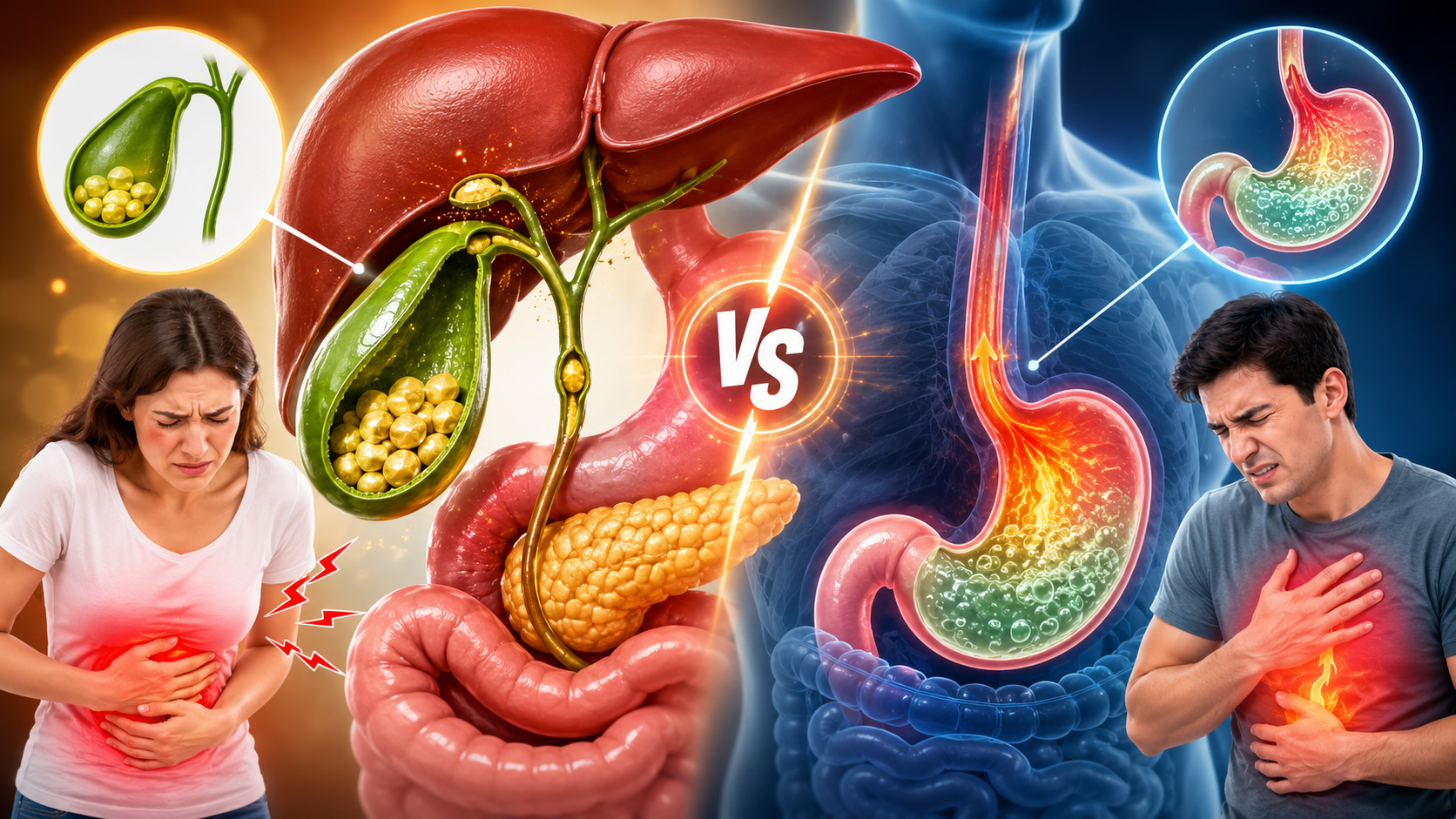
In many cases, the first attack occurs unexpectedly at night after a heavy dinner. The pain may intensify rapidly, creating deep pressure beneath the ribs, nausea, sweating, and severe discomfort lasting for hours.
Understanding the pattern of gallbladder pain—where it starts, how it spreads, what triggers it, and which warning signs suggest an emergency—may help patients seek medical attention before serious complications develop.
Emergency Gallbladder Symptoms: Seek Immediate Medical Care
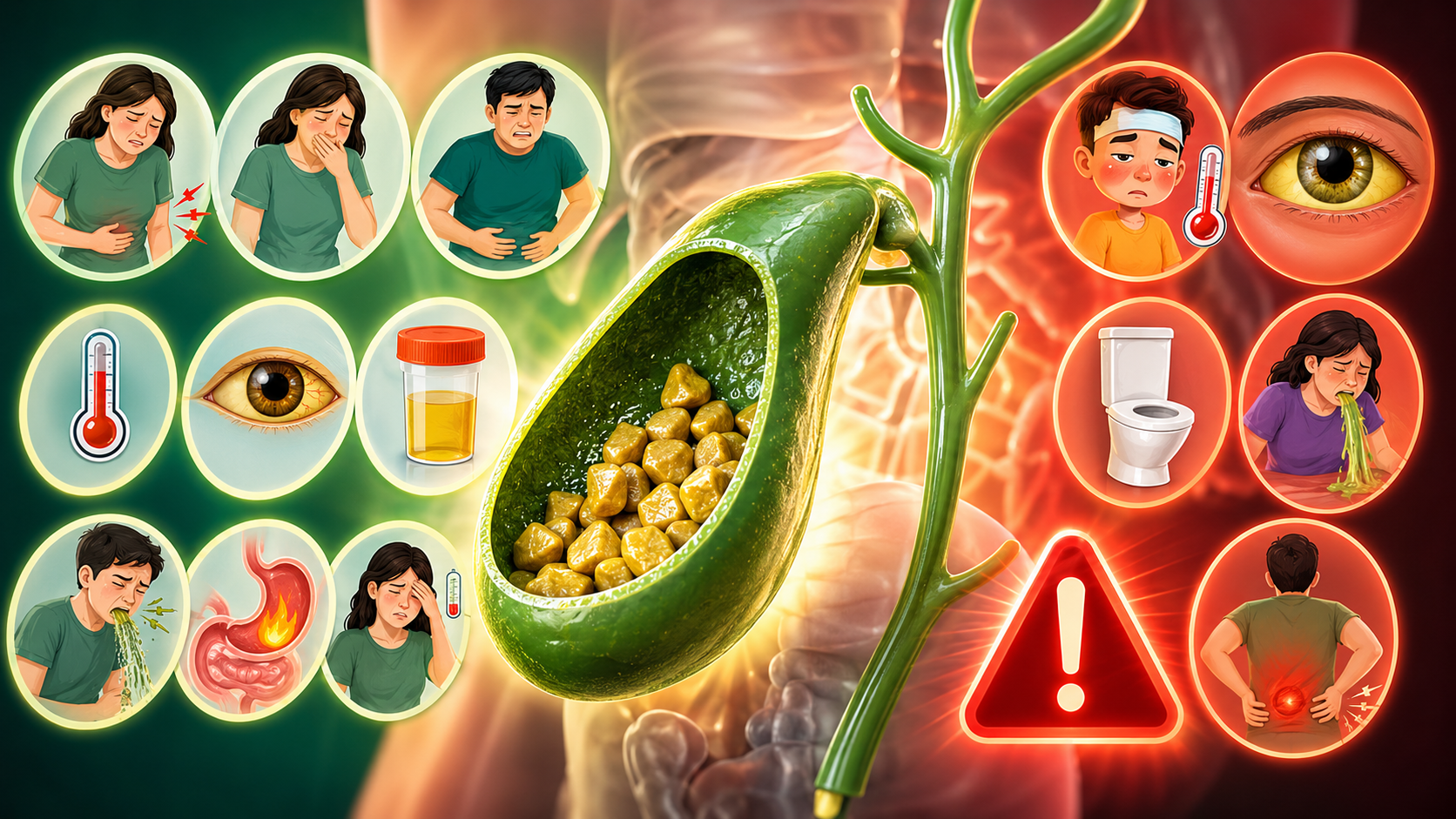
Go to the nearest emergency room immediately if gallstone symptoms occur with:
- Fever or shaking chills
- Yellowing of the skin or eyes (jaundice)
- Dark urine
- Gray or clay-colored stools
- Persistent vomiting
- Severe abdominal pain lasting more than 5–6 hours
- Chest pressure with shortness of breath
- Fainting, confusion, or sudden weakness
These symptoms may indicate:
- Acute cholecystitis
- Bile duct obstruction
- Gallstone pancreatitis
- Ascending cholangitis
- Severe systemic infection
These conditions can become life-threatening without prompt treatment.
What Do Gallstone Symptoms Feel Like? (The Anatomy of an Attack)
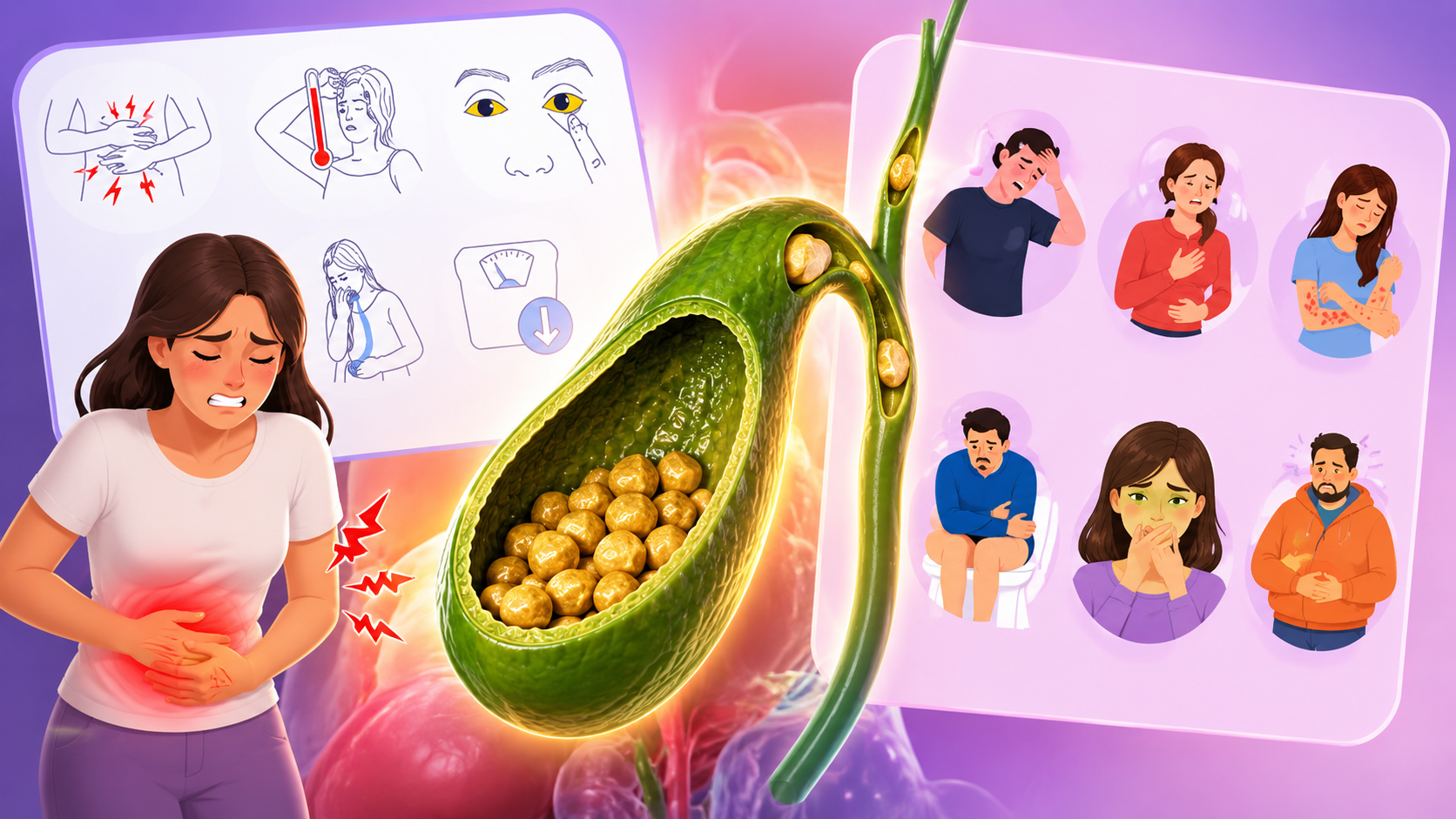
The Nature of Biliary Colic Pain
A classic gallbladder attack is medically known as biliary colic.
Despite the term “colic,” the pain is usually not wave-like or crampy.
Instead, patients commonly describe:
- A crushing pressure
- Tight squeezing beneath the ribs
- A deep internal ache
- Sharp upper abdominal fullness
- A gripping sensation that steadily intensifies
The pain typically builds within 15–30 minutes and then remains constant.
Unlike intestinal gas pain, it does not move around unpredictably.
Many patients say the discomfort feels “stuck” deep inside the upper abdomen.
Why Gallstones Cause This Type of Pain
The gallbladder stores bile, a digestive fluid made by the liver.
After eating—especially meals rich in fat—the small intestine releases a hormone called cholecystokinin (CCK). This hormone signals the gallbladder to contract forcefully and release bile into the digestive tract.
When a gallstone blocks the outlet:
- The gallbladder keeps squeezing
- Bile cannot escape properly
- Internal pressure rises rapidly
- The gallbladder wall stretches painfully
This mechanical obstruction creates the intense pain characteristic of a gallbladder attack.
A Simple Analogy
Doctors sometimes compare this process to squeezing a water balloon with a blocked opening.
Pressure builds internally with nowhere to go.
That trapped pressure is what creates the severe discomfort many patients experience during biliary colic.
The Fatty Food Trigger
Why High-Fat Meals Commonly Trigger Attacks
Gallstone attacks frequently occur after meals containing:
- Fried food
- Butter-heavy dishes
- Pizza
- Cheeseburgers
- Cream sauces
- Processed fast food
- Large holiday dinners
Fat digestion requires a strong release of bile.
The more fat consumed, the harder the gallbladder contracts.
If a stone blocks bile flow during that contraction, pressure rapidly accumulates.
Why Gallbladder Attacks Often Happen at Night
Many patients are surprised that gallbladder attacks commonly begin late in the evening or during sleep.
Several physiological factors may contribute:
1. Heavy Evening Meals
Dinner is often the largest and fattiest meal of the day.
This stimulates aggressive gallbladder contraction.
2. Slower Overnight Digestion
Digestive motility naturally slows during sleep, potentially prolonging gallbladder stimulation.
3. Position Changes and Stone Movement
This is one of the most overlooked mechanical explanations.
When standing upright, the gallbladder sits in a more vertical orientation. Small gallstones may remain pooled at the bottom of the gallbladder without causing obstruction.
However, when lying flat at night:
- The gallbladder shifts into a more horizontal position
- Free-floating stones may roll toward the gallbladder neck (infundibulum)
- Stones can become temporarily wedged near the cystic duct opening
This positional shift may explain why some patients fall asleep feeling normal but wake suddenly with severe pain several hours later.
Gallbladder Pain Mapping: Where Does It Hurt?
The Primary Pain Zone
The most common gallbladder pain location is:
- The upper right abdomen
- Directly beneath the right rib cage
- The center upper abdomen (epigastrium)
Some patients feel pain closer to the breastbone, while others experience pain farther toward the right flank.
Why the Pain Feels Deep
Gallbladder pain is usually visceral, meaning it originates from internal organs rather than muscles or skin.
Patients often describe:
- Deep pressure
- Internal tightness
- Fullness beneath the ribs
- A fist-like squeezing sensation
This differs from acid reflux, which usually creates a burning sensation closer to the chest or throat.
Referred Pain Pathways: Why Your Shoulder and Back Hurt
How Gallbladder Pain Travels
Gallbladder inflammation may irritate the nearby diaphragm and surrounding nerves, especially the phrenic nerve.
The phrenic nerve shares pathways with regions involving:
- The right shoulder
- Upper back
- Shoulder blade area
- Neck region
As a result, the brain may “misread” the pain source.
This phenomenon is called referred pain.
Common Referred Pain Locations
Gallbladder attacks may produce pain:
- Beneath the right shoulder blade
- Between the shoulder blades
- In the upper back
- Along the right shoulder
Some patients notice the back pain more strongly than the abdominal discomfort itself.
Why Gallbladder Back Pain Feels Different From Muscle Pain
Gallbladder-related back pain often:
- Appears suddenly
- Happens after meals
- Occurs simultaneously with nausea or bloating
- Feels deep rather than superficial
- Does not improve much with stretching
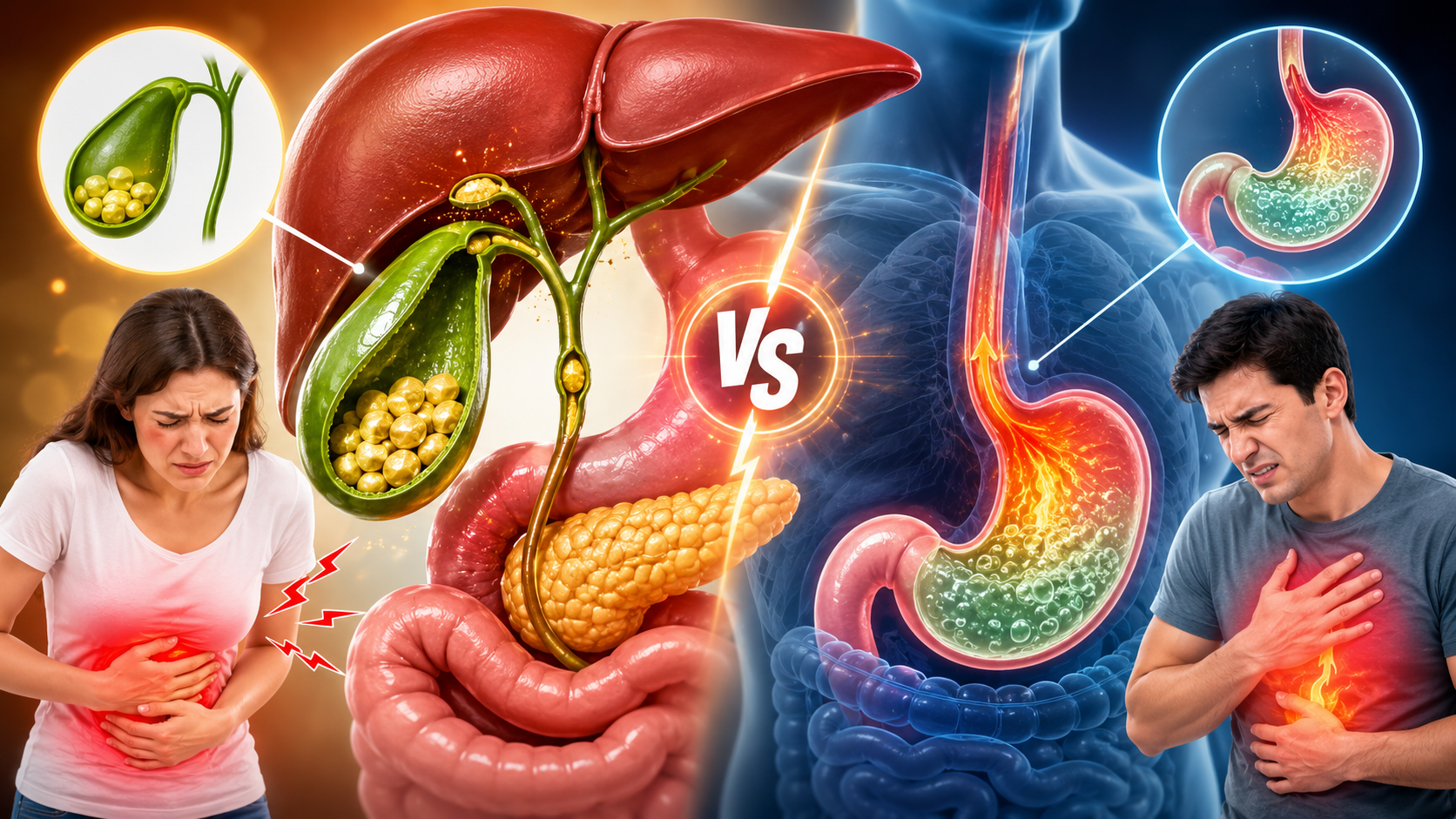
The Symptom Differential: Is It a Gallbladder Attack, GERD, or a Heart Attack?
Why This Distinction Is So Important
Upper abdominal pain and chest pressure can feel extremely alarming.
Many patients cannot initially tell whether they are experiencing:
- A gallbladder attack
- Acid reflux
- A heart attack
Because heart attacks can become fatal within minutes, differentiating symptoms safely is critical.
Gallbladder Attack vs Acid Reflux vs Heart Attack
| Condition | Typical Pain Pattern | Radiation | Trigger | Duration | Common Associated Symptoms |
| Gallbladder Attack | Steady upper right or center abdominal pressure | Right shoulder/back | Fatty meals | 1–5 hours | Nausea, bloating, vomiting |
| Acid Reflux (GERD) | Burning behind breastbone | Toward throat | Spicy or acidic foods | Variable | Sour taste, regurgitation |
| Heart Attack | Crushing chest pressure | Left arm, jaw, neck | Often unrelated to meals | Persistent | Sweating, shortness of breath, dizziness |
Table data synthesized based on clinical diagnostic principles from the American Heart Association (AHA) and the American College of Gastroenterology (ACG).
Important Safety Warning
Heart attacks do not always present “classically.”
Women, older adults, and diabetic patients may experience atypical symptoms including:
- Upper abdominal discomfort
- Nausea
- Fatigue
- Back pain
- Mild chest pressure
If symptoms feel severe, sudden, or associated with breathing difficulty, seek emergency care immediately.
Never assume chest pressure is “just gallstones.”
The Gallstone Symptom Timeline: When Does It Become an Emergency?
The Typical Attack Window (1–5 Hours)
Most uncomplicated gallbladder attacks last:
- 1 to 5 hours
This usually means the stone temporarily blocked bile flow before shifting away from the duct opening.
The pain often fades suddenly once pressure decreases.
Why Temporary Relief Does Not Mean the Problem Is Gone
Even if the attack resolves, the gallstones remain inside the gallbladder.
Future episodes may become:
- More frequent
- More painful
- More dangerous
Repeated attacks increase the risk of inflammation and infection.
The 6-Hour Red Line: Acute Cholecystitis
When Pain Lasts Too Long
Pain continuing beyond approximately 5–6 hours may indicate progression into acute cholecystitis, meaning active gallbladder inflammation.
This is no longer simple temporary obstruction.
The gallbladder wall itself may now be inflamed or infected.
What Happens During Acute Cholecystitis
If a stone remains stuck:
- Pressure continues building
- Blood flow decreases
- Inflammation worsens
- Bacterial infection risk rises
Without treatment, complications may include:
- Tissue necrosis
- Gallbladder rupture
- Abscess formation
- Sepsis
- Life-threatening infection
🚨 What NOT to Do During an Attack
Important Safety Warning:
While waiting to see whether symptoms improve within the first several hours, never apply a hot compress directly to the right upper abdomen. Heat may worsen acute inflammation and potentially increase tissue injury in an already inflamed gallbladder.
Additionally:
- Avoid taking excessive doses of strong pain medications
- Avoid masking severe symptoms before emergency evaluation
- Avoid alcohol
- Avoid large meals
- Avoid internet “gallbladder flushes”
Heavy oil-based cleanses may potentially worsen obstruction in patients with active gallstones.
Emergency Gallbladder Symptoms
Fever and Chills
Fever suggests possible infection involving:
- The gallbladder
- Bile ducts
- Pancreas
Chills combined with abdominal pain should never be ignored.
Jaundice (Yellowing of the Eyes or Skin)
Jaundice occurs when bilirubin builds up in the bloodstream due to bile obstruction.
This may suggest a stone lodged in the common bile duct.
Dark Urine and Pale Stools
Blocked bile flow alters normal pigment metabolism.
Patients may notice:
- Tea-colored urine
- Gray stool
- Pale or clay-colored bowel movements
These findings require prompt medical evaluation.
Persistent Vomiting
Repeated vomiting may signal:
- Severe inflammation
- Gallstone pancreatitis
- Duct obstruction
- Significant digestive irritation
Silent Gallstones: When There Are No Symptoms
Can You Have Gallstones Without Knowing It?
Yes.
Many individuals have gallstones for years without symptoms.
These are called silent gallstones.
How Silent Gallstones Are Discovered
Silent gallstones are frequently identified accidentally during:
- Abdominal ultrasounds
- CT scans
- Liver imaging
- Routine medical evaluations
Do Silent Gallstones Always Require Surgery?
Not necessarily.
Treatment decisions depend on:
- Symptoms
- Stone size
- Complications
- Overall medical condition
Some asymptomatic patients never develop major problems.
Special Populations: Hidden Symptoms You Shouldn’t Ignore
Gallstone Symptoms During Pregnancy
Pregnancy increases gallstone risk because hormonal changes slow gallbladder emptying.
Symptoms may mimic:
- Morning sickness
- Heartburn
- Pregnancy-related bloating
- Upper abdominal pressure
This overlap may delay diagnosis.
Elderly Adults May Have Subtle Symptoms
Older adults sometimes develop severe gallbladder infections without dramatic pain.
Instead, symptoms may include:
- Fatigue
- Mild fever
- Confusion
- Weakness
- Loss of appetite
This can make diagnosis more difficult.
Diabetes and Reduced Pain Sensation
Long-standing diabetes may damage nerves through neuropathy.
As a result, some diabetic patients experience:
- Blunted pain sensation
- Delayed recognition of infection
- Less obvious abdominal tenderness
This may allow severe inflammation to progress silently.
🔗 Internal Link Opportunity:
“Real Gallbladder Stones: What They Actually Look Like vs. Online Cleansing Myths.”
How Doctors Diagnose Gallstone Symptoms
Physical Examination
Doctors assess:
- Pain location
- Abdominal guarding
- Tenderness beneath the ribs
- Fever
- Signs of jaundice
Important Safety Note About Murphy’s Sign
Important Safety Note:
Murphy’s sign should only be evaluated by a trained healthcare professional. Patients should never press forcefully into their own abdomen during severe pain attacks, as improper pressure may aggravate inflammation or worsen complications.
Ultrasound Imaging
Ultrasound is typically the first-line imaging test for gallstones.
Doctors evaluate for:
- Gallstones
- Sludge
- Gallbladder wall thickening
- Fluid surrounding the gallbladder
- Dilated bile ducts
- Acoustic shadowing
Blood Tests
Bloodwork may help identify:
- Infection
- Elevated bilirubin
- Liver inflammation
- Pancreatic involvement
Frequently Asked Questions (FAQ)
Can you have gallstones and no symptoms at all?
Yes. Many people have silent gallstones that never cause pain or complications. These stones are often discovered accidentally during imaging for unrelated conditions.
How do I know if my upper back pain is from gallstones?
Gallbladder-related back pain usually occurs alongside upper abdominal discomfort, especially after eating fatty meals. The pain often appears beneath the right shoulder blade or between the shoulder blades.
Does drinking water stop a gallbladder attack?
Hydration supports overall digestive health, but drinking water alone will not usually stop an active gallbladder attack once a stone obstructs bile flow.
Can gallstone pain mimic a heart attack?
Yes. Gallbladder pain can sometimes resemble chest pressure associated with cardiac conditions. Because heart attacks may present atypically, emergency evaluation is important if symptoms feel severe or concerning.
Are all gallstones treated with surgery?
Not always. Some silent gallstones may not require immediate treatment. Management depends on symptoms, complications, and overall health status.
Conclusion
Gallstone symptoms may range from mild digestive discomfort to severe abdominal pain requiring emergency treatment.
Classic warning signs include:
- Upper right abdominal pain
- Pressure after fatty meals
- Nausea
- Back or shoulder pain
- Bloating
- Vomiting
However, prolonged attacks accompanied by fever, jaundice, dark urine, persistent vomiting, or severe pain lasting more than several hours may indicate dangerous complications such as acute cholecystitis or bile duct obstruction.
Recognizing these symptom patterns early may help patients seek timely medical evaluation before serious complications develop.