Gallstones Symptoms: The Complete Medical Guide to Recognizing Gallbladder Pain Before It Becomes Dangerous
Medical Disclaimer: This article is intended for educational purposes only and should not replace professional medical evaluation, diagnosis, or emergency care. Persistent abdominal pain, chest pressure, fever, jaundice, or breathing difficulty requires urgent medical assessment.
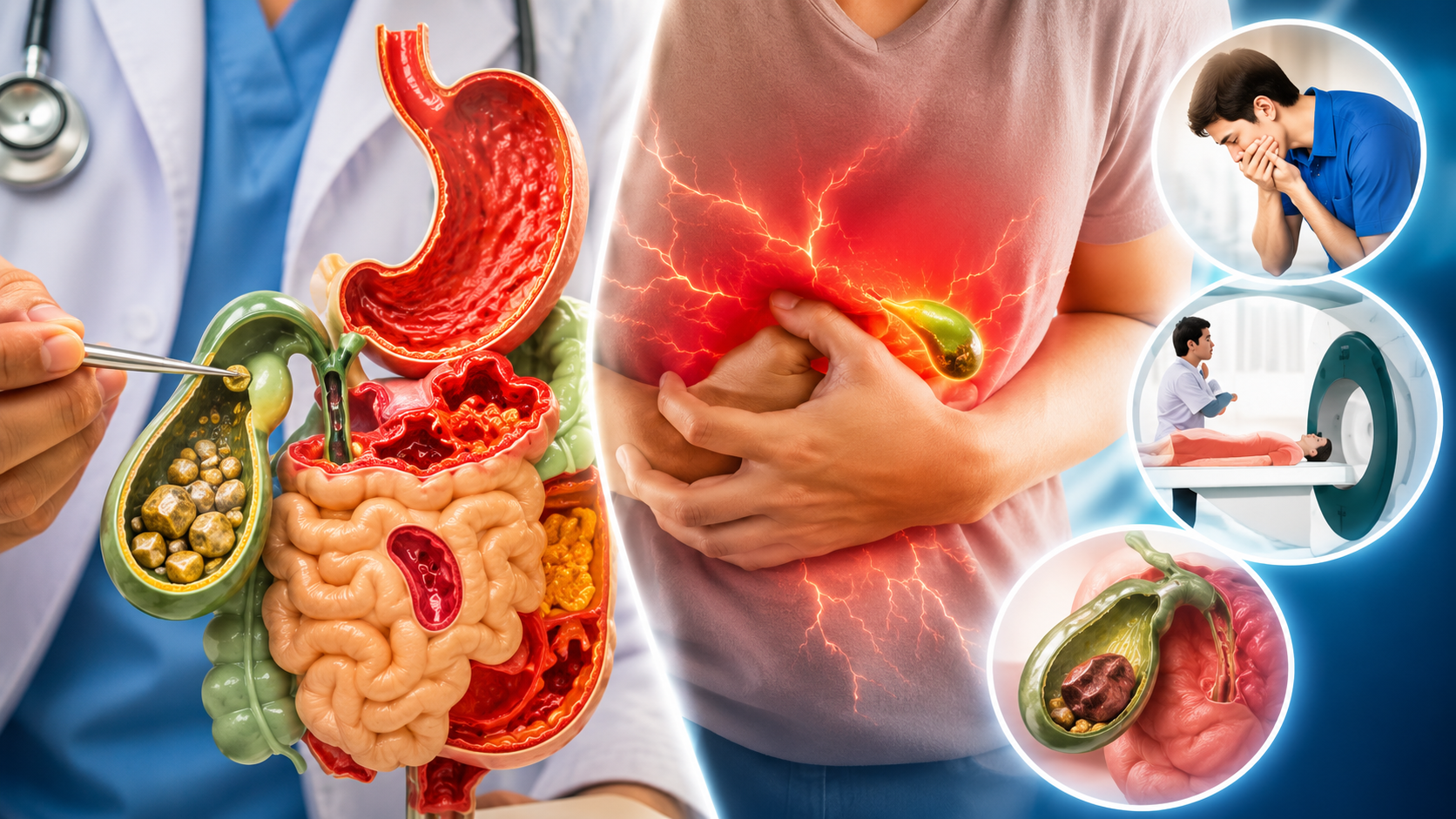
Gallstones symptoms often begin quietly. Many people first notice occasional bloating after dinner, unexplained nausea, or a strange pressure beneath the right ribs that feels more like “indigestion” than a true medical problem. Others experience sudden attacks so intense they mistake them for a heart attack.
What makes gallbladder disease particularly difficult is that symptoms may remain vague for months or even years before a dangerous complication develops. A small stone can sit silently inside the gallbladder for a long time, then suddenly shift into a narrow bile duct after a fatty meal, triggering severe pain, inflammation, or infection.
This medically reviewed guide explains what gallstones feel like, why attacks often happen at night, how to distinguish gallbladder pain from acid reflux or cardiac emergencies, and when symptoms require immediate emergency care.
Important Safety Note Before Reading
Upper abdominal pain after eating is not always caused by gallstones.
In older adults, women, and people with diabetes, a heart attack may present as:
- Upper stomach pressure
- Indigestion-like discomfort
- Nausea
- Sweating
- Fatigue
- Shortness of breath
Critical Clinical Warning
A heavy, high-fat meal increases blood flow demands throughout the digestive system and may unintentionally trigger severe angina or a cardiac event in individuals with underlying cardiovascular disease.
If abdominal pressure occurs alongside:
- Chest heaviness
- Jaw pain
- Sweating
- Weakness
- Dizziness
- Breathlessness
seek emergency evaluation immediately and do not assume it is “just gallstones.”
What Are Gallstones and Why Do They Cause Symptoms?
Gallstones are hardened crystal-like deposits that form inside the gallbladder.
The gallbladder is a small digestive organ located beneath the liver. Its role is to store bile, a digestive fluid that helps break down fats after meals.
Bile contains:
- Cholesterol
- Bile salts
- Bilirubin
- Lecithin
- Water
When the chemical balance inside bile becomes unstable, microscopic crystals begin forming.
Over time:
- Tiny cholesterol particles cluster together
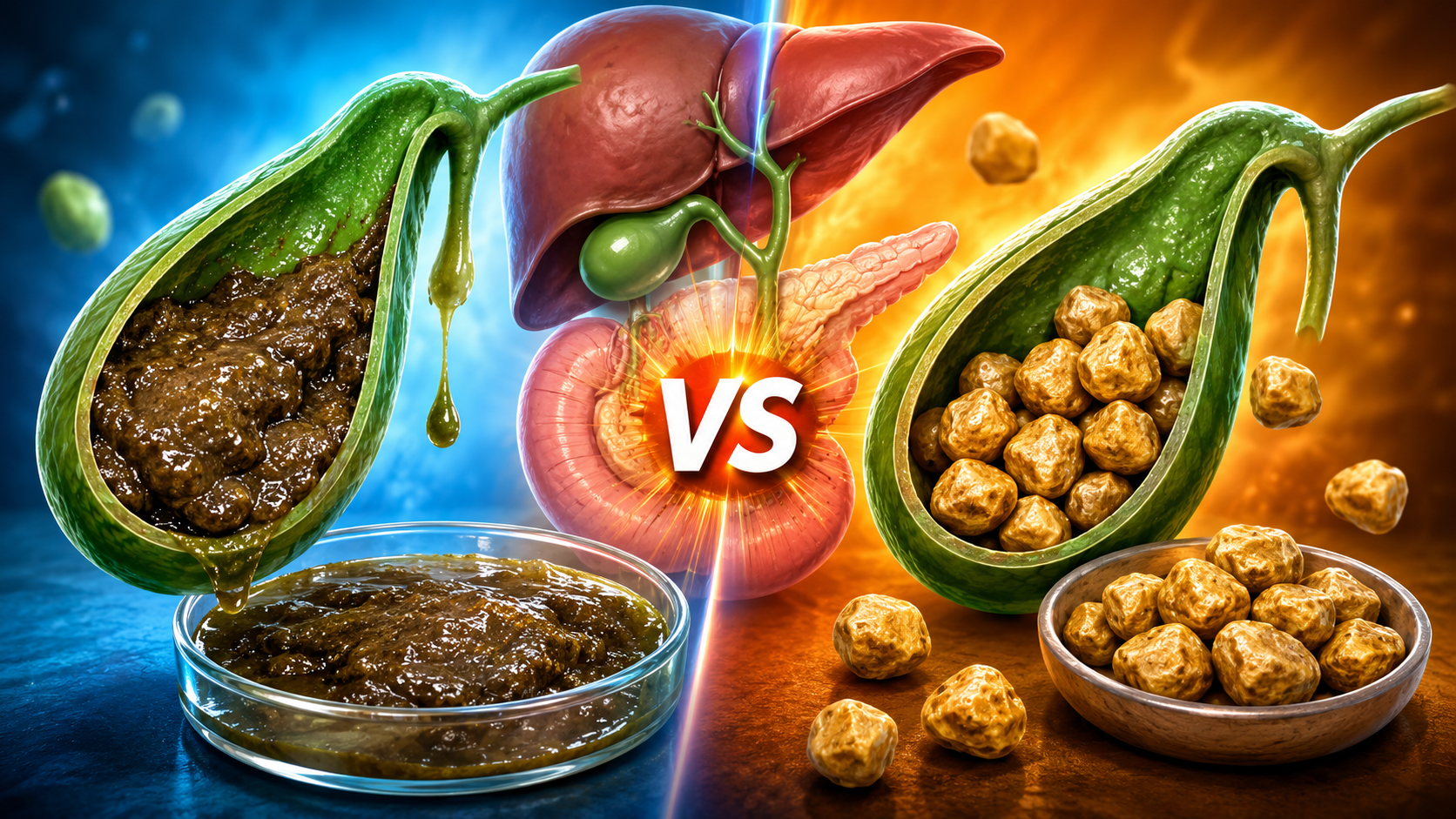
- Thick biliary sludge develops
- Hardened stones gradually form
Some stones remain harmless forever. Others trigger symptoms when they block the normal flow of bile.
The Silent Majority: Why Many Gallstones Cause No Symptoms
One of the most confusing aspects of gallbladder disease is that many people never realize they have stones.
These are called silent gallstones.
Silent stones:
- Stay inside the gallbladder pouch
- Do not obstruct bile flow
- Cause little or no inflammation
Many are discovered accidentally during:
- Pregnancy ultrasounds
- CT scans
- Liver imaging
- Routine abdominal studies
In asymptomatic cases, doctors commonly recommend watchful waiting instead of immediate surgery because many silent stones never become dangerous.
The mere presence of gallstones does not automatically mean treatment is necessary.
Symptoms usually begin only when a stone temporarily blocks a duct.
The Mechanics of a “Gallbladder Attack” (Biliary Colic)
The classic gallstone attack is called biliary colic.
This occurs when a stone becomes trapped near the gallbladder outlet or cystic duct while the gallbladder contracts.
After eating fatty food, the digestive hormone cholecystokinin (CCK) signals the gallbladder to squeeze bile into the intestine.
If a stone blocks the duct during this contraction:
- Pressure rapidly builds inside the gallbladder
- Bile becomes trapped
- The muscular wall stretches painfully
- Inflammation increases
Unlike intestinal gas cramps, biliary colic often feels:
- Deep
- Steady
- Internal
- Difficult to pinpoint precisely
Many patients describe it as:
“A fist pressing underneath my ribs.”
The pain typically rises gradually, peaks within an hour, and may persist for several hours before easing.
Visual Recommendation: A labeled diagram showing a gallstone blocking the cystic duct during gallbladder contraction.
Common Gallstones Symptoms: How to Recognize the Pain
Gallstones symptoms vary dramatically depending on:
- Stone size
- Stone mobility
- Degree of blockage
- Presence of infection
- Involvement of nearby organs
Some attacks resolve naturally. Others progress into emergencies requiring surgery or hospitalization.
The Classic RUQ (Right Upper Quadrant) Pain
The most recognizable symptom is pain in the right upper quadrant (RUQ) of the abdomen.
This discomfort is usually located:
- Beneath the right rib cage
- Near the upper middle abdomen
- Deep behind the abdominal wall
Unlike sharp intestinal cramps, gallbladder pain is commonly:
- Steady
- Pressure-like
- Squeezing
- Non-cramping
Attacks often begin:
- After fatty meals
- Late at night
- Several hours after dinner
Foods frequently associated with attacks include:
- Fried foods
- Pizza
- Bacon
- Heavy cream sauces
- Cheeseburgers
- Fast food meals
Patients often notice that changing posture, passing gas, or using the bathroom does not relieve the discomfort.
Why Gallstone Attacks Frequently Happen at Night
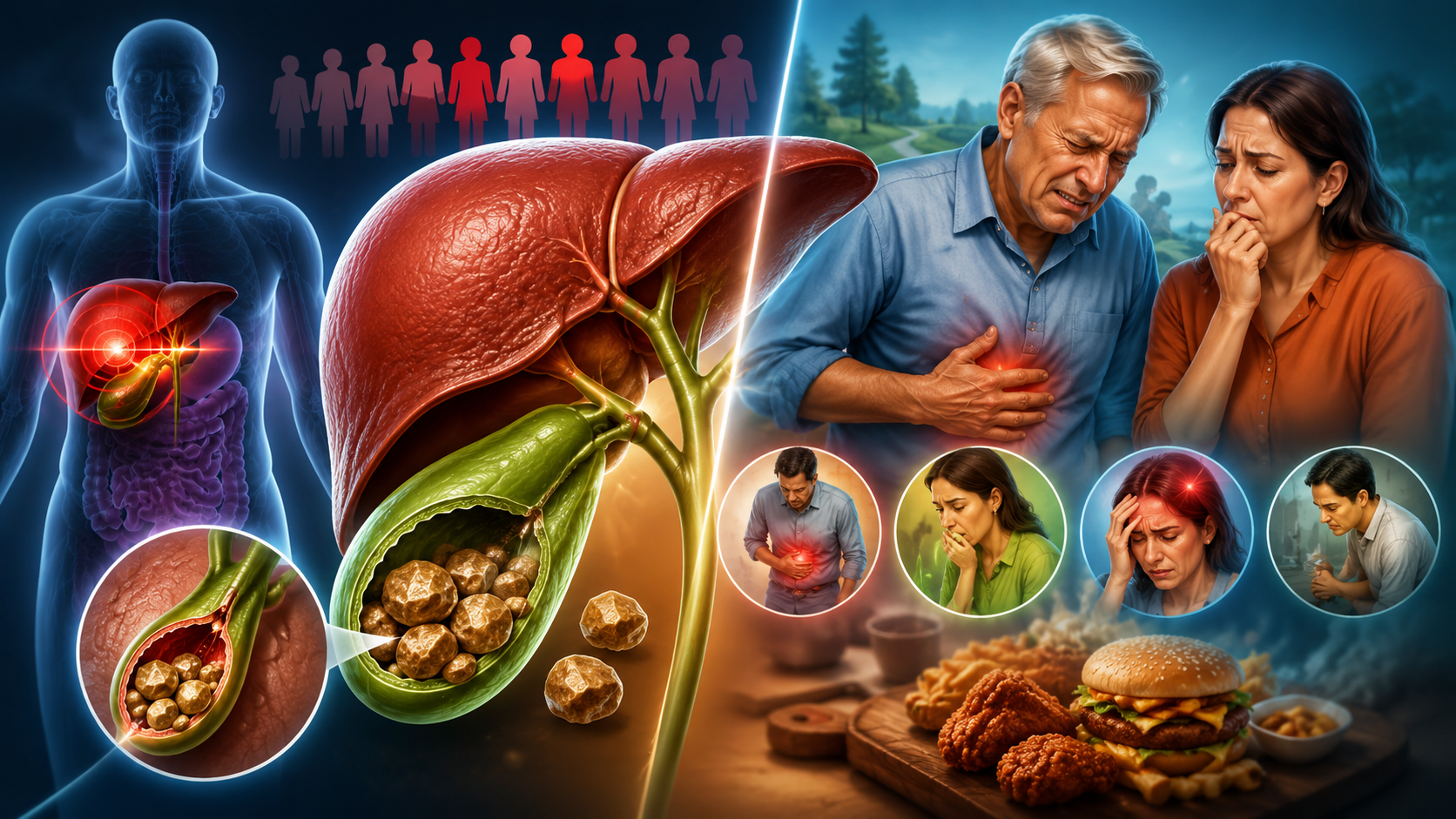
Nighttime gallbladder attacks are extremely common.
Several physiological factors help explain this pattern.
1. Heavy Evening Meals
Dinner is often the largest and fattiest meal of the day.
This stimulates strong gallbladder contractions for hours afterward.
2. Slower Overnight Digestion
Digestive motility naturally slows during sleep, which may contribute to temporary bile stagnation.
3. The “Gravity Effect”
One of the most clinically interesting explanations involves body positioning.
While standing upright:
- Stones may rest harmlessly at the bottom of the gallbladder
When lying flat:
- The gallbladder shifts orientation
- Loose stones may drift toward the narrow exit neck
- Temporary blockage becomes more likely
This mechanical explanation closely matches real-world patient experiences of waking suddenly with severe pain around midnight or early morning.
Referred Pain: Why Your Shoulder and Back Hurt
Gallbladder attacks often create pain far away from the gallbladder itself.
This is called referred pain.
Common referred pain locations include:
- Right shoulder blade
- Between the shoulder blades
- Upper back
- Right shoulder
This happens because inflammation near the diaphragm irritates the phrenic nerve, which shares neurological pathways with the shoulder region.
The brain interprets the signal incorrectly, creating pain in distant areas.
Many patients initially believe they injured a muscle before realizing the problem originates in the gallbladder.
Visual Recommendation: Pain mapping infographic showing the RUQ and referred pain pathway toward the scapula and shoulder.
🔗 Internal Link Opportunity: “Cholelithiasis: The Clinical Guide to Gallstone Pathophysiology”
Non-Painful Symptoms: The Digestive Red Flags Many People Ignore
Not every patient experiences dramatic pain immediately.
Some develop subtle digestive symptoms for months before their first true attack.
These symptoms may include:
- Bloating after meals
- Excessive burping
- Nausea
- Fat intolerance
- Feeling unusually full after eating
- Mild upper abdominal pressure
Because these symptoms overlap heavily with GERD and gastritis, many patients misinterpret early gallbladder disease as “simple acid reflux.”
Gallstones vs GERD: Why People Confuse Them
This confusion is extremely common.
Gallstones More Commonly Cause:
- Deep pressure beneath the right ribs
- Pain after fatty foods
- Shoulder blade radiation
- Nausea
- Symptoms lasting several hours
GERD More Commonly Causes:
- Burning behind the breastbone
- Sour taste in the mouth
- Acid regurgitation
- Symptoms worse when lying flat
- Temporary improvement with antacids
GERD typically produces a burning sensation, while gallbladder pain usually feels deeper and more pressure-like.
Visual Recommendation: Side-by-side infographic comparing GERD pain vs gallbladder pain vs gas pain.
Distinguishing Gallstones From Other Dangerous Conditions
Gallstones share symptoms with several serious medical emergencies.
Recognizing the differences may help patients seek appropriate care more quickly.
Gallstones vs Heart Attack: The Most Dangerous Misdiagnosis
This distinction is medically critical.
Heart attacks do not always cause classic crushing chest pain.
Women, older adults, and diabetic patients may instead experience:
- Upper abdominal pressure
- Nausea
- Indigestion-like discomfort
- Sweating
- Weakness
- Shortness of breath
Because gallbladder attacks also occur after heavy meals, many patients mistakenly assume the pain is “digestive.”
Critical Clinical Note
A heavy meal can simultaneously:
- Trigger gallbladder contraction
- Increase cardiovascular strain
This means symptoms after dinner should never automatically be blamed on gallstones alone.
If symptoms include:
- Chest heaviness
- Jaw pain
- Breathlessness
- Sweating
- Dizziness
- Sudden weakness
emergency evaluation is essential.
Visual Recommendation: Decision matrix infographic — “Gallstones vs GERD vs Heart Attack.”
Emergency Warning Signs: When Gallstones Become Dangerous
Most uncomplicated gallbladder attacks eventually improve.
However, persistent symptoms may indicate severe complications.
The “5-Hour Rule” and Red Flag Symptoms
Typical biliary colic usually improves within several hours.
Pain lasting longer than approximately 5–6 hours may suggest:
- Acute cholecystitis
- Duct obstruction
- Pancreatitis
- Infection
Seek emergency care immediately if symptoms include:
- Fever
- Chills
- Jaundice
- Persistent vomiting
- Severe constant pain
- Dark urine
- Pale stools
These signs suggest that bile flow may be blocked or infection is developing.
What NOT to Do During a Gallbladder Attack
While waiting for medical evaluation:
- Do not apply strong heat to the abdomen
- Avoid internet “gallbladder flushes”
- Avoid taking excessive anti-inflammatory medication
- Do not ignore persistent pain overnight
Why Heating Pads Can Be Dangerous
Applying intense heat to an inflamed gallbladder may worsen blood vessel dilation and inflammation.
In severe infections, this could theoretically increase the risk of tissue injury or rupture.
Understanding Jaundice and Bile Duct Obstruction
When a stone blocks the common bile duct:
- Bilirubin builds up in the bloodstream
- Skin and eyes may turn yellow
- Urine darkens
- Stools lose their normal brown color
This condition, called choledocholithiasis, can rapidly progress into infection or pancreatitis.
🔗 Internal Link Opportunity: “Gallbladder Red Flags: When Abdominal Pain Requires Emergency Evaluation”
Risk Factors: Who Is Most Likely to Develop Gallstones?
Gallstones develop through a combination of:
- Hormones
- Genetics
- Metabolism
- Diet
- Gallbladder motility
The “4 Fs” Framework
Doctors sometimes summarize classic gallstone risk trends using the “4 Fs”:
- Female
- Forty
- Fertile
- Fat
This is not a rigid rule but rather an epidemiological pattern.
Female
Estrogen increases cholesterol secretion into bile.
Forty
Risk generally rises with age.
Fertile
Pregnancy hormones slow gallbladder emptying.
Fat
Obesity increases cholesterol saturation and metabolic dysfunction.
Rapid Weight Loss and Crash Dieting
Rapid weight loss is one of the strongest modern gallstone triggers.
When the body burns fat aggressively:
- The liver releases extra cholesterol into bile
- Bile becomes oversaturated
- Crystals form more easily
Clinical digestive observations suggest that sustained weight loss exceeding approximately 1.5 kg (3.3 lbs) weekly may significantly increase risk in susceptible individuals.
Intermittent Fasting and the “Gallbladder Freeze” Mechanism
Intermittent fasting itself does not automatically cause gallstones in healthy individuals.
However, prolonged fasting without adequate fat intake may reduce normal gallbladder contractions in susceptible patients.
Clinical Observation
Clinical observations suggest that prolonged fasting without fat intake limits the release of CCK, leading to biliary stasis, which may be particularly risky in patients with pre-existing sludge or stones.
Without regular gallbladder emptying:
- Bile sits stagnant longer
- Sludge thickens
- Crystals accumulate
- Stone formation accelerates
Some specialists refer to this process informally as the “Gallbladder Freeze” mechanism.
Moderate healthy fats during meals may help support physiologic bile flow.
How Gallstones Are Diagnosed
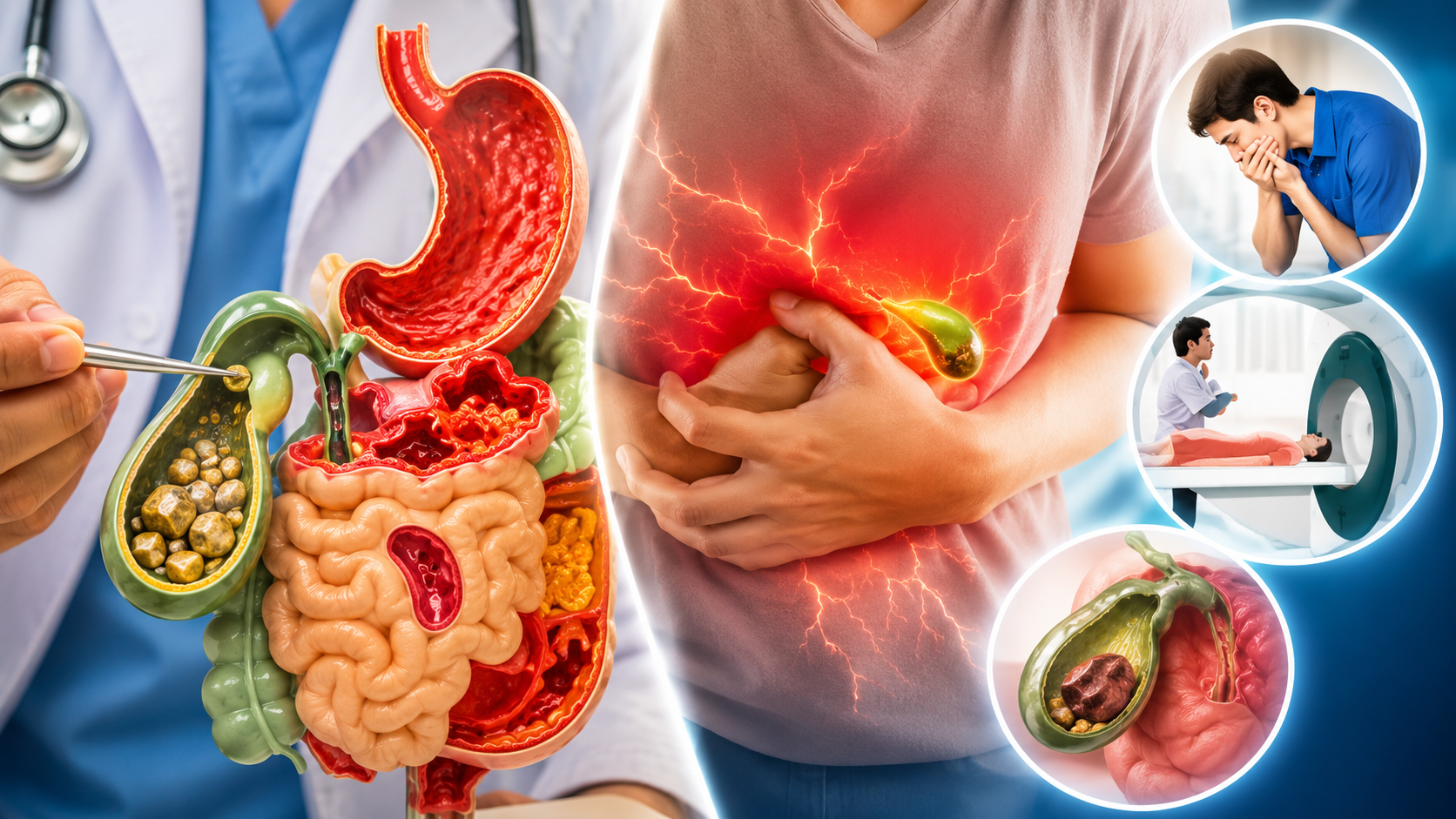
Doctors typically diagnose gallstones using imaging studies and laboratory testing.
Ultrasound: The Gold Standard
Abdominal ultrasound is usually the first imaging test ordered.
Ultrasound works by bouncing sound waves off structures inside the body.
Gallstones appear as:
- Bright reflective objects
- Dense structures casting dark “acoustic shadows”
Ultrasound is:
- Fast
- Non-invasive
- Radiation-free
- Highly effective for most gallstones
HIDA Scan and Functional Gallbladder Problems
Sometimes patients experience gallbladder pain despite normal ultrasounds.
In these cases, doctors may order a HIDA scan.
This test measures how effectively the gallbladder empties.
A very low gallbladder ejection fraction may suggest biliary dyskinesia, a condition where the gallbladder malfunctions even without visible stones.
Modern Treatment Options
Treatment depends on:
- Symptom severity
- Stone location
- Frequency of attacks
- Presence of complications
Watchful Waiting for Silent Stones
Silent gallstones often require no immediate intervention.
Doctors may simply monitor symptoms over time.
Laparoscopic Cholecystectomy: The Modern Gold Standard
For symptomatic gallstones, the most common treatment is laparoscopic cholecystectomy.
This minimally invasive surgery removes the gallbladder entirely through several tiny incisions.
Modern laparoscopic surgery generally involves:
- Short hospital stays
- Faster recovery
- Smaller scars
- Lower complication rates compared with older open surgery
Many patients return to routine activities within 1–2 weeks depending on recovery progress and medical complexity.
Visual Recommendation: Illustration showing the four-incision laparoscopic “keyhole surgery” technique.
Non-Surgical Treatment: Ursodiol
In select situations, doctors may use ursodeoxycholic acid (Ursodiol) to dissolve small cholesterol stones.
However:
- Treatment often requires months or years
- Stones may recur
- Success rates remain limited
This approach is generally reserved for carefully selected patients who are not ideal surgical candidates.
Frequently Asked Questions (FAQ)
What is the most common symptom of gallstones?
The most common symptom is steady pain beneath the right ribs, often occurring after fatty meals and sometimes radiating into the shoulder blade or upper back.
Can gallstones cause symptoms without severe pain?
Yes. Some patients primarily experience bloating, nausea, fat intolerance, or digestive discomfort before developing major attacks.
Can gallstones go away naturally?
Tiny cholesterol crystals or sludge may occasionally clear spontaneously, but larger hardened stones usually do not dissolve naturally.
Why does gallbladder pain radiate into the shoulder?
Inflammation near the diaphragm irritates the phrenic nerve, which shares neurological pathways with the shoulder region.
Do all gallstones require surgery?
No. Silent gallstones often require only monitoring. Surgery is usually recommended when symptoms become recurrent or complications develop.
Conclusion
Gallstones symptoms can range from mild digestive discomfort to severe medical emergencies involving infection, pancreatitis, and bile duct obstruction.
Because gallbladder pain frequently imitates:
- Acid reflux
- Gastritis
- Muscle strain
- Indigestion
- Even heart attacks
many patients delay proper evaluation.
Understanding:
- The classic RUQ pain pattern
- Referred shoulder pain
- The nighttime “Gravity Effect”
- Emergency red flags
- The difference between GERD and biliary colic
- Why persistent pain becomes dangerous
can help patients recognize when medical care is necessary.
Persistent abdominal pain, jaundice, fever, vomiting, chest pressure, or breathing difficulty should always be evaluated by a qualified healthcare professional rather than self-diagnosed online.