Hashimotos: Everything You Wanted to Know About This Life-Changing Thyroid Condition
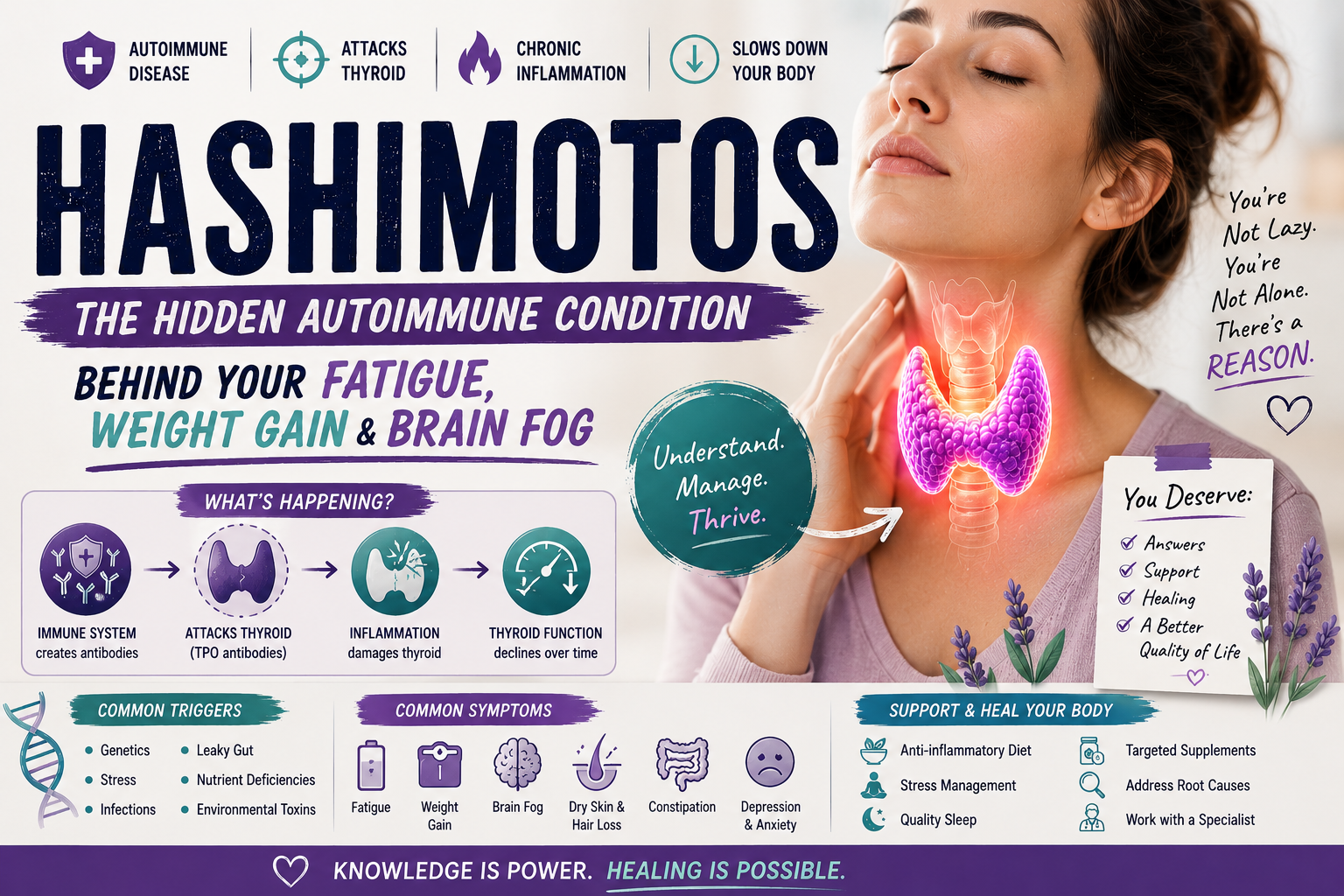
Hashimotos: Starting Your Journey Toward Understanding and Wellness
If you've typed "hashimotos" into a search bar today, you're probably looking for answers. Maybe you've just received a diagnosis that feels overwhelming and unfamiliar. Maybe you've been living with unexplained symptoms for years and a friend mentioned this name. Maybe someone in your family has it and you want to understand what they're going through. Wherever you're starting from, you've come to the right place.
Hashimotos — formally known as Hashimoto's thyroiditis or Hashimoto's disease — is one of the most common autoimmune conditions on the planet, yet it remains one of the most misunderstood. This guide is written in plain language, without medical jargon barriers, to give you a genuine, comprehensive understanding of what Hashimotos is, why it happens, how it affects daily life, what treatments are available, and how people with this condition build lives of genuine vitality and wellness.
What Exactly Is Hashimotos?
Hashimotos is a condition in which the immune system — the body's defense network — makes a critical error. Instead of limiting its attacks to outside invaders like bacteria and viruses, it begins attacking the thyroid gland: a small, butterfly-shaped gland at the base of the throat. The thyroid is responsible for producing hormones that regulate virtually every function in the body, from how fast your heart beats to how quickly you burn calories, from your body temperature to your mood.
When the immune system attacks the thyroid over months and years, the gland gradually loses its ability to produce enough of these hormones. The result is hypothyroidism — an underactive thyroid. And because thyroid hormones touch so many body systems, the consequences of this hormonal insufficiency ripple outward into virtually every aspect of how you feel and function.
The name "Hashimoto" comes from Hakaru Hashimoto, a Japanese physician who first described the condition in 1912 after observing four patients with a distinctive form of thyroid disease that included unusual white blood cell infiltration of the gland. His paper was largely ignored for decades, but when the autoimmune nature of the condition was finally confirmed in the 1950s, the scientific community honored his insight by naming the disease after him.

Who Gets Hashimotos? The Risk Landscape
Hashimotos affects an estimated 1–2% of the global population — and this figure likely underestimates the true prevalence, since many cases go undiagnosed. Women are disproportionately affected, comprising roughly 90% of diagnosed cases. The reasons for this female predominance are not fully understood, but estrogen's immunostimulating effects, the unique immunological demands of pregnancy, and sex-specific variations in genes regulating immune tolerance all likely play a role.
The condition can develop at any age, but it most commonly emerges during the reproductive years — between the mid-20s and the 50s. Peak diagnosis ages in women often cluster around puberty, the postpartum period, and perimenopause — all times of significant hormonal flux. In adolescents, Hashimotos can go unrecognized for years because fatigue, weight gain, and mood changes are attributed to the ordinary challenges of teenage life. In older adults, symptoms may be dismissed as normal aging.
Family history is a significant risk factor. If a parent, sibling, or child has Hashimotos, Graves' disease, or another autoimmune condition (such as Type 1 diabetes, rheumatoid arthritis, or lupus), your personal risk is meaningfully elevated. This doesn't mean you will definitely develop Hashimotos — genetics loads the gun, but environment pulls the trigger. What it does mean is that you have good reason for regular thyroid screening.
Other risk factors include: a history of other autoimmune conditions (people with one autoimmune disease often develop others), a history of significant stress or trauma, viral infections (particularly Epstein-Barr virus/mononucleosis), exposure to environmental toxins including certain pesticides and heavy metals, and excessive iodine intake (through supplements or high-iodine diets).
Recognizing Hashimotos: The Symptom Picture
One of the most frustrating things about Hashimotos is how vague and wide-ranging its symptoms can be. Because the thyroid influences so many body systems, thyroid hormone insufficiency produces a sprawling array of complaints that don't obviously point to a single cause. This is a major reason why patients often wait years between the onset of symptoms and a correct diagnosis.
The classic symptoms of hypothyroidism from Hashimotos include: fatigue that doesn't respond to rest or sleep — a profound, bone-deep exhaustion that makes even ordinary activities feel demanding; unexplained weight gain, or difficulty losing weight despite dietary changes; feeling cold when others are comfortable (cold intolerance), with persistently cold hands and feet; constipation; dry, rough skin and brittle nails; coarse or thinning hair, and often loss of the outer third of the eyebrows; puffiness around the eyes and face (especially prominent in the morning); a slow heart rate; depression, low mood, and emotional flatness; difficulty thinking clearly — the famous "brain fog" that includes poor concentration, memory lapses, and slowed mental processing; muscle weakness and aching; and in women, heavy, painful, or irregular menstrual periods.
Not everyone with Hashimotos experiences all of these symptoms, and the severity varies considerably between individuals. In the early stages, when thyroid function is still largely preserved despite the presence of antibodies, symptoms may be subtle or absent. As the disease progresses and thyroid function declines, the symptom burden typically increases. Some people experience dramatic symptom relief with treatment; others continue to struggle with residual symptoms even after their thyroid hormone levels are normalized — a frustrating reality that reflects the systemic inflammatory dimension of the disease beyond thyroid hormone insufficiency alone.
How Is Hashimotos Diagnosed?
Getting a Hashimotos diagnosis requires a few specific blood tests that your doctor may order together or sequentially. Understanding these tests helps you advocate for comprehensive evaluation and makes you a more informed participant in your own care.
The TSH test (thyroid-stimulating hormone) is the standard first-line screening test. TSH is produced by the pituitary gland and tells the thyroid how much hormone to produce. When the thyroid is underperforming, TSH rises — the pituitary working harder to drive a sluggish gland. An elevated TSH is the earliest and most sensitive indicator of developing hypothyroidism. Reference ranges typically span 0.4–4.5 mIU/L, though some experts favor a narrower target range of 1–2.5 mIU/L for treated patients.
Free T4 and Free T3 tests measure the actual thyroid hormones circulating in the blood. These provide a direct picture of thyroid hormone availability. In subclinical hypothyroidism, TSH is elevated but free T4 is still normal. In overt hypothyroidism, free T4 has also fallen below normal range.
Thyroid antibody tests — specifically anti-TPO (anti-thyroid peroxidase) and anti-Tg (anti-thyroglobulin) antibodies — confirm the autoimmune origin of thyroid dysfunction. Elevated anti-TPO antibodies are present in approximately 90–95% of Hashimotos cases and are diagnostic when combined with clinical context. Some patients are "seronegative" — their antibodies are negative despite genuine Hashimotos — and in these cases, thyroid ultrasound becomes particularly important. The characteristic ultrasound appearance of Hashimotos (reduced echogenicity, heterogeneous texture, fibrous stranding) can confirm the diagnosis even without elevated antibodies.
Understanding Your Treatment Options
Once a Hashimotos diagnosis is established, the appropriate treatment depends on your thyroid function status. Not everyone with Hashimotos requires medication immediately — it depends on whether and how much the thyroid is underperforming.
If your thyroid function is still normal (euthyroid Hashimotos): Regular monitoring is typically recommended, with thyroid function tests every 6–12 months. This is not a time to do nothing, however. Proactive lifestyle modifications — anti-inflammatory diet, stress management, sleep optimization, nutritional supplementation (especially selenium and vitamin D) — are appropriate and may slow disease progression.
If you have subclinical hypothyroidism (elevated TSH, normal T4): Whether to start medication depends on your TSH level, whether you have symptoms, your age, cardiovascular risk profile, and whether you are pregnant or planning pregnancy. Treatment is usually recommended when TSH exceeds 10 mIU/L and is strongly recommended for pregnant women at any TSH above 2.5 mIU/L.
If you have overt hypothyroidism (elevated TSH and low T4): Levothyroxine — synthetic T4 hormone — is the standard treatment. It is taken once daily, ideally 30–60 minutes before food and away from calcium, iron, and magnesium supplements. Levothyroxine is generally well tolerated and highly effective. The goal is to normalize TSH and relieve symptoms. Dose requirements vary between individuals and may change over time, particularly during pregnancy, illness, significant weight changes, and as the disease progresses.
Some patients do best on combination T4/T3 therapy — either with both synthetic hormones separately or as desiccated thyroid extract (DTE), a natural preparation derived from porcine thyroid glands that contains both T3 and T4. This approach may be worth exploring if you remain significantly symptomatic on levothyroxine alone with normalized TSH.

Nutrition and Hashimotos: What the Evidence Says
Nutrition is one of the most hotly debated topics in the Hashimotos community, and with good reason — food profoundly influences inflammation, immune function, gut microbiome composition, and micronutrient availability, all of which are relevant to Hashimotos disease activity. The challenge is that dietary research is inherently difficult to conduct with rigorous controls, and many popular dietary claims outrun the available evidence.
What the evidence does support with reasonable confidence includes: an anti-inflammatory dietary pattern (lots of vegetables, fruits, lean proteins, healthy fats, minimal processed foods and sugars) as a foundation for reducing systemic inflammation; selenium-rich foods or supplementation (200 mcg/day) to reduce antibody levels and support thyroid function; adequate iodine — neither deficient nor excessive — for thyroid hormone synthesis; sufficient iron, zinc, magnesium, and vitamin B12 to support energy and neurological function; and vitamin D optimization, given the widespread deficiency in autoimmune populations and vitamin D's known role in immune regulation.
The question of gluten is particularly relevant. There is a documented association between Hashimotos and celiac disease (full celiac affects approximately 4–6% of Hashimotos patients, much higher than the general population's 1%). All Hashimotos patients should be screened for celiac disease. For those with celiac, strict gluten elimination is medically essential. For others, some report symptomatic improvement with gluten-free eating, though the evidence is less clear. A supervised trial is reasonable for those who want to explore it.
The Mental Health Dimension of Living With Hashimotos
The psychological impact of Hashimotos deserves honest acknowledgment. Living with a chronic, often invisible illness — one whose symptoms frequently don't show up on standard lab tests and are often dismissed by clinicians — takes a genuine psychological toll. Depression and anxiety are significantly more common in Hashimotos patients than in the general population, reflecting both the neurological effects of thyroid hormone insufficiency and the emotional burden of navigating a complex, misunderstood condition.
Many people describe a grief process after their Hashimotos diagnosis: grieving the energy they used to have, the clarity of thought they've lost, the physical capabilities that have diminished, the future they imagined before the diagnosis. This grief is real and valid. Allowing yourself to feel it — rather than pushing through it with toxic positivity or dismissing it as weakness — is an important part of the healing process.
At the same time, many people with Hashimotos describe the diagnosis as ultimately transformative in positive ways: a catalyst for building healthier habits, developing greater self-awareness, cultivating deeper compassion, and finding community with others who understand their experience. The Hashimotos patient community is remarkable — filled with knowledgeable, generous, resilient individuals who share their experiences openly and support each other through the challenges. Connecting with this community — through online forums, social media groups, local support groups, or books by Hashimotos patients — can be one of the most valuable steps you take on your journey.
Building Your Hashimotos Wellness Plan: Practical Starting Points
If you're newly diagnosed with Hashimotos or looking to improve your management, here is a practical framework to get started. First, establish care with a knowledgeable provider — ideally an endocrinologist or thyroid specialist, though a well-informed internist or integrative medicine physician can also provide excellent care. Make sure your workup includes TSH, free T4, free T3, anti-TPO, anti-Tg, vitamin D, ferritin, B12, and a comprehensive metabolic panel.
Second, optimize your medication — if you are on levothyroxine, make sure your TSH is within the optimal range for you, not just within the broad reference range. Many patients feel best with TSH between 1 and 2.5 mIU/L. If your symptoms persist despite a normalized TSH, discuss checking your free T3 and exploring combination T4/T3 therapy.
Third, address your lifestyle foundations: prioritize sleep (7–9 hours consistently), manage stress with real strategies (not just "try to relax"), eat an anti-inflammatory diet, and incorporate regular moderate exercise that supports rather than depletes you. Fourth, address any nutritional deficiencies identified in your labs. Fifth, consider the potential benefit of selenium supplementation (200 mcg/day of selenomethionine) under the guidance of your healthcare provider.
Hashimotos is a marathon, not a sprint. The most successful patients are those who approach it with patience, curiosity, and a commitment to understanding their own bodies. Progress is real, healing is possible, and thriving — not merely surviving — is the achievable goal. You have more power over this condition than you may currently believe, and every informed choice you make is a step in the right direction.