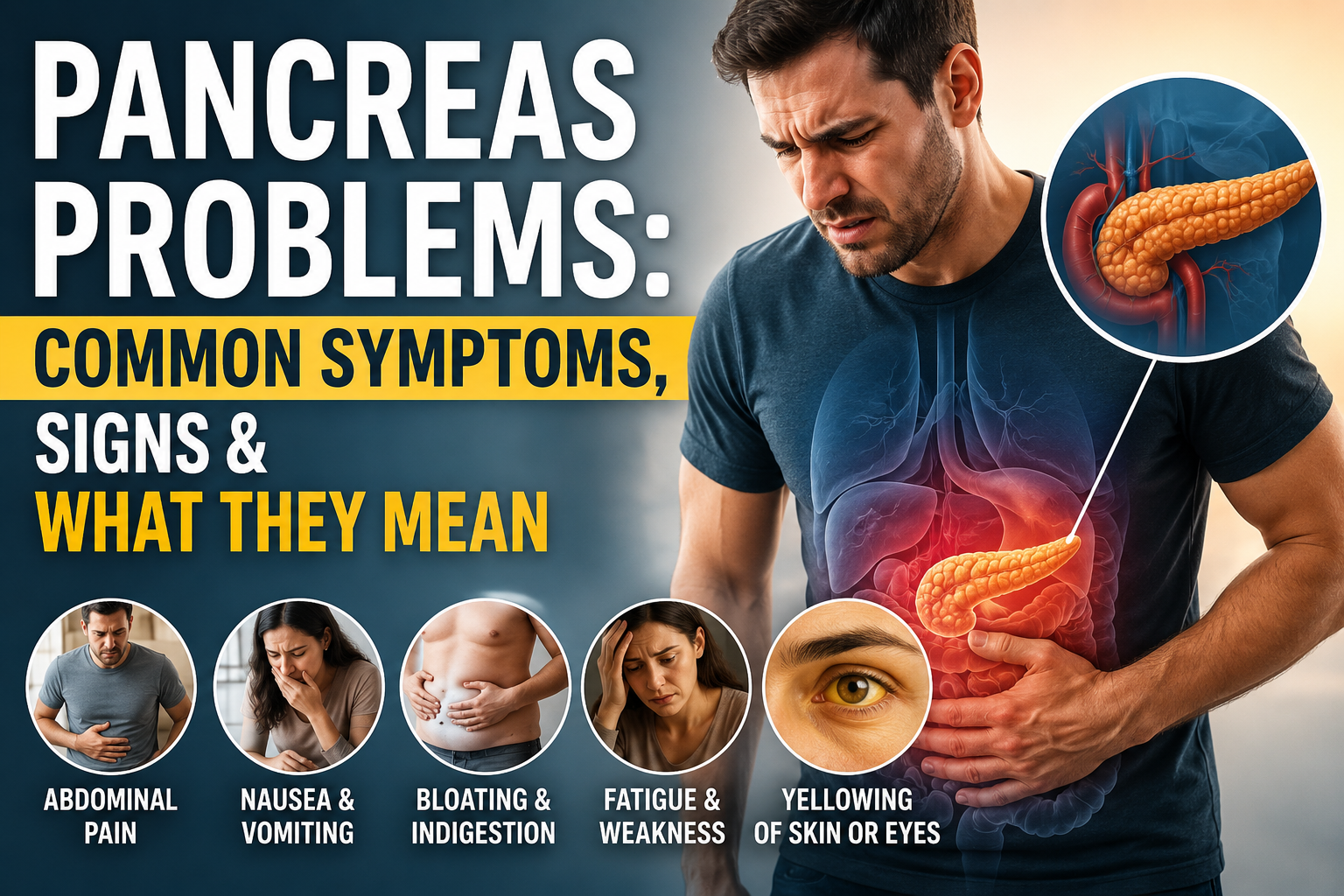
Pancreas Problems: Common Symptoms, Signs & What They Mean
Introduction: Why Your Pancreas Deserves Attention
The pancreas is one of the most hardworking yet least talked-about organs in the human body. Tucked behind the stomach in the upper abdomen, this elongated gland serves two critical functions: it produces digestive enzymes that break down food (exocrine function) and releases hormones — primarily insulin and glucagon — that regulate blood sugar levels (endocrine function). When the pancreas is healthy, it operates quietly in the background. But when pancreas problems develop, they can disrupt nearly every aspect of your digestive and metabolic health.
Pancreas problems range from temporary and treatable conditions like acute pancreatitis to chronic, life-altering diseases such as chronic pancreatitis, exocrine pancreatic insufficiency, and even pancreatic cancer. Because many pancreatic conditions share overlapping symptoms — and because the pancreas is so deeply positioned that it is difficult to examine directly — pancreas problems are often misdiagnosed or caught at a late stage.
In this comprehensive guide, we will walk you through the full spectrum of pancreas problems, the symptoms that indicate something may be wrong, the specific signs that distinguish one condition from another, and what all of this means for your health and treatment options. Understanding these warning signals is the first and most important step toward protecting your pancreatic health.
Understanding the Pancreas: A Foundation for Recognizing Problems
To understand pancreas problems, it is helpful to first grasp what the pancreas does and how it can fail. The pancreas is divided into functional zones: the exocrine pancreas (which constitutes about 95% of the gland's mass) produces digestive enzymes that are released into the small intestine through the pancreatic duct. These enzymes include amylase (for carbohydrates), lipase (for fats), and proteases like trypsin and chymotrypsin (for proteins). Without adequate enzyme production, digestion becomes severely impaired.
The endocrine portion of the pancreas — consisting of specialized clusters of cells called the islets of Langerhans — produces insulin, glucagon, and other hormones that regulate blood glucose. When these cells are damaged or destroyed, blood sugar control is lost, leading to diabetes. Understanding these two distinct functional roles helps explain why pancreas problems can produce such a wide and seemingly unrelated range of symptoms — from digestive issues and weight loss to blood sugar dysregulation and diabetes.
Major Pancreas Problems You Should Know About
1. Acute Pancreatitis
Acute pancreatitis is a sudden and severe inflammation of the pancreas that requires urgent medical attention. It occurs when digestive enzymes become prematurely activated inside the pancreas rather than in the small intestine, causing the pancreas to essentially digest itself. This self-destructive process leads to rapid inflammation, tissue damage, and intense pain.
The most common causes of acute pancreatitis are gallstones (accounting for approximately 40% of cases) and heavy alcohol consumption (accounting for another 30-35%). Other less common causes include high triglyceride levels, certain medications, viral infections (such as mumps or Coxsackievirus), trauma, and genetic mutations. In a small percentage of cases, no identifiable cause is found — these are called idiopathic cases.
Most episodes of acute pancreatitis are mild and resolve within a week with appropriate medical management. However, in about 20% of cases, the condition is severe and can lead to life-threatening complications including pancreatic necrosis (death of pancreatic tissue), infected necrosis, systemic inflammatory response syndrome (SIRS), acute respiratory distress syndrome (ARDS), kidney failure, and multi-organ failure. Early and aggressive treatment is essential in severe cases.
2. Chronic Pancreatitis
Chronic pancreatitis is a long-term progressive inflammatory disease that causes irreversible damage to the structure and function of the pancreas. Unlike acute pancreatitis, which typically resolves with treatment, chronic pancreatitis permanently scars and destroys pancreatic tissue over time, leading to loss of both digestive enzyme production and insulin secretion.
The most common cause of chronic pancreatitis in adults is long-term heavy alcohol consumption, responsible for about 70% of cases in developed countries. Other significant causes include genetic mutations (PRSS1, SPINK1, CFTR), autoimmune pancreatitis, recurrent acute pancreatitis, obstruction of the pancreatic duct, and hypercalcemia (high calcium levels). In some patients, particularly in tropical regions, a condition called tropical pancreatitis occurs due to malnutrition.
Chronic pancreatitis is a debilitating condition that profoundly affects quality of life. Patients may experience chronic abdominal pain, malnutrition, diabetes, and a significantly increased risk of pancreatic cancer. Management is multidisciplinary and focuses on pain control, nutritional support, enzyme replacement, and treatment of complications.
3. Pancreatic Cancer
Pancreatic cancer is among the most lethal of all malignancies, with a five-year survival rate of only about 11-12%. It is the third leading cause of cancer-related deaths in the United States. The dismal prognosis is largely due to the fact that most pancreatic cancers are not diagnosed until they have spread beyond the pancreas, at which point curative surgery is no longer an option.
The most common type is pancreatic ductal adenocarcinoma (PDAC), which arises from cells lining the pancreatic ducts. Risk factors include smoking, obesity, long-standing diabetes, chronic pancreatitis, family history of pancreatic cancer, and genetic syndromes such as BRCA mutations, Lynch syndrome, and Peutz-Jeghers syndrome. Early-stage pancreatic cancer typically causes no symptoms, making screening and early detection challenging.
4. Pancreatic Cysts
Pancreatic cysts are fluid-filled pockets in or on the pancreas. They are increasingly being discovered incidentally during imaging studies performed for other reasons. Some cysts, such as simple serous cystadenomas, are almost always benign and rarely cause problems. Others, such as intraductal papillary mucinous neoplasms (IPMNs) and mucinous cystic neoplasms (MCNs), carry a risk of malignant transformation and require regular monitoring and sometimes surgery.
Pseudocysts — the most common type of cystic lesion in the pancreas — develop as complications of pancreatitis when fluid collects in a walled-off space. They can cause pain, nausea, and a sensation of fullness when they grow large, and can sometimes become infected or rupture, requiring drainage.
5. Exocrine Pancreatic Insufficiency (EPI)
Exocrine pancreatic insufficiency occurs when the pancreas can no longer produce sufficient digestive enzymes to properly digest food, particularly fats. EPI is a common consequence of chronic pancreatitis, but can also occur in cystic fibrosis, following pancreatic surgery, and in other conditions affecting the pancreas. Without adequate enzyme production, fats pass undigested through the intestine, leading to steatorrhea (oily, bulky stools), malabsorption of fat-soluble vitamins, malnutrition, and weight loss.
6. Autoimmune Pancreatitis (AIP)
Autoimmune pancreatitis is a rare immune-mediated condition in which the body's own immune system attacks the pancreas. There are two types: Type 1 AIP, which is associated with elevated immunoglobulin G4 (IgG4) levels and can affect multiple organs, and Type 2 AIP, which is more limited to the pancreas. AIP can mimic pancreatic cancer on imaging and often presents with jaundice, mild abdominal pain, and weight loss. A key distinguishing feature is that AIP responds dramatically to corticosteroid therapy, while pancreatic cancer does not.
Symptoms of Pancreas Problems: What Your Body Is Telling You
Pancreas problems generate a constellation of symptoms that can affect the digestive system, metabolic function, and overall well-being. Recognizing these pancreas symptoms is crucial for early diagnosis and treatment.
Abdominal Pain
Pain is the most prominent and universal symptom of pancreas problems. In acute pancreatitis, pain is typically sudden, severe, and constant — located in the upper abdomen and often radiating to the back. It may be described as a boring, burning, or stabbing sensation that does not go away and is not relieved by passing gas or having a bowel movement. In chronic pancreatitis, pain may be episodic or chronic, sometimes described as a persistent dull ache or pressure in the upper abdomen and back. The pain typically worsens after eating, particularly after fatty meals, because eating stimulates the pancreas to produce more enzymes, increasing pressure and inflammation.
Nausea and Vomiting
Nausea and vomiting are nearly universal symptoms in acute pancreatitis and are also common in chronic pancreatic disease. These symptoms reflect both the local inflammatory response and the impaired digestive process. A key distinguishing feature is that vomiting does not provide relief from pancreatic pain — unlike vomiting from other causes such as gastroenteritis — because the source of pain is the organ itself, not the stomach contents.
Jaundice
Jaundice — characterized by yellowing of the skin, whites of the eyes (sclera), and sometimes the mucous membranes — occurs when bile flow is obstructed. The pancreas is closely associated with the common bile duct, which drains bile from the liver into the small intestine. When the head of the pancreas is swollen (as in pancreatitis) or invaded by a tumor (as in pancreatic cancer), it can compress the bile duct and prevent bile from flowing normally. This results in a buildup of bilirubin in the bloodstream, causing the characteristic yellow discoloration. Jaundice associated with pancreatic problems may also be accompanied by dark-colored urine and pale clay-colored stools.
Steatorrhea and Digestive Disturbances
When the exocrine function of the pancreas is impaired — as in chronic pancreatitis, EPI, or cystic fibrosis — the ability to digest fats is compromised. This results in steatorrhea: loose, bulky, greasy, pale stools that have a particularly foul odor and may float in the toilet. Patients may also experience bloating, flatulence, and cramping after eating. Over time, poor fat digestion leads to malabsorption of fat-soluble vitamins (A, D, E, and K), contributing to deficiencies that can affect bone health, vision, immune function, and blood clotting.
Unexplained Weight Loss
Unintentional weight loss is a concerning symptom associated with several pancreas problems. In pancreatic cancer, weight loss is often dramatic and rapid, resulting from a combination of factors: reduced appetite, altered metabolism, malabsorption, and the metabolic demands of the tumor itself. In chronic pancreatitis, weight loss results from inadequate enzyme production leading to poor nutrient absorption, combined with reduced appetite due to pain and nausea. Any unexplained weight loss of 5% or more of body weight over six months warrants prompt medical evaluation.
New-Onset Diabetes or Worsening Blood Sugar Control
The pancreas is the sole source of insulin in the body. When pancreatic tissue is damaged — whether by inflammation, tumor, or surgical removal — the insulin-producing beta cells may be destroyed or their function impaired. This can lead to pancreatogenic diabetes, also known as Type 3c diabetes. New-onset diabetes in individuals over 50, particularly those without a family history of Type 2 diabetes, or the sudden worsening of previously well-controlled diabetes can be an early sign of pancreatic cancer or severe chronic pancreatitis and should prompt further investigation.
Back Pain
Pain that radiates from the upper abdomen to the mid-back or between the shoulder blades is a classic symptom of pancreatic disease. The pancreas lies near several nerve ganglia (nerve clusters), and inflammation or tumor growth can irritate these nerves, causing referred pain to the back. Many patients with pancreatic cancer report that back pain was actually their first or most prominent symptom. Back pain that worsens when lying flat and improves when leaning forward is particularly suggestive of a pancreatic origin.
Loss of Appetite
Reduced or absent appetite (anorexia) is common in pancreatic disease. It can result from multiple mechanisms: pain that worsens with eating discourages food intake, hormonal changes affect appetite regulation, and systemic inflammation suppresses the desire to eat. In pancreatic cancer, cancer-related cachexia — a complex metabolic syndrome causing muscle and fat loss — contributes to profound loss of appetite and body mass.
Warning Signs That Should Prompt Immediate Medical Attention
While many symptoms of pancreas problems can be managed with scheduled medical care, certain warning signs require emergency evaluation without delay. These include sudden, severe upper abdominal or back pain that is constant and unrelenting, particularly if it is unlike any pain previously experienced. Accompanying symptoms that raise the alarm include high fever above 38.5 degrees Celsius, rapid heart rate, rigidity or guarding of the abdomen, and signs of shock such as dizziness, confusion, and cold clammy skin. Vomiting blood or passing black tarry stools indicates gastrointestinal bleeding and is a medical emergency. Rapidly progressive jaundice combined with abdominal pain and fever — known as Charcot's triad — may indicate ascending cholangitis, a life-threatening infection of the bile ducts that requires immediate treatment.
Diagnosing Pancreas Problems: What to Expect
When you present to a doctor with symptoms suggesting a pancreas problem, a systematic approach to diagnosis will be taken. A thorough medical history will be gathered, including your symptoms, their duration, any history of alcohol use, family history of pancreatic disease, and current medications. A physical examination will assess for abdominal tenderness, jaundice, and other signs of systemic illness.
Blood tests are a critical first step. Serum amylase and lipase levels are the primary markers of acute pancreatitis. Liver function tests assess bile duct involvement. Complete blood count can reveal signs of infection or anemia. CA 19-9 is a tumor marker that, while not specific, can support a diagnosis of pancreatic cancer when elevated along with other findings. Hemoglobin A1c and fasting glucose test for diabetes related to pancreatic dysfunction.
Imaging studies provide detailed visualization of the pancreas. Abdominal ultrasound is non-invasive and excellent for detecting gallstones. Computed tomography (CT) with contrast is the gold standard for evaluating pancreatitis severity and detecting tumors. Magnetic resonance imaging (MRI) with MRCP (magnetic resonance cholangiopancreatography) excels at visualizing ductal anatomy without radiation. Endoscopic ultrasound (EUS) provides the highest resolution images of the pancreas and is used for biopsies and staging. PET scans are sometimes used to assess for metastatic pancreatic cancer.
Treatment Approaches for Different Pancreas Problems
Treatment depends on the specific condition and its severity. For acute pancreatitis, the cornerstone of treatment is supportive care: intravenous fluids to prevent dehydration, pain management, bowel rest, and monitoring for complications. Mild cases typically resolve within a week. Severe cases may require intensive care, nutritional support through enteral feeding, antibiotics for infected necrosis, and surgical or endoscopic drainage procedures.
For chronic pancreatitis, management focuses on controlling pain, preventing malnutrition, and treating complications. Pain management includes lifestyle modifications (strict alcohol abstinence, low-fat diet), analgesic medications, antioxidants, endoscopic therapies to relieve ductal obstruction, nerve blocks (celiac plexus block), and in refractory cases, surgical procedures such as the Frey or Beger procedure. Pancreatic enzyme replacement therapy (PERT) is prescribed for exocrine insufficiency, and insulin therapy is initiated when pancreatogenic diabetes develops.
For pancreatic cancer, treatment options depend on whether the tumor is resectable (surgically removable). Resectable tumors may be treated with the Whipple procedure (pancreaticoduodenectomy), distal pancreatectomy, or total pancreatectomy. Most patients also receive chemotherapy (FOLFIRINOX or gemcitabine-based regimens) before or after surgery. For non-resectable tumors, palliative chemotherapy, radiation therapy, and symptom management focus on extending survival and maintaining quality of life.
Living With Pancreas Problems: Lifestyle Adjustments
Managing pancreas problems often requires significant lifestyle changes that can profoundly improve both symptoms and long-term outcomes. A strict low-fat diet is fundamental — fatty foods stimulate the pancreas more intensely and can trigger pain episodes and worsen steatorrhea. Meals should be small and frequent rather than large and infrequent. Complete abstinence from alcohol is non-negotiable in alcohol-related pancreatitis, as continued drinking accelerates disease progression and dramatically worsens prognosis.
Smoking cessation is strongly advised, as tobacco use worsens inflammation and significantly raises the risk of pancreatic cancer. Regular monitoring of blood sugar levels is important if pancreatogenic diabetes has developed. Nutritional supplements including fat-soluble vitamins A, D, E, and K may be necessary in cases of exocrine insufficiency. Psychological support and counseling can also be valuable, as living with chronic pain and dietary restrictions can take a significant toll on mental health and quality of life.
Prevention: Can Pancreas Problems Be Avoided?
While not all pancreas problems are preventable — particularly those driven by genetic factors — a significant proportion can be reduced or avoided through conscious lifestyle choices. Moderating or eliminating alcohol consumption removes one of the most modifiable risk factors for pancreatitis. Quitting smoking reduces the risk of both chronic pancreatitis and pancreatic cancer. Maintaining a healthy body weight and avoiding obesity reduces the risk of gallstone formation and metabolic stress on the pancreas. Managing blood lipids through diet, exercise, and medication prevents hypertriglyceridemia-induced pancreatitis. Regular health check-ups allow early detection of gallstones, diabetes, and other conditions that can secondarily affect the pancreas.
Conclusion
Pancreas problems are diverse, complex, and potentially life-threatening, but many can be managed effectively when identified early. The key lies in recognizing the symptoms and warning signs — from upper abdominal and back pain to jaundice, steatorrhea, unexplained weight loss, and new-onset diabetes — and responding to them with timely medical evaluation. No single symptom is definitively diagnostic of a pancreas problem, but patterns of symptoms, combined with appropriate testing, can lead to accurate diagnosis and effective treatment.
If you or someone you know is experiencing symptoms that may suggest a pancreas problem, do not wait and hope they will pass. The pancreas may be small and hidden from direct view, but the problems it develops can be enormous. Proactive attention to pancreatic health — through lifestyle choices, regular medical care, and awareness of warning signs — is the most powerful tool you have to preserve this essential organ and maintain your overall well-being.