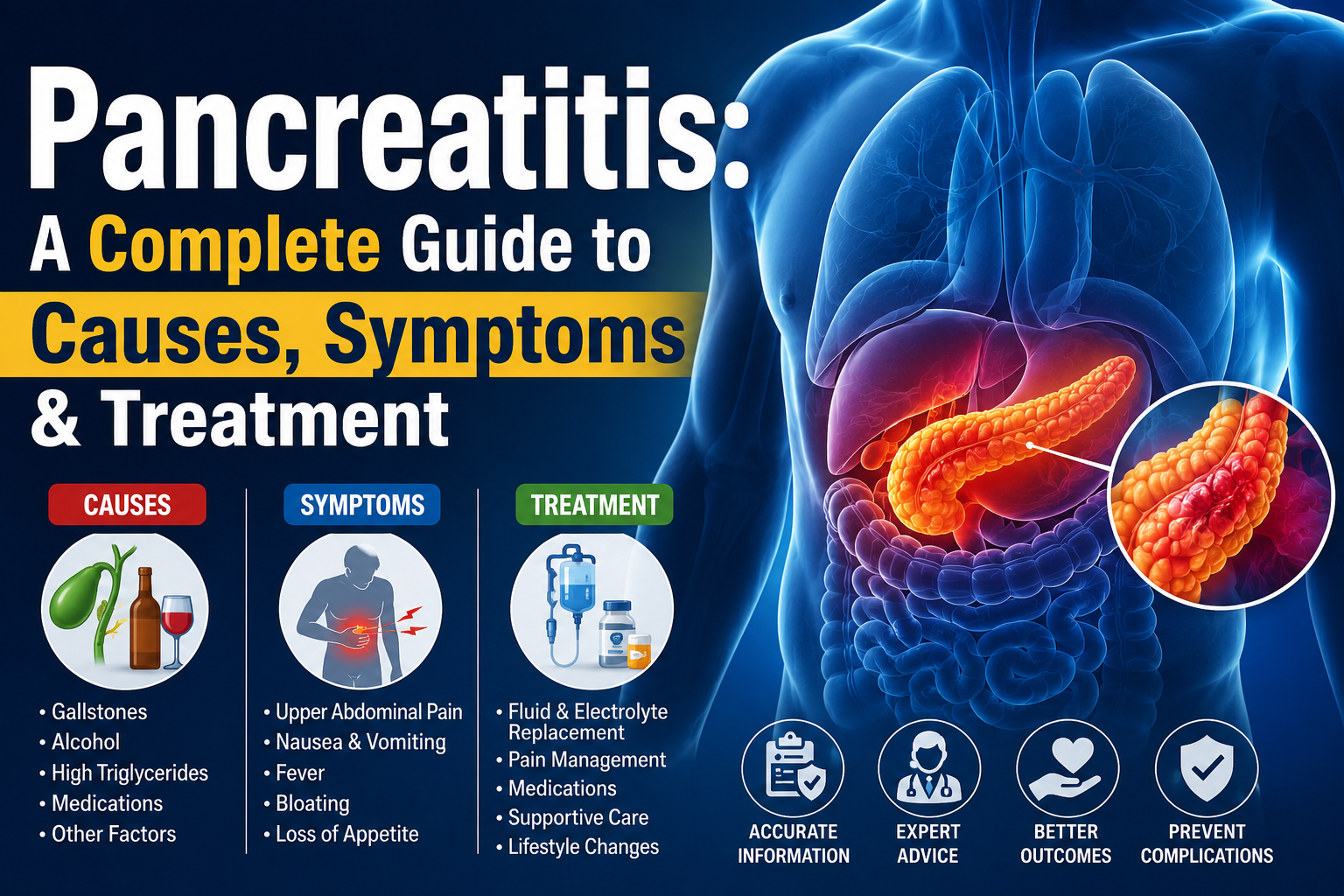
Pancreatitis: A Complete Guide to Causes, Symptoms & Treatment
What Is Pancreatitis?
Pancreatitis is inflammation of the pancreas — a crucial gland located in the upper abdomen behind the stomach. The term covers a spectrum of conditions, from a single acute episode that resolves completely to a chronic, progressive disease that permanently impairs pancreatic function. Regardless of the form it takes, pancreatitis is a serious medical condition that demands attention, accurate diagnosis, and appropriate treatment.
The pancreas serves two distinct roles in the body. As an exocrine gland, it produces digestive enzymes — including amylase, lipase, and proteases — that are secreted into the small intestine to break down carbohydrates, fats, and proteins. As an endocrine gland, it manufactures hormones such as insulin, glucagon, and somatostatin that regulate blood sugar and metabolic functions. Pancreatitis disrupts both these functions, creating a cascade of symptoms and health consequences that can affect virtually every system in the body.
Globally, pancreatitis is a significant health burden. Acute pancreatitis accounts for hundreds of thousands of hospitalizations annually in the United States alone, and its incidence is rising. Chronic pancreatitis affects millions worldwide, causing persistent pain, nutritional deficiencies, and substantially increased risk of pancreatic cancer. Understanding pancreatitis in depth — its causes, symptoms, diagnosis, treatment, and prevention — is essential for anyone who has been diagnosed or is at risk.
Types of Pancreatitis
Acute Pancreatitis
Acute pancreatitis is characterized by sudden onset inflammation of the pancreas. It develops rapidly, usually over hours to days, and can range in severity from mild and self-limiting to severe and potentially fatal. In mild acute pancreatitis, the gland is edematous (swollen) but intact, and the condition typically resolves within a few days with supportive care. In severe acute pancreatitis, the inflammation is more extensive and can lead to pancreatic necrosis (tissue death), infected necrosis, hemorrhage, and systemic complications affecting the lungs, kidneys, and cardiovascular system.
The Revised Atlanta Classification system categorizes acute pancreatitis into three severity levels: mild (no organ failure, no local complications), moderately severe (transient organ failure lasting less than 48 hours or local complications), and severe (persistent organ failure lasting more than 48 hours, which carries a mortality rate of up to 30-40%).
Chronic Pancreatitis
Chronic pancreatitis is a long-term progressive inflammation that leads to irreversible structural and functional damage of the pancreas. The chronic inflammatory process causes fibrosis (scarring), calcification, ductal dilation, and loss of both exocrine and endocrine pancreatic tissue. Unlike acute pancreatitis, where the pancreas can recover fully after an episode, chronic pancreatitis involves permanent damage that worsens over time.
Chronic pancreatitis may develop as a consequence of recurrent acute pancreatitis episodes, or it may develop insidiously without any clear acute episodes. The hallmarks of chronic pancreatitis are recurrent or persistent abdominal pain, exocrine pancreatic insufficiency (leading to malabsorption and steatorrhea), and endocrine pancreatic insufficiency (leading to diabetes mellitus). Morphological changes such as pancreatic duct dilation, calcifications, and atrophy are typically visible on imaging.
Other Forms of Pancreatitis
Beyond acute and chronic pancreatitis, several other specific forms deserve mention. Hereditary pancreatitis is caused by genetic mutations (most commonly in the PRSS1 gene) and presents with recurrent acute episodes from childhood, ultimately progressing to chronic disease. Autoimmune pancreatitis, as discussed earlier, is an immune-mediated condition that can mimic pancreatic cancer and typically responds to steroid therapy. Tropical pancreatitis is a form of chronic pancreatitis associated with malnutrition and cassava consumption, prevalent in tropical regions of Asia, Africa, and Latin America.
Pancreatitis Causes: What Triggers Inflammation of the Pancreas?
Understanding pancreatitis causes is fundamental to both prevention and treatment. While over 30 different causes have been identified, a few predominate in clinical practice.
Gallstones: The Leading Cause
Gallstones are the most common cause of acute pancreatitis, responsible for approximately 35-40% of all cases. Gallstones form in the gallbladder when cholesterol or bilirubin crystallizes into solid particles. When a gallstone passes from the gallbladder into the common bile duct and temporarily lodges at the sphincter of Oddi — the valve that controls the flow of bile and pancreatic juice into the duodenum — it can obstruct the outflow of pancreatic enzymes. This obstruction causes a backflow of enzymes that activates them prematurely within the pancreas, triggering the inflammatory cascade that characterizes pancreatitis.
Gallstone pancreatitis is particularly common in women over 40 who are overweight, have had multiple pregnancies, or have a family history of gallstones. The 4 F's mnemonic (Female, Fat, Forty, Fertile) captures the typical patient profile, though gallstone pancreatitis can affect anyone. Definitive treatment after an episode of gallstone pancreatitis is cholecystectomy (gallbladder removal) to prevent recurrence.
Alcohol: A Major Contributor
Chronic, heavy alcohol consumption is the second most common cause of acute pancreatitis and the leading cause of chronic pancreatitis, accounting for 30-70% of chronic cases depending on the population studied. Alcohol and its metabolic byproducts (acetaldehyde, fatty acid ethyl esters) are directly toxic to pancreatic acinar cells — the cells responsible for producing digestive enzymes. Alcohol also promotes premature activation of digestive enzymes within the pancreas, impairs the protective mechanisms that normally prevent enzyme activation, and triggers oxidative stress and inflammatory pathways.
Not all heavy drinkers develop pancreatitis — genetic susceptibility, dietary factors, and other variables influence who develops the disease. However, the risk increases substantially with the amount and duration of alcohol consumption. Any level of alcohol intake is harmful once pancreatitis is established, and strict abstinence is the cornerstone of treatment for alcohol-related pancreatitis.
Hypertriglyceridemia
Very high blood triglyceride levels — specifically above 1000 mg/dL — can cause acute pancreatitis by a mechanism not fully understood but likely involving the hydrolysis of triglycerides by pancreatic lipase, generating toxic free fatty acids and lysolecithin that damage acinar cells and endothelial cells of pancreatic blood vessels. Hypertriglyceridemia accounts for 1-4% of acute pancreatitis cases in general populations but is more prevalent in patients with poorly controlled diabetes, obesity, or genetic lipid disorders.
Medications
A variety of medications have been associated with drug-induced pancreatitis, which accounts for approximately 1.4% to 2% of cases. High-evidence drugs include azathioprine, 6-mercaptopurine, valproic acid, didanosine, pentamidine, and certain estrogen-containing preparations. Mechanisms vary and include direct cytotoxic effects, hypersensitivity reactions, and accumulation of toxic metabolites. Drug-induced pancreatitis should always be considered in patients who develop pancreatitis without other identifiable causes, and the offending medication should be discontinued if identified.
Genetic and Hereditary Factors
Mutations in several genes are associated with increased susceptibility to pancreatitis. PRSS1 mutations activate the trypsinogen gene, leading to premature trypsin activation. SPINK1 mutations impair a protective trypsin inhibitor. CFTR mutations, responsible for cystic fibrosis, also predispose to pancreatitis by affecting pancreatic duct function. These genetic factors may cause pancreatitis independently or may lower the threshold for pancreatitis when combined with environmental triggers like alcohol.
Other Causes
Additional causes of pancreatitis include trauma to the abdomen (blunt or penetrating injury), endoscopic procedures (post-ERCP pancreatitis occurs in 2-5% of ERCP procedures), metabolic disorders such as hypercalcemia, infections (mumps, Coxsackievirus, HIV, Salmonella), anatomical abnormalities (pancreas divisum, annular pancreas), and autoimmune conditions. A substantial proportion of cases — estimated at 10-20% — have no identifiable cause and are classified as idiopathic.
Pancreatitis Symptoms: Recognizing the Warning Signs
Pancreatitis symptoms can vary depending on whether the condition is acute or chronic, mild or severe. However, certain core symptoms appear across all forms of the disease.
Abdominal Pain
Pain is the defining symptom of pancreatitis. In acute pancreatitis, the pain is typically sudden, severe, and constant — often described as the worst abdominal pain the patient has ever experienced. It is located in the upper abdomen (epigastric region) and classically radiates to the back. The pain is steady rather than colicky (not coming in waves), does not improve with bowel movements or passing gas, and worsens with eating. In severe cases, the pain may be so intense that the patient cannot find a comfortable position. Partial relief may be obtained by leaning forward or adopting the fetal position.
In chronic pancreatitis, pain may be episodic — occurring in flares triggered by eating or alcohol — or it may be constant and persistent. Over time, some patients with chronic pancreatitis experience a phenomenon called "burnout," where the pain diminishes as pancreatic tissue is progressively destroyed. However, the absence of pain in late-stage chronic pancreatitis is not a sign of improvement but of advanced disease.
Nausea and Vomiting
Nausea and vomiting accompany the vast majority of acute pancreatitis episodes. They result from the inflammatory process, the pain itself, and the effect of pancreatic inflammation on gastrointestinal motility. In contrast to vomiting from gastroenteritis or peptic ulcer disease, vomiting in pancreatitis provides no relief from the pain — an important clinical clue.
Fever and Chills
A mild fever is common in acute pancreatitis, reflecting the systemic inflammatory response. High fever (above 38.5°C or 101.3°F), especially if it develops after the initial episode or returns after seeming to improve, may indicate a secondary infection such as infected pancreatic necrosis or abscess — both of which require urgent intervention.
Abdominal Tenderness and Distension
Physical examination typically reveals tenderness on palpation of the upper abdomen. In severe cases, the abdomen may be rigid, guarded, or distended — signs that suggest significant inflammation or complications such as peritonitis. Two classic physical signs associated with severe pancreatitis are Cullen's sign (bruising around the navel) and Grey Turner's sign (bruising on the flanks), both indicating retroperitoneal hemorrhage, though these are relatively rare.
Jaundice
Jaundice (yellowing of the skin and eyes) can occur in pancreatitis when the swollen head of the pancreas or a gallstone compresses the bile duct. It may be accompanied by dark urine and pale stools. Jaundice in the context of pancreatitis suggests biliary obstruction and requires additional evaluation to identify and treat the cause.
Symptoms Specific to Chronic Pancreatitis
Chronic pancreatitis presents additional symptoms related to permanent pancreatic damage. Steatorrhea (oily, malodorous, floating stools) develops when the pancreas can produce less than 10% of its normal enzyme output — a late-stage finding indicating severe exocrine insufficiency. Weight loss and malnutrition result from poor fat absorption and reduced food intake due to pain. Diabetes mellitus develops when enough insulin-producing beta cells are destroyed; this pancreatogenic diabetes (Type 3c) is often difficult to manage and differs from Type 1 and Type 2 diabetes in important ways.
Diagnosis of Pancreatitis
Accurate and timely diagnosis of pancreatitis is essential for appropriate treatment and monitoring. The diagnosis of acute pancreatitis requires at least two of the following three criteria: characteristic abdominal pain, serum amylase or lipase levels at least three times the upper limit of normal, and characteristic findings on imaging.
Laboratory testing is the immediate first step. Serum lipase is more specific and sensitive than amylase for acute pancreatitis and remains elevated longer (up to two weeks versus 3-5 days for amylase). Additional blood tests assess severity and complications: complete blood count (elevated white blood cells indicate infection), metabolic panel (BUN and creatinine for kidney function), liver function tests (elevated in gallstone-related pancreatitis or biliary obstruction), calcium levels, and triglyceride levels.
Imaging is essential for confirming the diagnosis, identifying the cause, and assessing severity. Abdominal ultrasound is the first-line imaging study, primarily to detect gallstones. Contrast-enhanced CT (CECT) of the abdomen is the gold standard for diagnosis and severity assessment — it can visualize pancreatic necrosis, pseudocysts, and other complications. MRI and MRCP are preferred over CT when radiation exposure is a concern (e.g., in young patients or pregnant women) and provide superior visualization of the pancreatic and bile ducts. Endoscopic ultrasound (EUS) is used for detailed evaluation of pancreatic pathology and guided biopsies when needed.
Several scoring systems help predict severity and guide management decisions. The Ranson criteria use clinical and laboratory values to estimate prognosis. The APACHE II score assesses overall disease severity. The Bedside Index for Severity in Acute Pancreatitis (BISAP) score uses five parameters to predict mortality risk. The CT Severity Index (CTSI), also called the Balthazar score, uses imaging findings to grade severity and predict complications.
Treatment of Pancreatitis
Acute Pancreatitis Treatment
The management of acute pancreatitis is primarily supportive — there is no specific antidote for the inflammatory process itself. The cornerstones of treatment are aggressive fluid resuscitation, pain management, nutritional support, and careful monitoring for complications.
Intravenous fluid therapy is the most critical early intervention. Aggressive hydration with lactated Ringer's solution (preferred over normal saline) counteracts the fluid shifts that occur with severe inflammation and helps prevent pancreatic necrosis by maintaining adequate blood flow to the pancreas. Pain management is essential for patient comfort and reducing the stress response. Modern practice uses opioid analgesics (such as morphine or hydromorphone) administered intravenously for severe pain; the old concern that morphine worsens pancreatitis by causing sphincter of Oddi spasm has been refuted.
Nutritional support is a critical aspect of pancreatitis management that has evolved significantly. Early enteral nutrition — feeding through a nasogastric or nasojejunal tube — is now strongly preferred over total parenteral nutrition (intravenous feeding) in patients who cannot eat orally. Early enteral feeding maintains gut integrity, reduces infection risk, and shortens hospital stay compared with parenteral nutrition.
Bowel rest (keeping the patient nil by mouth) may be necessary in the early hours, but early introduction of oral feeding as tolerated is now encouraged in mild acute pancreatitis and associated with better outcomes. In gallstone pancreatitis, cholecystectomy should ideally be performed during the same hospitalization after the patient has recovered, to prevent recurrence.
In severe acute pancreatitis complicated by infected pancreatic necrosis, antibiotics are indicated, and drainage procedures (endoscopic, percutaneous, or surgical) may be required to debride and drain the infected tissue. The trend has shifted toward minimally invasive step-up approaches rather than immediate open surgery, which carries a higher complication rate.
Chronic Pancreatitis Treatment
Management of chronic pancreatitis addresses the three main problems: pain, exocrine insufficiency, and endocrine insufficiency. Lifestyle modification is the foundation — complete alcohol abstinence and smoking cessation are absolutely mandatory, as both accelerate disease progression. A low-fat diet with small, frequent meals reduces pancreatic stimulation and symptom burden.
Pain management in chronic pancreatitis is challenging. The pain is often neuropathic in nature and may not respond well to standard analgesics. A stepwise approach begins with non-opioid analgesics (NSAIDs, acetaminophen), antioxidant supplements (vitamins A, C, E, selenium, and methionine), and pancreatic enzyme supplementation (which may reduce pain by suppressing cholecystokinin release). If these fail, low-dose opioids may be necessary, though opioid dependence is a significant concern. Endoscopic therapies including ERCP with stone extraction, stricture dilation, and stent placement can relieve pain caused by ductal obstruction. Endoscopic ultrasound-guided celiac plexus block can provide temporary pain relief. Extracorporeal shock wave lithotripsy (ESWL) breaks down pancreatic duct stones. Surgery — including the Frey procedure, Beger procedure, or Puestow procedure — is indicated for patients who fail endoscopic therapy and have anatomy suitable for surgical decompression.
Exocrine insufficiency is treated with pancreatic enzyme replacement therapy (PERT). Enteric-coated enzyme capsules containing lipase, amylase, and protease are taken with every meal and snack. Starting doses are typically 25,000-50,000 IU of lipase per meal, with adjustments based on symptom response. Fat-soluble vitamin supplementation (vitamins A, D, E, K) and monitoring for deficiencies are important components of nutritional management. Pancreatogenic diabetes (Type 3c) requires careful management, typically with insulin, recognizing that glucagon deficiency makes these patients particularly susceptible to hypoglycemia.
Complications of Pancreatitis
Pancreatitis can give rise to numerous local and systemic complications that significantly affect prognosis and treatment. Local complications include pancreatic necrosis (sterile or infected), peripancreatic fluid collections, pseudocysts, walled-off pancreatic necrosis (WOPN), pancreatic duct disruption, and splenic vein thrombosis causing sinistral portal hypertension. Systemic complications include acute kidney injury, acute respiratory distress syndrome (ARDS), cardiovascular shock, disseminated intravascular coagulation (DIC), and multi-organ failure. In the long term, chronic pancreatitis significantly increases the risk of pancreatic cancer — patients with chronic pancreatitis have approximately a 10-20 times greater lifetime risk of developing pancreatic cancer compared to the general population.
Prognosis and Long-Term Outlook
The prognosis of pancreatitis varies considerably depending on the type, severity, and underlying cause. Mild acute pancreatitis has an excellent prognosis — the vast majority of patients recover fully within one to two weeks with appropriate care. Severe acute pancreatitis carries a mortality rate of 20-40% in cases complicated by organ failure and infected necrosis. Patients who survive severe acute pancreatitis may develop long-term complications including exocrine insufficiency, diabetes, and recurrent episodes.
Chronic pancreatitis is a relentlessly progressive disease with significant morbidity. Continued alcohol consumption dramatically worsens the prognosis. Even with optimal management, most patients with chronic pancreatitis will eventually develop exocrine and endocrine insufficiency. The lifetime risk of pancreatic cancer in hereditary pancreatitis is particularly high — approximately 40% by age 70, necessitating regular surveillance.
Prevention of Pancreatitis
Preventing pancreatitis requires addressing its modifiable risk factors. Limiting or abstaining from alcohol remains the most impactful preventive measure for alcohol-related pancreatitis. Addressing gallstones promptly — whether through dietary changes to reduce cholesterol or through cholecystectomy when symptomatic — prevents gallstone-related pancreatitis and its recurrence. Controlling blood triglyceride levels through dietary modification, exercise, and lipid-lowering medications prevents hypertriglyceridemia-induced pancreatitis. Quitting smoking not only reduces the risk of pancreatitis but also significantly reduces the risk of pancreatic cancer. Reviewing medications with your doctor — particularly if you have a history of pancreatitis — helps identify and substitute any drugs with pancreatitis risk. Maintaining a healthy weight and following a balanced diet low in saturated fat provides broad protection for pancreatic health.
Conclusion
Pancreatitis is a complex and potentially serious condition that can range from a single, manageable acute episode to a life-altering chronic disease. Understanding its causes — from gallstones and alcohol to genetic factors and medications — empowers individuals to reduce their personal risk. Recognizing its symptoms — particularly the characteristic upper abdominal pain radiating to the back, nausea, and vomiting — enables prompt medical evaluation and treatment. And understanding the full spectrum of available treatments — from supportive hospital care and dietary modification to enzyme replacement and surgery — helps patients and caregivers make informed decisions about management and long-term care.
If you or someone you care for has been diagnosed with pancreatitis or is experiencing symptoms that suggest it, work closely with your healthcare team, commit to the necessary lifestyle changes, and stay vigilant for warning signs of complications. With the right approach, many patients with pancreatitis can achieve meaningful improvement in their symptoms and quality of life. The pancreas is remarkably resilient — but it benefits enormously from our respect and protection.