Pancreatitis: When to Worry and When to Seek Emergency Care
Introduction: The Question That Could Save Your Life
Pancreatitis when to worry — this is the question that brings thousands of people to their doctors, urgent care clinics, and emergency rooms every year. And it is the right question to ask. Pancreatitis is not always a life-threatening emergency, but it can be, and the difference between mild and severe forms of the disease can be dramatic and fast-moving. Understanding when pancreatitis symptoms cross the line from manageable to dangerous is one of the most valuable pieces of medical knowledge you can have.
The challenge is that pancreatitis presents across a wide spectrum of severity, and early on it can be genuinely difficult to determine — even for clinicians — how serious a given episode will become. A patient may arrive at the emergency department with moderate abdominal pain and a relatively normal initial CT scan, only to deteriorate rapidly over the next 24-48 hours as the inflammatory response escalates and complications develop. Conversely, someone who fears they are having a severe attack may turn out to have a mild episode that resolves with intravenous fluids and a brief hospital stay.
This guide is designed to give you a clear, practical framework for assessing pancreatitis severity — from the very first symptoms through the danger signs that require immediate emergency care. It covers the full spectrum of presentations: mild pancreatitis that can often be managed conservatively, moderately severe pancreatitis that needs close monitoring, and severe pancreatitis that demands intensive, rapid medical intervention. By the end, you will know exactly when to worry about pancreatitis and what to do when you do.
Understanding the Spectrum: Mild, Moderate, and Severe Pancreatitis
Before diving into specific warning signs, it is helpful to understand how pancreatitis is classified medically. The Revised Atlanta Classification system, the most widely used international framework, categorizes acute pancreatitis into three levels of severity based on two key factors: the presence of organ failure and the presence of local complications in or around the pancreas.
Mild Acute Pancreatitis
Mild acute pancreatitis is defined by the absence of both organ failure and local or systemic complications. It accounts for approximately 80% of all acute pancreatitis cases and carries a mortality rate of less than 1%. Patients typically experience severe abdominal pain, nausea, and vomiting that begin to improve within 48-72 hours of supportive treatment. Inflammatory markers (such as C-reactive protein) may be elevated but usually normalize within a week. Hospitalization is typically required, but the stay is short — usually 3 to 7 days. CT scanning may be deferred in mild cases unless the diagnosis is uncertain or no improvement is seen within 48-72 hours.
Moderately Severe Acute Pancreatitis
Moderately severe acute pancreatitis involves either transient organ failure (lasting less than 48 hours) or local complications such as peripancreatic fluid collections, pancreatic necrosis, or pancreatic pseudocysts. The mortality rate is higher than mild pancreatitis but generally lower than the severe form. Patients require closer monitoring and may need interventions such as endoscopic drainage of pseudocysts or nutritional support through enteral feeding tubes. The clinical course is less predictable than mild pancreatitis, and deterioration to severe disease is possible.
Severe Acute Pancreatitis
Severe acute pancreatitis is defined by persistent organ failure lasting more than 48 hours, affecting one or more organ systems including the cardiovascular system (shock), respiratory system (respiratory failure requiring oxygen support or ventilation), or kidneys (acute kidney injury requiring dialysis). Severe pancreatitis carries a mortality rate ranging from 15% to 40%, particularly when complicated by infected pancreatic necrosis and multi-organ failure. These patients require intensive care unit (ICU) admission, aggressive intravenous fluid resuscitation, careful nutritional management, and often interventional or surgical procedures.
Pancreatitis When to Worry: The Red Flag Symptoms
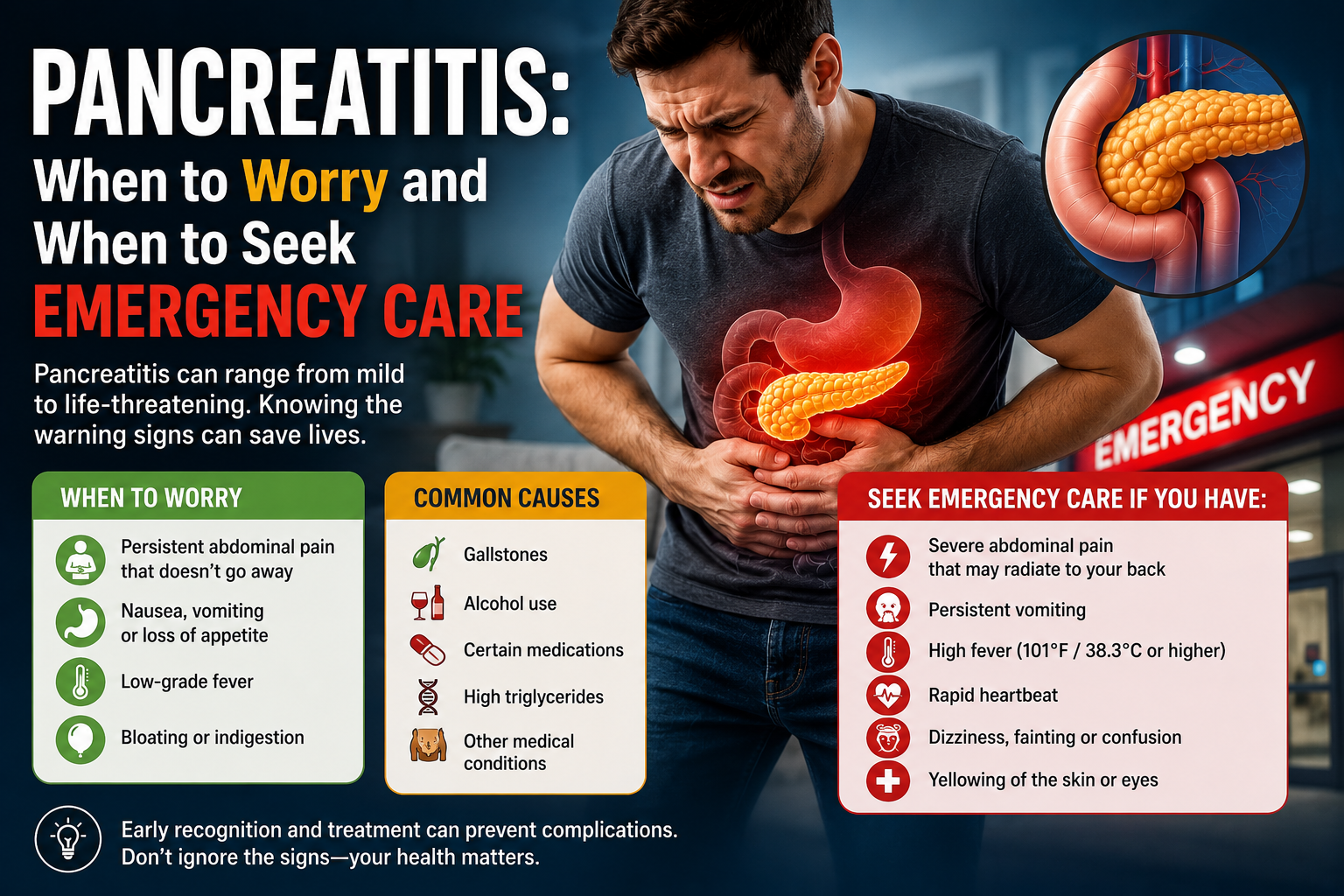
Understanding pancreatitis when to worry requires knowing which symptoms represent benign, manageable disease and which represent alarming escalation. The following sections detail the most critical warning signs that should prompt immediate action.
Pain That Is Unbearable or Escalating Rapidly
All pancreatitis involves significant abdominal pain, but there is a critical difference between severe pain that is stable and pain that is worsening rapidly or becoming unbearable. If you develop sudden, excruciating upper abdominal pain that is the worst pain you have ever felt — sometimes described as a "9 or 10 out of 10" on the pain scale — this is a red flag that demands immediate emergency evaluation, even if you have had previous milder pancreatitis episodes.
Pain that escalates rapidly over minutes to hours, or that suddenly shifts in character from a manageable ache to an unbearable agony, may indicate that a new complication has developed — such as the rupture of a pancreatic pseudocyst, hemorrhage into the pancreatic bed, or the development of peritonitis from leakage of pancreatic enzymes into the abdominal cavity. Any sudden significant change in the character or intensity of your pancreatic pain should be treated as a medical emergency.
Pain That Does Not Improve After 48-72 Hours
In mild acute pancreatitis, pain typically begins to improve within 48 to 72 hours of starting intravenous fluids, resting the bowel, and receiving pain management. If your pain is not improving after 2-3 days of appropriate treatment, or if it initially improved but then returned or worsened, this is a significant concern. Failure to improve suggests that the pancreatitis may be more severe than initially apparent, that a complication has developed (such as a pseudocyst, walled-off necrosis, or secondary infection), or that the underlying cause has not been adequately treated.
This pattern of initial improvement followed by clinical deterioration — sometimes called the "second-hit phenomenon" in severe pancreatitis — is particularly worrying. It often indicates the development of infected pancreatic necrosis, which dramatically worsens prognosis and requires aggressive intervention with antibiotics and drainage procedures.
High Fever or Fever That Returns
A modest fever in the first few days of acute pancreatitis is expected and reflects the normal inflammatory response. However, a fever above 38.5°C (101.3°F), particularly if accompanied by chills, rigors, rapid heart rate, and escalating abdominal pain, is a danger signal. This pattern suggests the development of an infectious complication — most commonly infected pancreatic necrosis or a pancreatic abscess — which are both potentially fatal without prompt treatment.
Even more concerning is a fever that develops or returns after an initial period of clinical improvement, particularly in the second week of illness. Infected necrosis most commonly declares itself one to three weeks after the onset of pancreatitis, after a period during which the necrotic tissue becomes colonized by bacteria. The development of fever with systemic toxicity in this timeframe should prompt urgent CT scanning to evaluate for complications and immediate antibiotic therapy.
Signs of Systemic Shock
Systemic shock in pancreatitis is a life-threatening emergency. It occurs when the massive fluid losses and inflammatory vasodilation of severe pancreatitis overwhelm the body's compensatory mechanisms, resulting in a catastrophic fall in blood pressure and inadequate blood flow to vital organs. Recognizing shock early is critical because each minute of delay in treatment increases the risk of irreversible organ damage and death.
The warning signs of developing shock include a rapid heart rate (feeling your heart racing or pounding), a rapid drop in blood pressure, dizziness or lightheadedness especially when standing up, a sudden urge to lie down because you feel faint, cold and clammy skin that may appear pale, mottled, or grayish, rapid and shallow breathing, and confusion, disorientation, or sudden worsening of mental clarity. If any of these signs appear — particularly in combination — call emergency services (911 or your local equivalent) immediately and lie flat with your legs elevated while waiting for help. Do not attempt to drive yourself to the hospital.
Jaundice Combined With Fever and Abdominal Pain
The combination of jaundice (yellowing of the skin and eyes), fever, and right upper quadrant abdominal pain — known as Charcot's triad — is a medical emergency. This combination of symptoms indicates ascending cholangitis, an acute bacterial infection of the bile ducts that develops when bile duct obstruction (most commonly from a gallstone) allows bacteria to multiply and ascend into the biliary system and potentially the liver. Without emergency treatment (IV antibiotics and emergent ERCP to relieve the obstruction), ascending cholangitis can rapidly progress to biliary sepsis and death.
The more alarming extension of this presentation is Reynolds' pentad: Charcot's triad plus altered mental status (confusion, lethargy, or disorientation) and cardiovascular instability (low blood pressure, rapid heart rate). Reynolds' pentad indicates septic shock from cholangitis and is associated with a very high mortality rate. Any patient with this presentation requires immediate emergency care, ICU admission, aggressive resuscitation, and emergency biliary drainage.
Vomiting Blood or Bloody Stools
Vomiting blood (hematemesis) or passing black, tarry stools (melena) in the context of pancreatitis indicates significant gastrointestinal bleeding, which can occur for several reasons. Severe pancreatitis may erode into adjacent blood vessels, causing direct hemorrhage. The stress of critical illness can cause stress ulcers in the stomach or duodenum. Splenic vein thrombosis — a complication of pancreatitis in which the vein draining the spleen becomes blocked — can cause elevated pressure in stomach and esophageal veins (gastric varices), which may rupture and bleed profusely.
Any bleeding from the upper gastrointestinal tract is a serious emergency that requires immediate evaluation. Vomiting blood that is bright red or resembles coffee grounds, or passing stools that are black, sticky, and tarry (or frankly bloody), should prompt an immediate call to emergency services. Do not wait to see if it improves — gastrointestinal bleeding can escalate rapidly and become fatal without medical intervention.
Sudden Worsening of Breathing
Respiratory complications are among the most serious systemic effects of severe pancreatitis. Acute respiratory distress syndrome (ARDS) — a form of respiratory failure in which widespread lung inflammation causes profound difficulty breathing and low blood oxygen levels — develops in a significant proportion of patients with severe pancreatitis. It results from the massive inflammatory cytokine storm that accompanies severe pancreatic injury, which causes fluid to leak into the lungs (pulmonary edema) and impairs oxygen exchange.
Warning signs of respiratory involvement in pancreatitis include rapid breathing (respiratory rate above 20 breaths per minute), shortness of breath even at rest, an inability to complete a full sentence without stopping to breathe, bluish discoloration of the lips or fingertips (cyanosis), and oxygen saturation dropping below 95% on pulse oximetry. These are critical warning signs that the patient may need supplemental oxygen, non-invasive ventilation, or even mechanical ventilation in an ICU. If you or someone with pancreatitis develops these symptoms, call emergency services immediately.
Practical Decision Framework: What to Do at Each Stage
If You Suspect Pancreatitis for the First Time
If you develop sudden, severe upper abdominal pain — especially pain that radiates to the back, is associated with nausea and vomiting, and worsens after eating — and you suspect it may be pancreatitis, go to the emergency department rather than waiting to see your primary care doctor. Pancreatitis is diagnosed and initially managed in the hospital setting because it requires intravenous fluids, pain management, blood tests, and imaging that cannot be provided in an office setting. Do not eat or drink anything on the way to the hospital, as fasting helps rest the pancreas and may be necessary for safe administration of pain medication.
If You Have Diagnosed Pancreatitis and Your Symptoms Are Controlled
If you have previously been diagnosed with acute or chronic pancreatitis and your current symptoms are similar to previous episodes, are manageable with the medications you have been prescribed, and are not getting worse, you may be able to manage at home temporarily and contact your gastroenterologist for guidance. Follow a strict low-fat, easily digestible diet — or temporarily stop eating if the pain is significant — and stay well hydrated with clear fluids. Monitor your symptoms closely. If pain escalates, fever develops, or you develop any of the warning signs described in this guide, go to the emergency department without delay.
If You Have Chronic Pancreatitis and Experience a New or Different Pain
Patients with chronic pancreatitis often develop a degree of familiarity with their typical pain pattern. If you experience pain that is qualitatively different from your usual pattern — sharper, more severe, in a different location, or accompanied by symptoms you have not had before — seek medical evaluation promptly. Changes in the pain pattern of chronic pancreatitis may indicate development of a new pseudocyst, pancreatic duct obstruction, bile duct stricture, or — most importantly — early pancreatic cancer. A new symptom in a known pancreatitis patient is never to be dismissed without evaluation.
Risk Stratification: Who Is at Highest Risk for Severe Pancreatitis?
Not everyone with pancreatitis is at equal risk for severe disease. Certain patient characteristics and clinical findings at presentation are associated with a higher likelihood of developing severe pancreatitis and complications. Understanding your personal risk profile helps you and your medical team make appropriate decisions about the level of monitoring and care needed.
Age above 55 is associated with worse outcomes in acute pancreatitis, as older patients have less physiologic reserve to compensate for the massive fluid shifts and inflammatory burden. Obesity (body mass index above 30) is a significant risk factor for severity because abdominal fat (particularly peripancreatic fat) fuels the inflammatory process. Pre-existing organ dysfunction — including kidney disease, heart failure, or chronic lung disease — leaves patients with less capacity to tolerate the systemic insults of severe pancreatitis. Laboratory markers of severity at admission include elevated blood urea nitrogen (BUN) above 20 mg/dL, rising creatinine, hematocrit above 44%, and CRP above 150 mg/L at 48 hours. Clinical scoring systems such as BISAP (which uses BUN, altered mental status, SIRS criteria, age, and pleural effusion) and APACHE II can be applied on admission to estimate severity and guide management decisions.
Long-Term Monitoring: When to Worry After Recovery
Recovery from an acute episode of pancreatitis does not mean the concern is entirely over. There are specific situations in which you should follow up with your physician after an episode of pancreatitis, and signs that may indicate delayed complications or disease progression.
If you had a moderate or severe episode of pancreatitis, you should have a follow-up CT scan approximately four to six weeks after discharge to assess for pseudocysts, walled-off necrosis, or other collections that may require drainage. If gallstones caused your pancreatitis and you have not yet had your gallbladder removed, cholecystectomy should be scheduled promptly to prevent recurrence — ideally during the same hospitalization or within four to six weeks. Recurrent episodes of pancreatitis — even if each individual episode seems mild — warrant thorough investigation for underlying causes such as genetic mutations, occult gallstones, or pancreatic duct abnormalities. In patients with acute pancreatitis and no identifiable cause, endoscopic ultrasound (EUS) should be performed to look for small gallstones, biliary sludge, and early pancreatic tumors.
For patients with chronic pancreatitis, the most important long-term concern beyond pain and nutritional management is pancreatic cancer surveillance. Guidelines recommend regular monitoring with imaging (typically MRI or CT) and serum CA 19-9 measurement in patients with hereditary pancreatitis and those with long-standing chronic pancreatitis, particularly if there are changes in symptoms, new-onset or worsening diabetes, or unexplained weight loss. Any new mass lesion, ductal irregularity, or atypical cyst identified on surveillance imaging should prompt multidisciplinary evaluation at a specialized pancreatic center.
Special Populations: Pancreatitis When to Worry in Pregnancy and Children
Pancreatitis in pregnancy and in children deserves special mention because the presentation and management differ in important ways from the general adult population. Pancreatitis during pregnancy most commonly occurs in the second or third trimester and is most often caused by gallstones, which form more readily due to the hormonal changes of pregnancy. Any pregnant woman with severe upper abdominal pain radiating to the back should receive immediate evaluation. The concern is heightened because the normal physiologic changes of pregnancy — including elevated white blood cell count and slightly elevated amylase levels — can mask some of the usual diagnostic markers. Management requires careful fluid resuscitation, pain control safe for the fetus, and close fetal monitoring. ERCP, when needed for gallstone removal, can be performed safely in pregnancy with lead shielding and minimal fluoroscopy exposure.
Pancreatitis in children is less common than in adults but is increasing in incidence. In children, common causes include blunt abdominal trauma, medications (particularly valproate and L-asparaginase), infections (mumps, Epstein-Barr virus), and systemic diseases (Kawasaki disease, hemolytic uremic syndrome). Gallstones and alcohol are less common causes in children compared to adults. Children with pancreatitis may present with abdominal pain that is less well-localized than in adults, and may simply report feeling very unwell, nauseated, and refusing to eat. Any child with persistent, unexplained abdominal pain — especially if accompanied by elevated amylase or lipase — should be evaluated promptly.
How to Communicate Effectively With Emergency Providers
When you arrive at an emergency department with suspected pancreatitis or worsening pancreatitis, communicating effectively with the medical team dramatically improves the speed and quality of your care. Be specific about the onset of your pain — exactly when it started, whether it was sudden or gradual, and how it has evolved over time. Describe the character of the pain: its location, severity on a scale of 1-10, whether it radiates, and what makes it better or worse. Mention all associated symptoms including nausea, vomiting, fever, jaundice, changes in stool or urine, and any cardiovascular or respiratory symptoms. Provide a complete medication history, including over-the-counter drugs, supplements, and alcohol use. Bring any previous medical records, imaging reports, or discharge summaries from past pancreatitis episodes, as prior imaging provides critical baseline comparisons for evaluating new findings. If you have known risk factors such as gallstones, heavy alcohol use, high triglycerides, or a family history of pancreatitis, mention these prominently.
Conclusion: When in Doubt, Seek Care
The overarching answer to the question of pancreatitis when to worry is this: when in doubt, seek care. Pancreatitis is not a condition that rewards a wait-and-see approach, particularly in its early stages when trajectory is uncertain. The potential downside of seeking care when it turns out to be unnecessary — a few hours in an emergency department and some blood tests — is trivially small compared to the potential downside of delaying care when pancreatitis is severe and rapidly escalating.
Mild pancreatitis resolves with appropriate support. Severe pancreatitis, if caught early and managed aggressively, has a better prognosis than if treatment is delayed. Infected pancreatic necrosis, biliary sepsis, and multi-organ failure are all conditions where every hour of delay in appropriate treatment meaningfully worsens outcomes. The red flags outlined in this guide — escalating or unbearable pain, high fever or returning fever, signs of shock, jaundice with fever, gastrointestinal bleeding, and respiratory difficulty — should be treated as emergencies without exception.
If you are a patient with known or suspected pancreatitis, educate your family members about these warning signs so that they can advocate for you if you are too ill to do so yourself. If you are a caregiver, trust your instincts — if someone with pancreatitis looks significantly sicker than before, seek emergency care even if they insist they are fine. The pancreas is a vital organ, and pancreatitis is a serious disease. Respect it accordingly, act decisively when the warning signs appear, and you will give yourself or your loved one the best possible chance of a full recovery.