Real Gallbladder Stones: What They Actually Look Like vs. Online Cleansing Myths
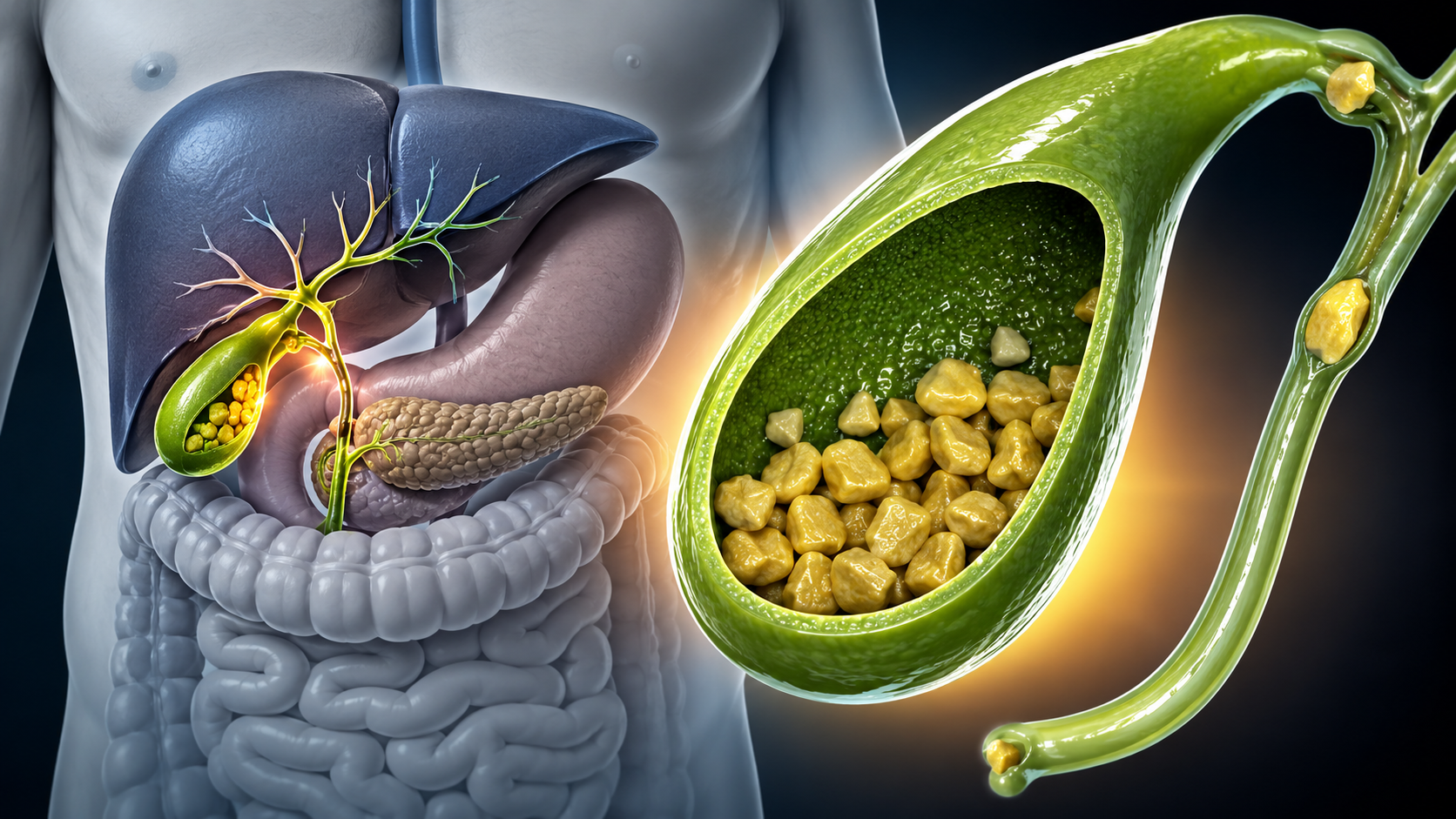
Medical Disclaimer: This article is for educational purposes only and should not replace professional medical advice, diagnosis, or treatment. Severe abdominal pain, jaundice, fever, vomiting, chest pressure, or signs of bile duct obstruction require prompt evaluation by a qualified healthcare professional.
If you have ever wondered what real gallbladder stones actually look like after surgery—or whether the soft green blobs shown in online “liver cleanse detox” videos are genuine—this guide explains the medical reality using pathology, imaging science, and digestive biochemistry.
Real gallstones are not soft gelatinous masses. They are mechanically solid crystalline structures that often develop over years inside the gallbladder. Some resemble smooth yellow pebbles, while others look like jagged charcoal fragments or tiny volcanic rocks. Understanding the difference between authentic gallstones and artificial “flush stones” may help people avoid dangerous misinformation and seek appropriate medical care when symptoms become severe.
Table of Contents
- What Do Real Gallbladder Stones Look Like?
- The Cross-Section View: Inside a Real Stone
- Colors and Composition of Real Gallstones
- Real Gallstones vs. Fake “Gallbladder Flush” Stones
- The Science of Gastric Saponification
- How Real Gallstones Appear on Medical Scans
- Real Gallstones After Surgery
- Frequently Asked Questions
Conclusion
What Do Real Gallbladder Stones Look Like?
Texture, Density, and Hardness
One of the biggest misconceptions online is the idea that gallstones are soft, jelly-like, or easily crushed.
Real gallstones are usually the exact opposite.
Authentic gallstones are typically:
- Hard
- Crystalline
- Dense
- Mechanically solid
- Resistant to compression
Many resemble:
- Pebbles
- Gravel
- Hardened wax beads
- Tiny rocks
- Crystalline mineral fragments
Some cholesterol stones appear smoother and more polished, while pigment stones often look rough, jagged, and irregular.
Why Real Gallstones Feel Like Actual Rocks
Gallstones develop through years of microscopic crystal accumulation.
Inside the gallbladder, bile gradually becomes oversaturated with cholesterol or bilirubin compounds. Tiny crystals slowly layer onto each other until they harden into compact structures.
Because of this long crystallization process, real gallstones generally:
- Do not dissolve in water
- Do not flatten under finger pressure
- Do not melt under mild heat
- Cannot usually be crushed by hand
This behavior is dramatically different from the soft green masses shown in internet “flush” videos.
The Mechanical Reality of Gallstones
Surgeons and pathology labs routinely describe real stones as:
- Firm
- Brittle
- Calcified
- Waxy-crystalline
- Dense enough to resist compression
Some stones even produce an audible clicking sound when dropped into a metal pathology tray.
Size Variability
Gallstones vary tremendously in size.
Doctors may remove:
- Sand-like microlithiasis
- Pea-sized stones
- Marble-sized stones
- Golf-ball-sized stones
Some patients develop one large dominant stone, while others accumulate hundreds of tiny stones suspended inside thick biliary sludge.
Shape and Surface Appearance
Gallstones may appear:
- Rounded
- Polygonal
- Faceted
- Jagged
- Layered
When multiple stones crowd together inside the gallbladder fundus wall, they may compress against each other and develop flattened crystal surfaces similar to stones packed tightly in a jar.
The Cross-Section View: Inside a Real Stone
What Happens When a Gallstone Is Cut Open?
One of the most fascinating discoveries in surgical pathology occurs when a gallstone is bisected.
Many real stones reveal concentric internal rings resembling:
- Tree rings
- Onion layers
- Geological sediment patterns
These layered rings document the stone’s gradual growth over years.
[IMAGE PLACEHOLDER: Cross-section medical illustration of a bisected cholesterol gallstone showing concentric ring layering around a central nidus]
The “Nidus” Theory: How Stones Begin
Most gallstones form around a tiny microscopic center called a nidus.
The nidus may contain:
- Cholesterol monohydrate crystals
- Calcium salts
- Bacterial debris
- Mucus glycoproteins
- Organic matrix material
Once the nidus forms, additional layers accumulate around it over time.
Cholesterol Monohydrate Crystal Precipitation
Cholesterol stones form when bile becomes supersaturated with cholesterol.
Eventually:
- Micelles destabilize
- Cholesterol precipitates from solution
- Crystals aggregate
- Layered crystalline growth develops
This process is called cholesterol monohydrate crystal precipitation.
Why Gallstones Usually Take Years to Form
Symptoms often appear suddenly, but stones themselves usually develop slowly.
The painful attack occurs only when stones obstruct:
- The cystic duct
- The gallbladder neck
- The common bile duct
- The biliary tree network
Many patients unknowingly carry gallstones for years before symptoms begin.
Colors and Composition: The Real-World Varieties
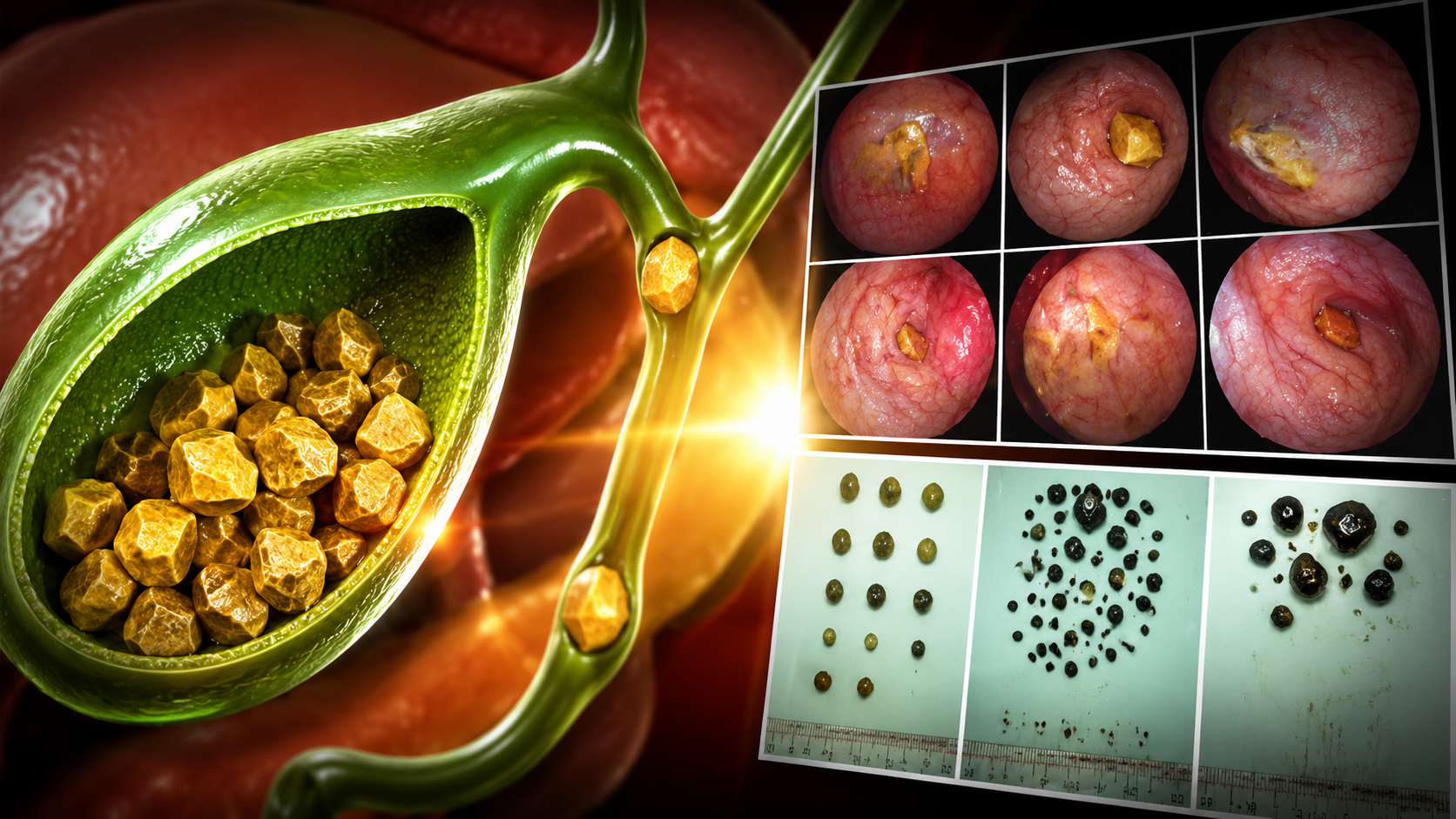
Gallstones differ dramatically depending on their chemical composition.
Real Cholesterol Stones (Yellow-Green Pebbles)
The Most Common Gallstone Type
Cholesterol stones account for approximately 75–80% of gallstones in developed countries, according to digestive disease data published by organizations such as the National Institute of Diabetes and Digestive and Kidney Diseases (NIDDK).
These stones are usually:
- Yellow-green
- Pale tan
- Cream-colored
- Waxy-looking
Surface Characteristics
Real cholesterol stones often appear:
- Smooth
- Slightly faceted
- Crystalline
- Pebble-like
Some resemble polished yellow gemstones.
Why They Are Greenish
Their coloration comes from:
- Cholesterol
- Oxidized bile pigments
- Biliverdin compounds
- Biliary fluid staining
Freshly removed stones may appear glossy because they remain coated in concentrated bile.
Can Cholesterol Stones Float?
Some pure cholesterol stones occasionally float because their specific gravity is close to bile fluid or water.
However, many cholesterol stones still sink depending on density and calcium content.
Real Pigment Stones (Black and Brown Rocks)
Black Pigment Stones
Black pigment stones look completely different from cholesterol stones.
They often resemble:
- Charcoal fragments
- Obsidian gravel
- Volcanic rocks
These stones are usually:
- Jet black
- Dense
- Brittle
- Jagged
- Extremely hard
Why Black Pigment Stones Form
Black pigment stones develop when bile contains excessive bilirubin.
Conditions linked to these stones include:
- Cirrhosis
- Hemolytic anemia
- Sickle cell disease
- Chronic liver disease
Calcium Bilirubinate Polymers
These stones contain:
- Calcium bilirubinate polymers
- Mineralized bile compounds
- Organic matrix proteins
This composition explains their dense, rock-like appearance.
Brown Pigment Stones
Brown pigment stones are somewhat softer than black pigment stones but still mechanically solid.
They may appear:
- Clay-like
- Muddy brown
- Irregular
- Crumbly
These stones are often associated with:
- Biliary infections
- Bacterial overgrowth
- Stagnant bile
- Chronic duct obstruction
Fact-Check: Real Gallstones vs. Fake “Gallbladder Flush” Stones
The Viral Olive Oil and Lemon Juice Cleanse
One of the most widespread internet myths involves so-called:
- Gallbladder flushes
- Liver cleanse detoxes
- Olive oil flushes
These regimens often instruct people to consume:
- Large amounts of olive oil
- Lemon juice or grapefruit juice
- Epsom salts
- Herbal laxatives
Afterward, people may pass dozens or hundreds of green soft blobs in stool and believe they expelled gallstones.
Why These Green Blobs Are Usually NOT Real Gallstones
Real gallstones do not suddenly pour out of the gallbladder after drinking oil.
More importantly:
- Real gallstones are hard
- Real stones resist pressure
- Real stones do not melt
- Real stones usually cannot pass safely through bile ducts in large numbers
The green masses shown online are generally soft fatty soap complexes formed inside the digestive tract itself.
Why Gallstones Usually Require Imaging Confirmation
Doctors confirm gallstones using:
- Transabdominal ultrasound probes
- Acoustic shadowing artifacts
- CT scans
- MRCP imaging
- Surgical pathology tissue specimens
Stool appearance alone cannot reliably diagnose gallstones.
The Science of Gastric Saponification
What Is Saponification?
Saponification is a chemical reaction involved in soap formation.
When oils combine with acids and digestive enzymes, fatty soap-like compounds may form.
What Happens During an Olive Oil Flush?
During a typical flush:
- Large quantities of olive oil enter the stomach
- Citric acid from lemon juice mixes with fats
- Gastric lipases begin breaking down oils
- Bile pigments color the mixture green
- Soft fatty soap complexes form inside the intestines
These soft masses are not calcified gallstones from the gallbladder.
Why Flush “Stones” Melt
Artificial soap complexes behave very differently from authentic gallstones.
They often:
- Melt under heat
- Crush easily
- Flatten with finger pressure
- Break apart easily
- Lack crystalline architecture
Real gallstones remain mechanically solid.
Why the Flush Myth Persists
The visual effect is dramatic.
People naturally assume:
“Something came out, therefore toxins or stones must have left the body.”
However, the digestive tract itself can manufacture these soap-like masses chemically under these conditions.
Important Safety Warning About Gallbladder Flushes
Warning: No, a gallbladder flush cannot safely remove large stones, and attempting one may be dangerous.
Drinking massive quantities of oil forces the gallbladder to contract aggressively. If real stones are present, this sudden forceful contraction may push a stone directly into the narrow bile ducts, causing:
- Acute mechanical obstruction
- Acute cholecystitis
- Gallstone pancreatitis
- Severe bile duct blockage
- Life-threatening infection
These emergencies may require urgent hospitalization or surgery.
[IMAGE PLACEHOLDER: Side-by-side infographic comparing hard crystalline real gallstones vs soft green soap-like flush masses]
Laboratory Analysis of Flush “Stones”
Several published medical analyses of “flush stones” found that many consisted primarily of:
- Fatty acids
- Soap complexes
- Digestive lipids
- Olive oil byproducts
rather than true crystalline gallstones.
Seeing the Unseen: How Real Gallstones Appear on Medical Scans
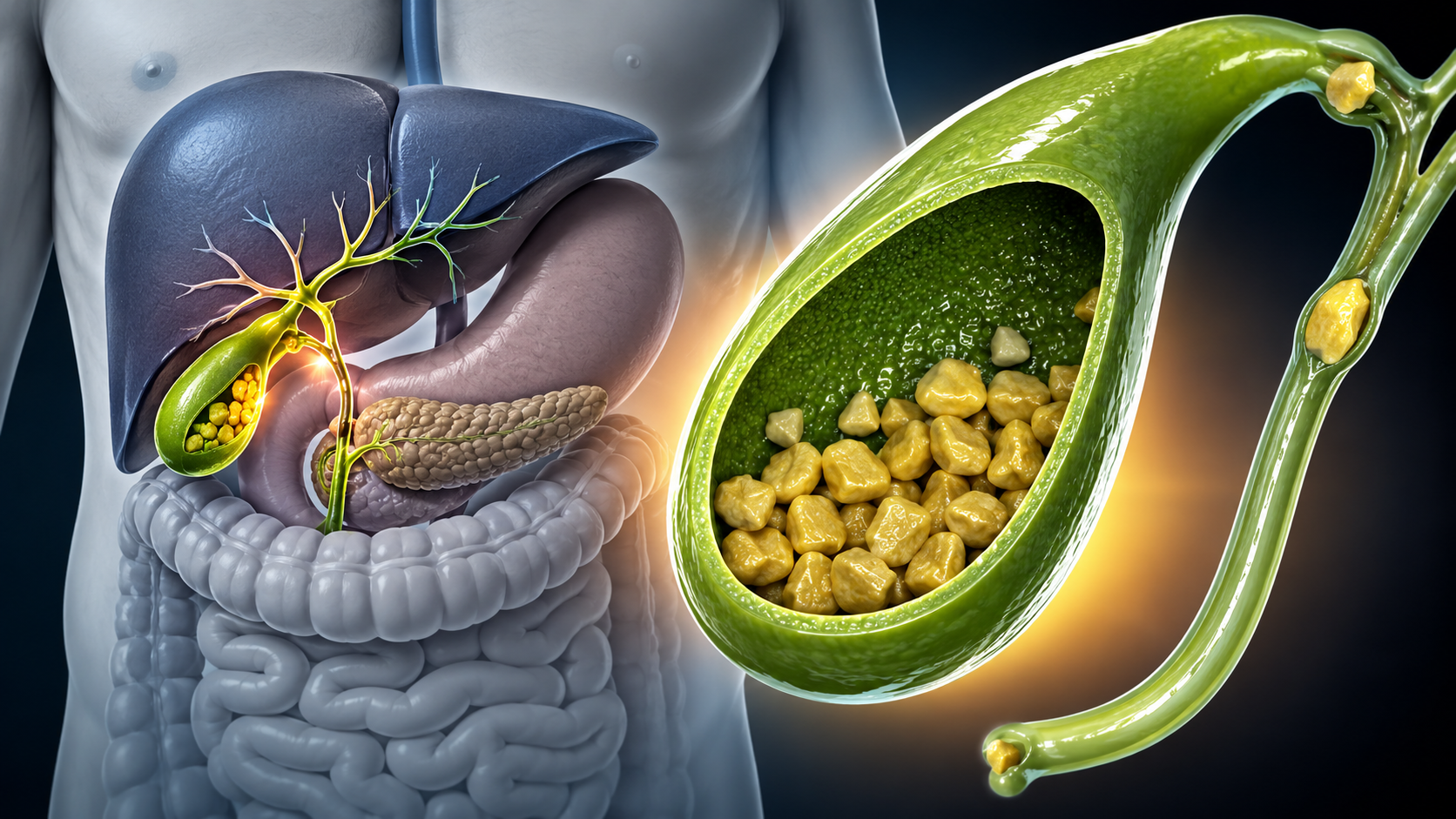
The “Acoustic Shadow” on a Real Ultrasound
Ultrasound is considered the gold-standard first-line imaging test for gallstones.
Real stones appear as:
- Bright hyperechoic structures
- Dense reflective masses
- Shadow-producing objects
What Is Acoustic Shadowing?
Because gallstones are dense, ultrasound waves cannot pass through them effectively.
Instead, the ultrasound beam creates a dark strip behind the stone called an acoustic shadowing artifact.
[IMAGE PLACEHOLDER: Medical ultrasound diagram showing hyperechoic gallstone with posterior acoustic shadow]
Why Acoustic Shadowing Matters
Acoustic shadowing helps physicians distinguish true stones from:
- Soft sludge
- Polyps
- Air bubbles
- Debris
This is why ultrasound remains highly accurate for gallstone diagnosis.
Why Cholesterol Stones Are Often “Invisible” on Standard X-Rays
Radiolucent vs. Radiopaque Stones
Pure cholesterol stones are usually radiolucent, meaning they do not block X-rays effectively.
As a result, many cholesterol stones cannot be seen clearly on standard abdominal X-rays.
Why Pigment Stones Appear More Easily
Pigment stones often contain calcium.
Calcium increases radiopacity, making these stones more visible on X-ray imaging.
The Important Statistical Reality
Only a minority of gallstones are clearly visible on standard abdominal X-rays.
Some medical estimates suggest approximately 10–15% of gallstones contain enough calcium to appear radiopaque on plain films.
This explains why ultrasound—not X-ray—is considered the diagnostic gold standard.
Additional Imaging Modalities
Doctors may also use:
- CT scans
- MRCP imaging
- ERCP procedures
These tests help evaluate:
- Bile duct obstruction
- Pancreatitis
- Cholangitis
- Cystic duct mechanical blockage
Real Gallstones After Surgery (Post-Cholecystectomy Reality)
What Happens During Gallbladder Surgery?
The standard treatment for symptomatic gallstones is usually laparoscopic cholecystectomy.
This minimally invasive surgery removes the gallbladder through several small incisions.
The Surgical Specimen Bag
After removal:
- The gallbladder is placed into a laparoscopic cholecystectomy bag
- The specimen is extracted through a small incision
- The pathology lab examines the tissue specimen carefully
Why Pathologists Open the Gallbladder
Pathologists typically inspect the gallbladder for:
- Stone composition
- Gallbladder wall thickening
- Polyps
- Chronic inflammation
- Rare malignancy
What Patients Often Notice
Many patients are surprised when they see their actual stones after surgery.
Instead of soft green blobs, they typically see:
- Hard crystalline pebbles
- Black rocky fragments
- Dense mineralized structures
The visual difference between real pathology specimens and internet cleanse masses is usually dramatic.
Frequently Asked Questions (FAQ)
Can you crush a real gallstone with your fingers?
No. Real gallstones are solid, calcified, or crystalline structures that are usually as hard as pebbles or rocks. They cannot typically be crushed or molded by finger pressure. Soft, gelatinous green spheres passed after herbal flushes are more likely artificial soap complexes formed inside the digestive tract.
Why do some real gallstones look like black charcoal?
Those are called black pigment gallstones. They form when bile contains excess bilirubin. These stones contain calcium bilirubinate polymers and organic matrix material, giving them a dense black appearance resembling charcoal or gravel.
Is it true that real gallstones can float in water?
Some pure cholesterol gallstones may occasionally float because their specific gravity is close to bile or water. However, many pigment stones are dense enough to sink quickly.
Can a gallbladder flush safely remove large stones?
No. Gallbladder flushes are not considered a safe or reliable way to remove true gallstones. Drinking large amounts of oil may force aggressive gallbladder contractions that could push a real stone into narrow bile ducts, potentially triggering dangerous obstruction, pancreatitis, or acute infection requiring emergency medical treatment.
Why do doctors trust ultrasound more than stool appearance?
Ultrasound directly visualizes hyperechoic stones, acoustic shadowing artifacts, sludge, and bile duct abnormalities inside the biliary system. Stool appearance alone cannot reliably confirm authentic gallstones.
Conclusion
Real gallbladder stones are dense crystalline structures formed gradually through cholesterol precipitation, bilirubin accumulation, and bile stagnation inside the gallbladder.
They are mechanically solid, often rock-hard, and visually very different from the soft green soap-like masses produced during online “gallbladder flush” cleanses.
Understanding the difference between authentic gallstones and artificial flush byproducts may help patients avoid misinformation, recognize dangerous symptoms earlier, and seek proper medical evaluation when necessary.
If symptoms become severe—especially with fever, jaundice, vomiting, chest pressure, or persistent upper abdominal pain—prompt medical care is important.