Rotator Cuff Strain: Causes, Symptoms, and Treatment Guide
What Is a Rotator Cuff Strain?
A rotator cuff strain is one of the most common shoulder injuries affecting people of all ages — from athletes and manual laborers to older adults experiencing gradual wear and tear. The rotator cuff is a group of four muscles and their associated tendons that stabilize the shoulder joint and allow a wide range of arm movements. When these muscles or tendons are overstretched or partially torn, the result is a rotator cuff strain.
Understanding the difference between a strain and a tear is important: a strain involves overstretching of the muscle fibers without complete rupture, while a tear means the tissue has been fully or partially severed. Both conditions share similar symptoms but differ in severity and treatment approach.
Common Causes of Rotator Cuff Strain
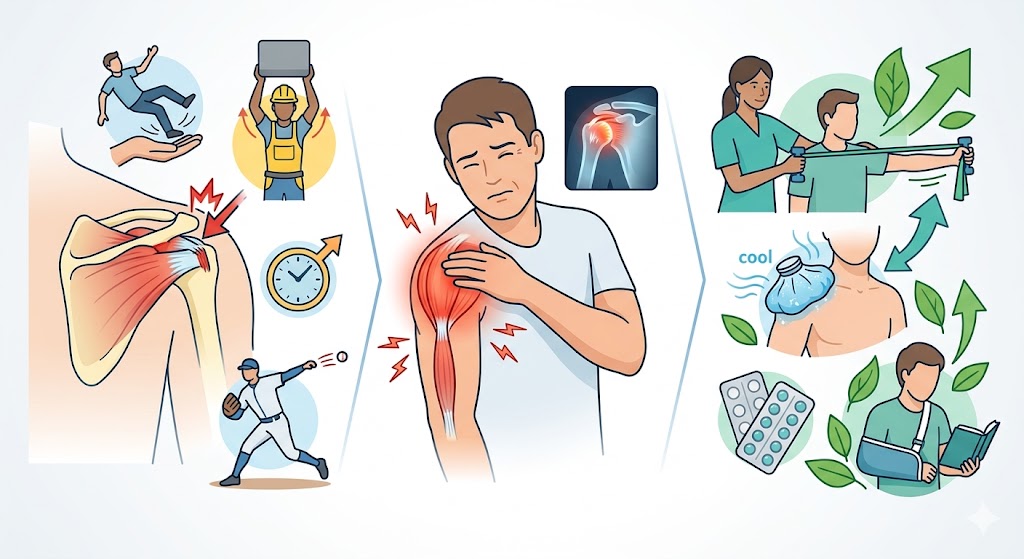
Rotator cuff strains typically result from one of two mechanisms: acute injury or chronic overuse.
Acute causes include sudden jerking movements of the arm, falling on an outstretched hand, lifting a heavy object improperly, or a direct blow to the shoulder. Sports such as baseball, tennis, swimming, and weightlifting put athletes at particularly high risk for acute strains.

Chronic overuse is equally common, especially in occupations that require repetitive overhead motions — painters, carpenters, and warehouse workers frequently develop rotator cuff strains over time. As the tendons are repeatedly stressed without adequate rest and recovery, micro-tears accumulate and lead to a full strain.
Age is another contributing factor. As we get older, the blood supply to the tendons decreases and the tissue becomes less resilient, making the rotator cuff more vulnerable to strain even with everyday activities.
Recognizing the Symptoms of a Rotator Cuff Strain
The symptoms of a rotator cuff strain can range from mild discomfort to severe pain that limits daily activities. Key warning signs include dull aching pain deep in the shoulder (often worse at night), pain radiating from the top of the shoulder down toward the elbow, weakness when lifting or reaching overhead, a clicking or popping sensation during shoulder movement, and stiffness with reduced range of motion.
If you notice sudden, sharp pain after an injury along with immediate loss of arm strength, seek medical attention promptly as this may indicate a more severe tear rather than a simple strain.
How Is a Rotator Cuff Strain Diagnosed?
A healthcare provider will begin with a thorough physical examination, testing shoulder strength, range of motion, and pain responses. Specific orthopedic tests — such as the Neer impingement test, Hawkins-Kennedy test, and drop arm test — help pinpoint rotator cuff involvement.
Imaging studies play a crucial role in diagnosis. X-rays rule out bone fractures or arthritis. Ultrasound is a cost-effective, real-time tool for evaluating tendon integrity. MRI provides the most detailed view of soft tissue damage and is the gold standard for assessing the extent of a rotator cuff strain or tear.
Treatment Options for Rotator Cuff Strain
The good news is that most rotator cuff strains respond well to conservative (non-surgical) treatment, especially when addressed early. Rest and activity modification are the first steps — avoid activities that aggravate the shoulder and use a sling if recommended. Apply ice packs for 15–20 minutes several times a day during the first 48–72 hours to reduce inflammation. Anti-inflammatory medications such as ibuprofen or naproxen help manage pain and swelling.
Physical therapy is the cornerstone of recovery. A structured rehabilitation program focuses on restoring flexibility, strengthening the rotator cuff muscles, and correcting movement patterns. For persistent pain, corticosteroid injections can provide significant relief and allow better participation in physical therapy.
Recovery Time and Prognosis
Recovery from a rotator cuff strain depends on the severity of the injury and the consistency of rehabilitation. Mild strains may heal within 2–4 weeks with proper rest and therapy. Moderate strains typically require 6–12 weeks of physical therapy. More severe strains that approach a partial tear may take 3–6 months to fully resolve. Returning to sports or physically demanding work too soon is the most common reason for re-injury.
Prevention Strategies
Preventing rotator cuff strains involves a combination of strength training, flexibility work, and movement awareness. Regularly strengthening the rotator cuff muscles through targeted exercises — such as external rotation with resistance bands, side-lying dumbbell raises, and prone Y-T-W movements — builds resilience. Always warm up thoroughly before physical activity, practice proper technique during sports and lifting, and take adequate rest between training sessions.
Conclusion
A rotator cuff strain is a painful but highly treatable condition. With the right combination of rest, physical therapy, and guided return to activity, most people recover fully and regain complete shoulder function. If you suspect a rotator cuff strain, don't ignore the symptoms — early intervention is the key to a faster, more complete recovery.