Rotator Cuff Symptoms: A Complete Guide to Identifying Shoulder Problems
Understanding Rotator Cuff Symptoms
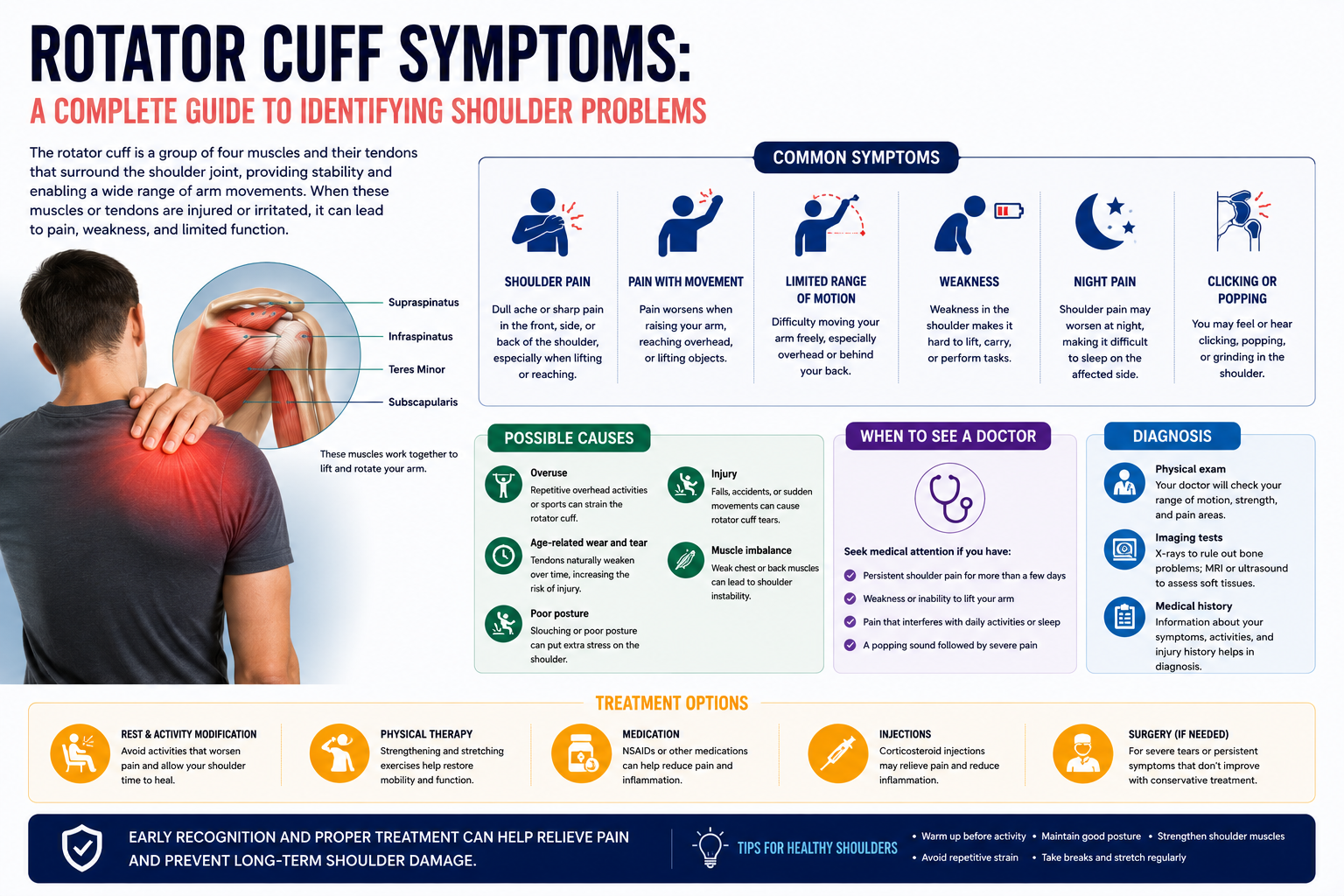
The rotator cuff is a critical structure of the shoulder, comprising four muscles — the supraspinatus, infraspinatus, teres minor, and subscapularis — along with their tendons. These work together to keep the humeral head centered in the shoulder socket and enable lifting, rotating, and reaching movements. When the rotator cuff is injured or deteriorating, it produces a distinctive set of symptoms that are important to recognize early for the best outcome.
Rotator cuff symptoms can develop suddenly after an acute injury or gradually over weeks and months due to repetitive stress or age-related degeneration. Understanding the full spectrum of symptoms helps you determine whether you need rest, therapy, or urgent medical care.

The Most Common Rotator Cuff Symptoms
Shoulder pain is the hallmark symptom of a rotator cuff problem. The pain is typically located on the outer side of the shoulder and upper arm, often described as a dull, deep ache rather than a sharp, localized hurt. It frequently worsens at night, particularly when lying on the affected shoulder, which is a distinguishing feature that strongly suggests rotator cuff involvement rather than other shoulder conditions.
Weakness in the shoulder and arm is another major symptom. You may notice difficulty performing everyday tasks such as reaching overhead to grab something from a shelf, lifting a bag of groceries, or combing your hair. In more severe cases, the arm may feel completely unable to be raised to shoulder height.
Pain with specific movements is characteristic. Activities that involve lifting the arm out to the side, reaching behind the back, or rotating the arm outward tend to provoke the most discomfort. This pattern is directly linked to which tendon or muscle is most affected.
Nighttime Pain and Sleep Disturbance
One of the most telling rotator cuff symptoms is pain that significantly worsens at night. Many patients report being woken from sleep by shoulder discomfort, especially when rolling onto the injured side. This occurs because lying down increases pressure on the tendons and reduces circulation to the already compromised tissue. If nighttime shoulder pain is disrupting your sleep regularly, this is a strong signal to seek evaluation.
Reduced Range of Motion
Stiffness and a reduced range of motion often accompany rotator cuff problems. You may find it difficult to raise your arm fully overhead, rotate it externally, or reach behind your back to fasten clothing. In chronic cases where inflammation has been present for a long time, the shoulder capsule can tighten and lead to frozen shoulder (adhesive capsulitis), which compounds the limitation significantly.
Clicking, Popping, or Grinding Sounds
Some people with rotator cuff injuries notice audible or palpable sounds during shoulder movement — clicks, pops, or crepitus (a grinding sensation). While occasional clicking in a pain-free shoulder is usually harmless, consistent clicking accompanied by pain is a warning sign of structural damage to the tendons or surrounding tissue.
Muscle Atrophy
In long-standing or severe rotator cuff injuries, the muscles around the shoulder may visibly waste away (atrophy). This is particularly noticeable in the muscles above and below the shoulder blade. Muscle wasting indicates that the nerve supply or mechanical use of the muscle has been significantly compromised, and it typically requires more intensive rehabilitation or surgical intervention.
How Rotator Cuff Symptoms Differ by Injury Type
The specific combination of symptoms can hint at the type of rotator cuff injury present. A rotator cuff strain (overstretching without tearing) typically causes mild to moderate pain with preserved strength. A partial tear produces more significant pain and moderate weakness. A full-thickness (complete) tear may cause severe weakness — the arm may be unable to be actively lifted — though some people with large tears surprisingly have less pain than expected.
When to Seek Medical Help
Not all shoulder pain requires urgent care, but certain rotator cuff symptoms should prompt you to see a doctor promptly. These include sudden severe pain after an injury, complete inability to lift or move your arm, significant weakness that appeared suddenly, symptoms that persist beyond two weeks without improvement, or pain severe enough to interfere with sleep and daily activities.
A healthcare provider can perform physical examination tests and order imaging — typically an ultrasound or MRI — to confirm the diagnosis and determine the appropriate treatment plan.
Differentiating Rotator Cuff Symptoms from Other Conditions
Several other conditions can mimic rotator cuff symptoms, including shoulder bursitis, AC joint arthritis, biceps tendinitis, shoulder impingement syndrome, and cervical radiculopathy (neck nerve compression). A thorough clinical evaluation is essential to ensure accurate diagnosis, since the treatment approach differs significantly between these conditions.
Conclusion
Recognizing rotator cuff symptoms early can make the difference between a straightforward recovery and a prolonged, complicated rehabilitation process. If you experience persistent shoulder pain, weakness, or restricted movement, don't dismiss it as normal aging or minor strain. Seek professional evaluation to get an accurate diagnosis and start appropriate treatment before the condition worsens.