Rotator Cuff Tear Symptoms: How to Know If You Have a Tear
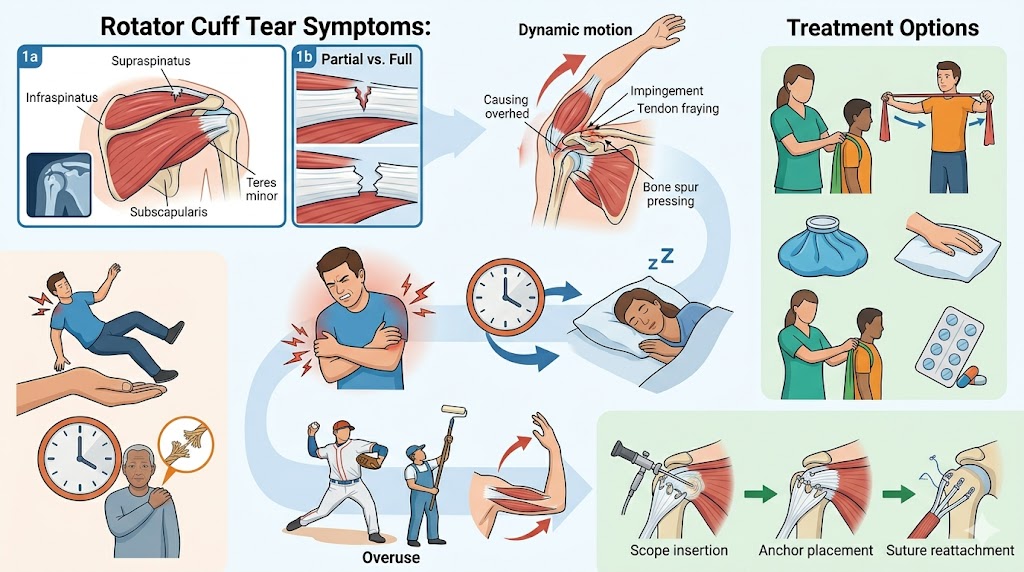
Recognizing Rotator Cuff Tear Symptoms
Rotator cuff tear symptoms can range from a mild, nagging ache to sudden, debilitating pain and complete inability to lift the arm. Because the symptoms of a rotator cuff tear can overlap with those of other shoulder conditions — such as bursitis, impingement, or biceps tendinitis — it's important to understand the specific patterns that distinguish a true tear from less serious problems.
The symptoms you experience will depend on several factors: whether the tear was caused by an acute injury or gradual degeneration, whether it is a partial or complete (full-thickness) tear, and which specific tendon within the rotator cuff is affected. Here is a comprehensive breakdown of what to expect.

Pain: The Primary Symptom
Pain is the most consistent and often most disabling symptom of a rotator cuff tear. The pain is typically felt deep in the shoulder joint, on the outer side or front of the shoulder, and may radiate down the upper arm toward the elbow. It rarely extends below the elbow unless there is also a nerve component to the injury.
A key characteristic of rotator cuff tear pain is that it worsens significantly at night, particularly when lying on the affected shoulder. Many patients report being awakened multiple times during the night by pain, and some find that no sleeping position provides relief. This night pain pattern is a particularly strong indicator of rotator cuff pathology.
Pain also worsens with specific overhead activities — reaching for objects on high shelves, lifting the arm above shoulder height, throwing, or any activity that requires shoulder rotation. Resting the arm typically eases the pain, but the relief is often incomplete.
Arm Weakness
Weakness in the affected arm is one of the most functionally significant rotator cuff tear symptoms. You may notice that you struggle to raise your arm to the side or forward against resistance, have difficulty lifting objects that previously felt light, feel the arm "give out" during certain movements, or are unable to maintain the arm in a raised position (the arm drops involuntarily).
The degree of weakness correlates roughly with the size of the tear. A small partial tear may cause only mild weakness, while a massive full-thickness tear involving multiple tendons can leave the arm almost completely unable to be actively lifted. This "pseudoparalysis" — where the patient can feel the shoulder moving passively but cannot actively raise the arm — is a hallmark of a massive rotator cuff tear.
Decreased Range of Motion
Alongside pain and weakness, rotator cuff tear symptoms frequently include a reduced range of motion. Patients often report difficulty reaching behind the back (such as fastening a bra or tucking in a shirt), reaching across the body, or lifting the arm fully overhead. Stiffness after inactivity is also common, with the shoulder feeling particularly tight in the morning or after prolonged periods of rest.
Chronic, untreated rotator cuff tears can lead to progressive stiffening of the shoulder capsule, eventually resulting in adhesive capsulitis (frozen shoulder), which dramatically worsens range of motion and requires extensive treatment to resolve.
Clicking, Popping, and Crepitus
Audible or palpable mechanical sensations — including clicking, popping, catching, or a grinding feeling (crepitus) — during shoulder movement are frequently reported by people with rotator cuff tears. These sensations occur because the torn tendon edges may catch on surrounding structures as the shoulder moves, or because the torn tissue disrupts the smooth mechanical function of the joint.
While occasional shoulder clicking without pain is usually benign, persistent clicking or popping that is accompanied by pain or weakness warrants evaluation for rotator cuff pathology.
Symptoms of an Acute vs. Degenerative Tear
The symptom onset pattern provides important diagnostic clues. An acute rotator cuff tear from a traumatic event (such as a fall or forceful lifting) typically produces immediate, severe pain at the moment of injury, followed by rapid onset of weakness and difficulty moving the shoulder. Patients often describe hearing or feeling a "pop" at the time of injury.
In contrast, a degenerative rotator cuff tear develops gradually, with symptoms that may begin as intermittent, mild shoulder discomfort during specific activities. Over months or years, the pain and weakness progressively worsen as the tear enlarges. Some patients with large degenerative tears actually report less pain than those with smaller acute tears, as the nervous system has adapted to the chronic injury.
Symptoms by Tendon Affected
Different tendons produce slightly different symptom patterns. Supraspinatus tears (the most common) cause pain and weakness with lifting the arm out to the side or forward. Infraspinatus and teres minor tears primarily affect external rotation — turning the arm outward — causing weakness when opening doors or steering a car. Subscapularis tears (less common) produce weakness with internal rotation, such as reaching behind the back or tucking in clothing.
When to See a Doctor
You should seek medical evaluation for possible rotator cuff tear symptoms if shoulder pain has persisted for more than 2–4 weeks without improvement, if there is notable weakness in the shoulder, if pain is severe enough to disrupt sleep or daily activities, or if symptoms developed after a traumatic injury. Early diagnosis is crucial — delaying care can allow the tear to enlarge, the muscle to atrophy and retract, and the window for optimal surgical repair to close.
Conclusion
Rotator cuff tear symptoms are often distinctive and recognizable once you know what to look for. Persistent shoulder pain, especially at night; unexplained arm weakness; reduced range of motion; and mechanical clicking or catching sensations together paint a clear clinical picture. If you recognize these symptoms in yourself, consult an orthopedic specialist for a thorough evaluation and appropriate treatment plan.