The Ultimate Guide to the Gallbladder: Anatomy, Function, Symptoms & Treatment
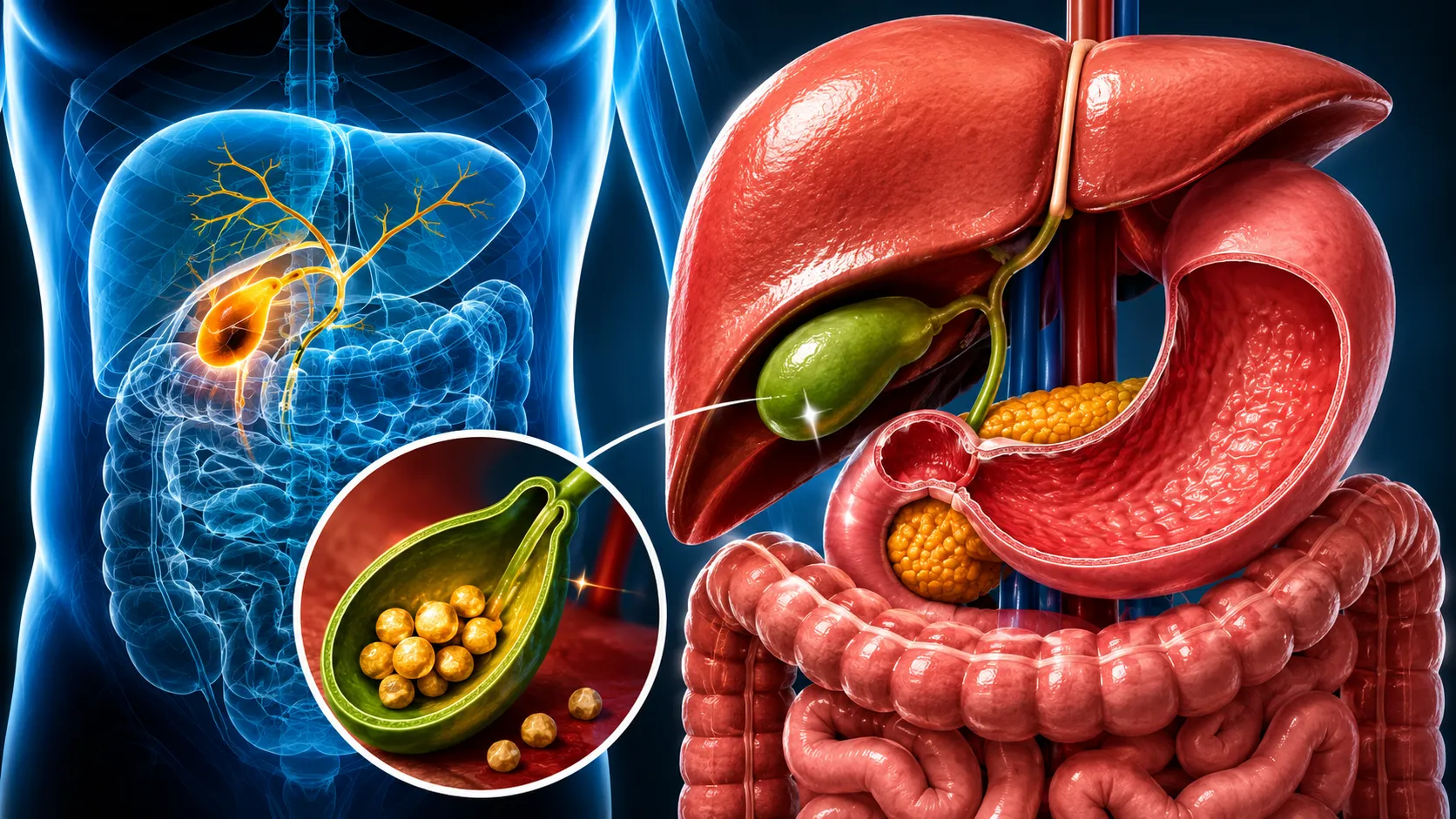
Though small and often overlooked, the gallbladder plays a major role in digestion and fat metabolism. Problems affecting the gallbladder can range from mild digestive discomfort to severe medical emergencies involving infection, bile duct blockage, or pancreatitis.
Many people do not think about the gallbladder until symptoms suddenly appear after a heavy meal or late at night. Pain beneath the right rib cage, nausea, bloating, or pain radiating into the back may all signal gallbladder disease. In some cases, symptoms remain silent for years before a sudden gallbladder attack occurs.
This medically reviewed guide explains what the gallbladder does, where it is located, the most common gallbladder diseases, warning signs of a gallbladder attack, modern diagnostic tests, treatment options, and what recovery looks like after gallbladder removal surgery. The structure and semantic coverage in this article are based on the uploaded healthcare SEO pillar outline and quality-review recommendations.
Table of Contents
- What Is the Gallbladder and Where Is It Located?
- What Does the Gallbladder Actually Do?
- Common Gallbladder Conditions and Diseases
- How Dieting and Lifestyle Cause Gallstones
- Gallbladder Symptoms and Warning Signs
- Diagnosis and Clinical Tests
- Gallbladder Removal Surgery (Cholecystectomy)
- Living Without a Gallbladder
- FAQ
- Conclusion
What Is the Gallbladder and Where Is It Located?
Anatomy and Physical Characteristics
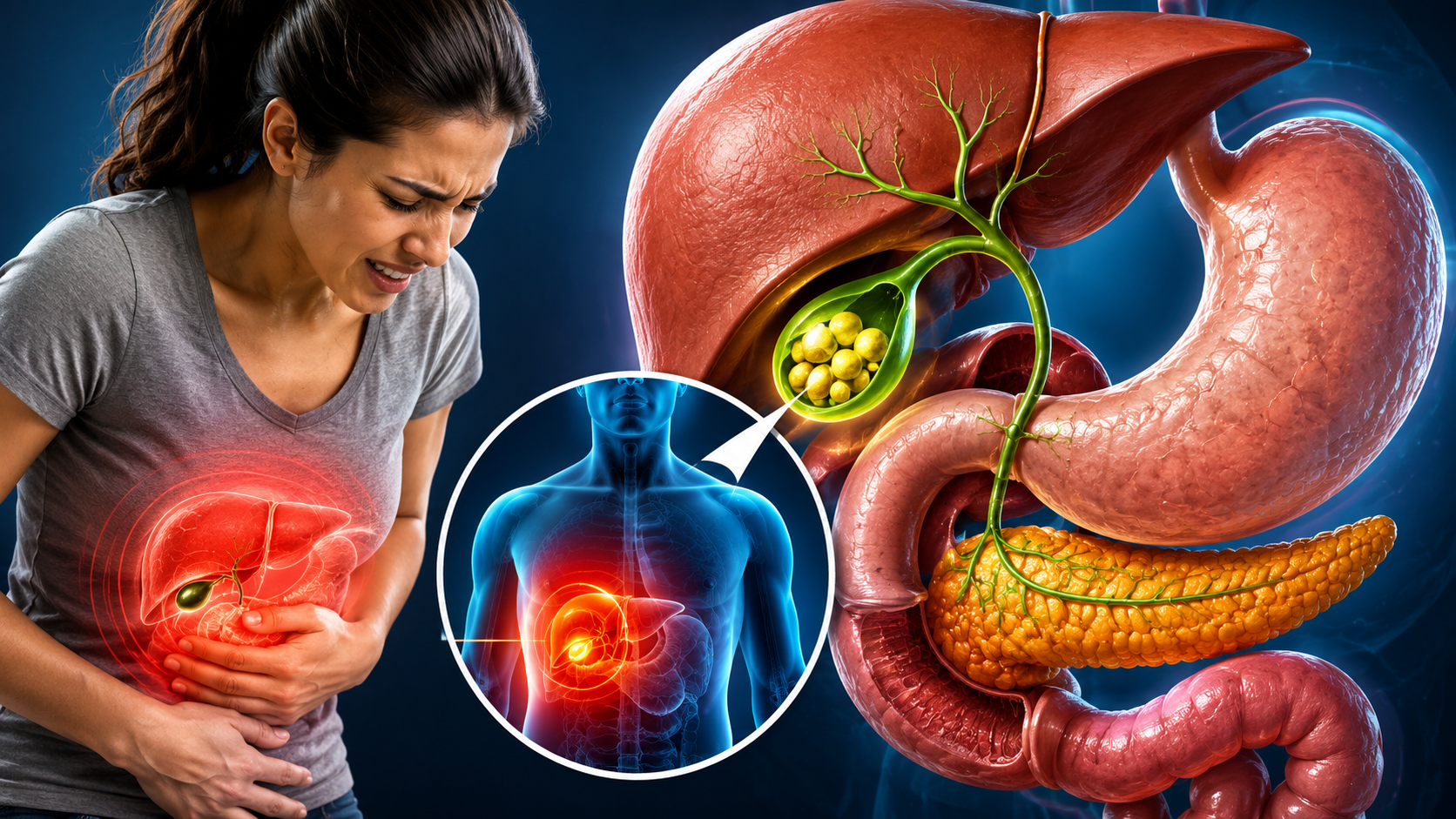
The gallbladder is a small, pear-shaped organ located beneath the liver.
In most adults, it measures approximately:
- 3–4 inches long
- 1–2 inches wide
- Thin-walled and hollow
- Dark green because of concentrated bile
Although small, the gallbladder connects directly to the digestive system through an intricate network of bile ducts called the biliary tree.
The biliary system includes:
- Cystic duct
- Common bile duct (CBD)
- Hepatic ducts
- Sphincter of Oddi
- Duodenum (first part of the small intestine)
Together, these structures regulate the movement of bile from the liver into the intestines.
Mapping the Location in Your Abdomen
The gallbladder sits:
- Underneath the liver
- In the upper right quadrant (RUQ) of the abdomen
- Beneath the right rib cage
- Near the upper middle stomach
Gallbladder pain usually develops in this region.
However, discomfort may also radiate into:
- The right shoulder blade
- Upper back
- Chest
- Upper middle abdomen
This phenomenon is called referred pain and occurs because of shared nerve pathways involving the diaphragm and phrenic nerve.
Why Gallbladder Location Matters Clinically
The gallbladder lies close to several important organs, including:
- Liver
- Pancreas
- Duodenum
- Colon
Because these organs share overlapping nerve signals, gallbladder disease may mimic:
- Acid reflux
- Gastritis
- Pancreatitis
- Kidney stones
- Heart-related pain
This overlap sometimes delays diagnosis.
Function: What Does the Gallbladder Actually Do?
The Liver–Gallbladder Partnership
One of the most common misconceptions is that the gallbladder produces bile.
It does not.
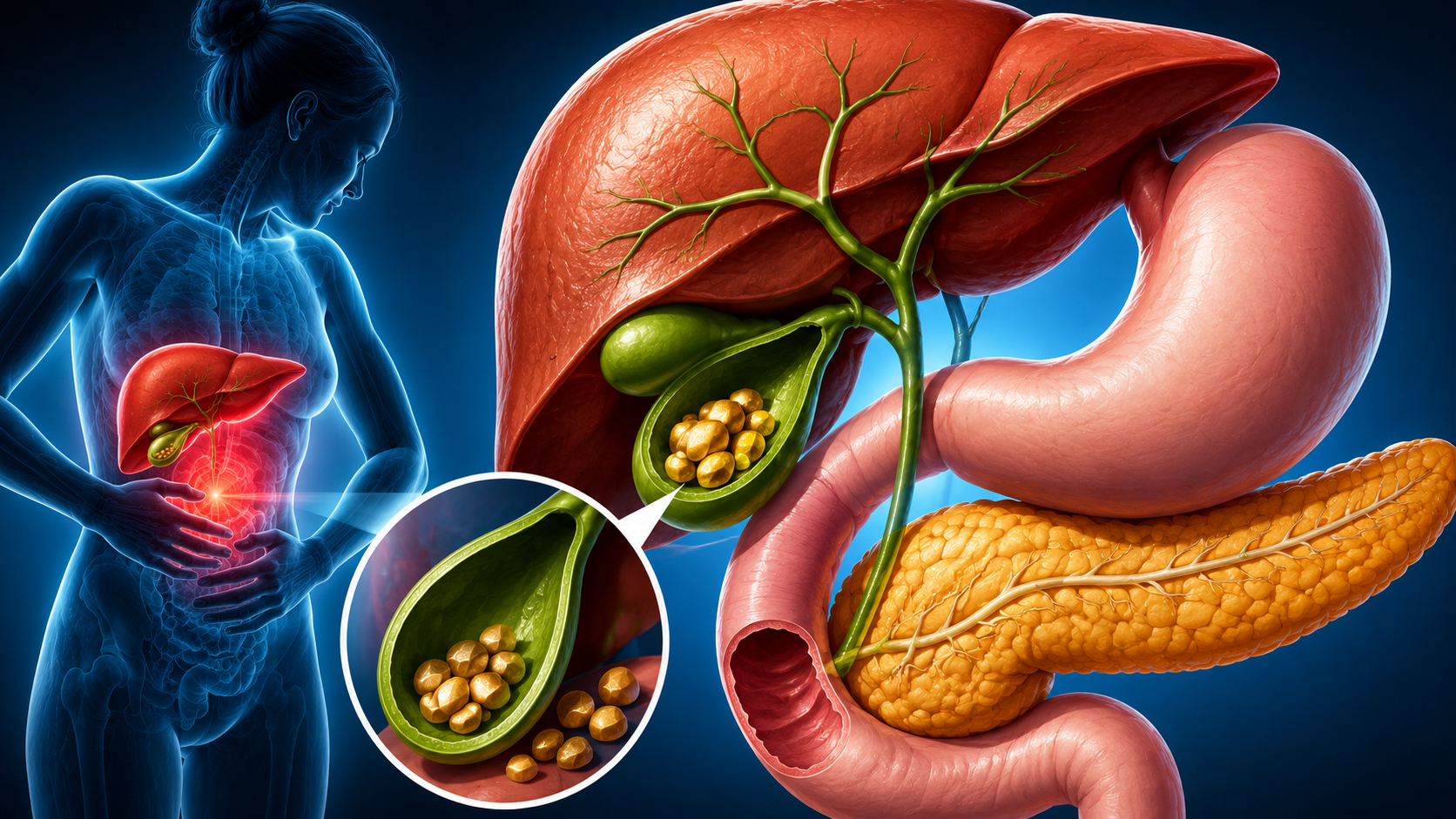
The liver produces bile continuously throughout the day.
The gallbladder functions as:
- A storage reservoir
- A concentration chamber
- A controlled release system for bile
Bile flows from the liver through the hepatic ducts and into the gallbladder, where water is removed to create highly concentrated bile.
What Is Bile?
Bile is a digestive fluid containing:
- Bile salts
- Cholesterol
- Bilirubin
- Lecithin
- Electrolytes
- Water
Bilirubin forms when the body breaks down old red blood cells.
Cholesterol and bile salts help digest fats.
How Bile Helps Digest Fats (The Emulsification Process)
Bile works similarly to dish soap in a greasy pan.
When you eat fatty foods:
- Fat enters the small intestine
- The intestine releases a hormone called cholecystokinin (CCK)
- CCK signals the gallbladder to contract
- Concentrated bile is squeezed into the duodenum
- Bile breaks large fat droplets into tiny particles
This process is called emulsification.
Emulsification allows digestive enzymes to absorb fats more efficiently.
Why Gallbladder Problems Affect Digestion
If bile flow becomes blocked:
- Fat digestion becomes less efficient
- Bloating increases
- Nausea may occur
- Fatty meals may trigger pain
- Loose stools or diarrhea can develop
Some people gradually begin avoiding greasy foods because they repeatedly trigger symptoms.
Common Gallbladder Conditions and Diseases
Gallstones (Cholelithiasis): The Most Common Culprit
Gallstones are hardened deposits that form inside the gallbladder.
They are extremely common and may range in size from:
- Tiny grains of sand
- Pebble-sized stones
- Golf-ball-sized masses
The Two Main Types of Gallstones
Cholesterol Stones
These are the most common type.
Characteristics include:
- Yellow-green appearance
- Formed from excess cholesterol
- Linked to obesity and metabolic syndrome
Pigment Stones
These stones are:
- Dark brown or black
- Associated with excess bilirubin
- More common in liver disease and blood disorders
Why Gallstones Form
Gallstones develop when bile chemistry becomes imbalanced.
Factors include:
- High cholesterol saturation index
- Reduced bile salts
- Poor gallbladder emptying
- Bile stasis
- Thickened bile sludge
Over time, crystals harden into stones.
Gallbladder Polyps: When Are They Dangerous?
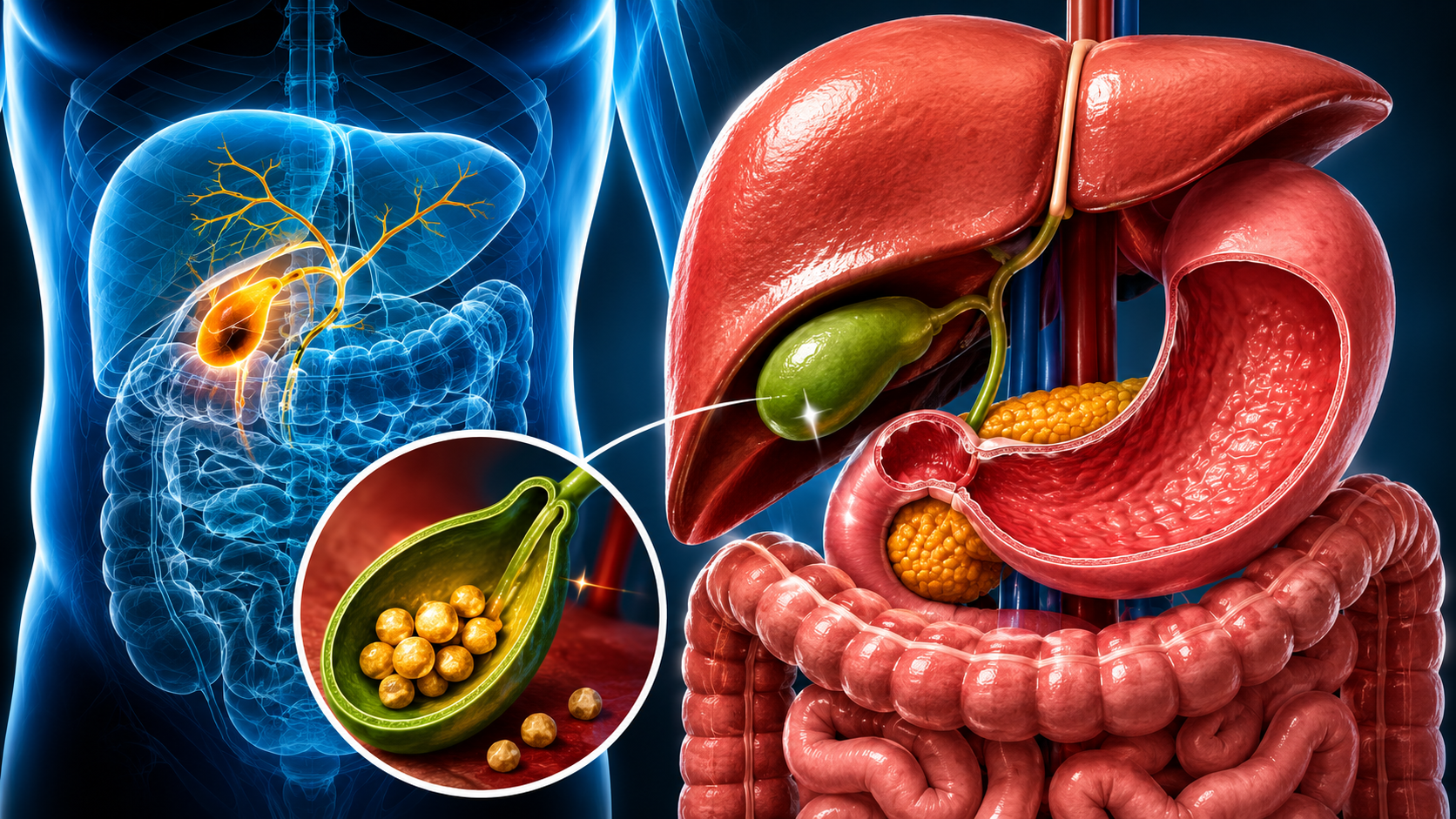
Gallbladder polyps are small growths protruding from the gallbladder wall.
Many are benign cholesterol polyps discovered incidentally during ultrasound imaging.
Size Matters
Doctors often use size as a risk guide:
- Under 10 mm → usually monitored
- Over 10 mm → may require surgical removal
Larger polyps may carry a higher malignancy risk, which is why many gastroenterology guidelines recommend closer monitoring or surgical consultation for larger lesions.
Porcelain Gallbladder
Porcelain gallbladder refers to calcification and hardening of the gallbladder wall.
This rare condition is clinically important because it may increase gallbladder cancer risk in some patients.
Cholecystitis (Gallbladder Inflammation)
Cholecystitis occurs when a gallstone blocks the cystic duct.
This causes:
- Bile backup
- Swelling
- Increased pressure
- Infection risk
Acute vs. Chronic Cholecystitis
Acute Cholecystitis
Symptoms develop suddenly:
- Severe right upper abdominal pain
- Fever
- Nausea
- Vomiting
- Positive Murphy’s sign
Chronic Cholecystitis
Repeated mild inflammation gradually scars the gallbladder over time.
Symptoms may include:
- Digestive discomfort
- Bloating
- Mild intermittent pain
- Food intolerance
Additional Gallbladder Conditions
Biliary Sludge
Biliary sludge consists of thickened bile particles that accumulate when the gallbladder empties poorly.
Sludge may eventually form gallstones.
Choledocholithiasis
This occurs when stones enter the common bile duct (CBD).
This condition may block bile flow from both the liver and gallbladder.
Gallstone Pancreatitis
If stones block the pancreatic duct near the sphincter of Oddi, digestive enzymes may inflame the pancreas.
This can become life-threatening.
Gallstone Ileus
Gallstone ileus is a rare but serious complication in which a gallstone enters the intestine and causes bowel obstruction.
Symptoms may include:
- Severe bloating
- Vomiting
- Abdominal distension
- Constipation
Biliary Dyskinesia
Some individuals experience gallbladder dysfunction without visible stones.
The gallbladder simply fails to contract effectively.
A HIDA scan may identify poor gallbladder ejection fraction.
The Hidden Triggers: How Dieting and Lifestyle Cause Gallstones
The Danger of Rapid Weight Loss and Crash Diets
Extreme dieting may unexpectedly increase gallstone risk.
When people stop eating normally:
- The gallbladder contracts less often
- Bile sits stagnant
- Cholesterol crystals accumulate
- Sludge thickens
This stagnant environment encourages stone formation.
Why Bariatric Surgery Increases Risk
Rapid weight loss after bariatric surgery can dramatically increase cholesterol release into bile.
This creates ideal conditions for gallstones.
Some physicians prescribe preventive medications such as ursodeoxycholic acid during rapid weight loss periods to reduce stone formation risk.
Other Lifestyle Risk Factors
Risk increases with:
- Obesity
- Diabetes
- Sedentary lifestyle
- Pregnancy
- Family history
- High-fat diets
- Metabolic syndrome
Hormonal Influences
Women face increased risk because estrogen may:
- Increase cholesterol concentration in bile
- Slow gallbladder emptying
This explains why gallstones are more common during:
- Pregnancy
- Hormonal contraception
- Hormone replacement therapy
Gallbladder Symptoms: Recognizing a Gallbladder Attack
The Classic Signs: Pain After Eating
A gallbladder attack is often called biliary colic.
Symptoms typically include:
- Sudden upper right abdominal pain
- Pain beneath the rib cage
- Pressure after fatty meals
- Pain lasting 30 minutes to several hours
Attacks often begin:
- 1–2 hours after eating
- Late at night
- During sleep
Why Fatty Foods Trigger Attacks
Fat-rich foods stimulate strong gallbladder contractions.
Common triggers include:
- Pizza
- Fried chicken
- Burgers
- Cream sauces
- Fast food
- Heavy restaurant meals
If stones are present, aggressive contractions may temporarily wedge stones into the cystic duct.
Referred Pain and Digestive Distress
Gallbladder pain often spreads into:
- Right shoulder blade
- Upper back
- Chest
- Middle abdomen
Digestive symptoms may include:
- Nausea
- Vomiting
- Gas
- Bloating
- Indigestion
- Burping
Why Shoulder Pain Happens
Inflammation irritates the diaphragm and phrenic nerve.
The brain misinterprets these nerve signals as shoulder pain.
Emergency Red Flags (The Danger Zone)
Seek emergency medical care immediately if symptoms occur with:
- Fever and chills
- Jaundice
- Dark urine
- Pale or clay-colored stools
- Persistent vomiting
- Confusion
- Severe pain lasting more than 5 hours
These symptoms may indicate:
- Complete bile duct blockage
- Severe infection
- Gallstone pancreatitis
- Ascending cholangitis
Diagnosis and Clinical Tests
Non-Invasive Imaging: Abdominal Ultrasound
Ultrasound is considered the gold-standard first-line test.
Advantages include:
- Painless
- No radiation
- Fast
- Highly accurate
Ultrasound may detect:
- Gallstones
- Sludge
- Wall thickening
- Fluid accumulation
- Acoustic shadowing
Murphy’s Sign
WARNING: Murphy’s sign is a clinical examination maneuver that should only be performed gently by a trained healthcare professional. Patients should never attempt to press deeply or forcefully into their own abdomen during an active painful attack, as excessive pressure could worsen inflammation or potentially contribute to serious complications.
Doctors sometimes evaluate gallbladder inflammation using Murphy’s sign.
Pain worsening during inhalation while gentle pressure is applied beneath the right ribs may suggest cholecystitis.
HIDA Scan
A HIDA scan evaluates how effectively the gallbladder empties bile.
This test may identify:
- Biliary dyskinesia
- Obstruction
- Poor ejection fraction
CT Scan and MRCP
CT imaging may identify complications such as:
- Infection
- Pancreatitis
- Gallbladder perforation
Magnetic Resonance Cholangiopancreatography (MRCP) provides highly detailed imaging of the biliary tree.
ERCP (Endoscopic Retrograde Cholangiopancreatography)
ERCP is both diagnostic and therapeutic.
Doctors may:
- Visualize bile ducts
- Remove stuck stones
- Insert stents
- Relieve obstruction
Treatment: Gallbladder Removal Surgery (Cholecystectomy)
Laparoscopic vs. Open Surgery
Over 90% of gallbladder removals are performed laparoscopically.
Laparoscopic Cholecystectomy
This “keyhole surgery” uses:
- Tiny incisions
- Small cameras
- Specialized instruments
Advantages include:
- Less pain
- Faster recovery
- Minimal scarring
- Short hospital stay
Most patients recover within 1–2 weeks.
Open Surgery
Open surgery may still be necessary for:
- Severe infection
- Dense scar tissue
- Gallbladder rupture
- Complicated anatomy
Recovery takes longer.
Living Without a Gallbladder: The Post-Surgery Timeline
People can live normally without a gallbladder.
The liver continues producing bile, but instead of being stored, bile drips continuously into the small intestine.
Post-Cholecystectomy Nutrition Roadmap
| Recovery Phase | Foods Often Better Tolerated | Foods Commonly Limited |
| Weeks 1–2 | Broths, applesauce, toast, rice, bananas, lean chicken, oatmeal | Fried foods, cream sauces, greasy fast food |
| Weeks 3–4 | Soft vegetables, oatmeal, soluble fiber, turkey, potatoes | Heavy fats, spicy foods, excessive dairy |
| Month 2+ | Balanced meals, moderate healthy fats, whole grains, fruits, vegetables | Very greasy or oversized meals if symptoms persist |
Why Digestive Changes Happen After Surgery
Without a gallbladder:
- Bile becomes less concentrated
- Bile drips continuously instead of being released in bursts
- Some people temporarily struggle with fat digestion
Common temporary symptoms include:
- Loose stools
- Urgency after meals
- Bloating
- Mild cramping
Most symptoms improve gradually as the digestive system adapts.
Post-Cholecystectomy Syndrome (PCS)
A small percentage of people continue experiencing symptoms after surgery.
PCS symptoms may include:
- Bloating
- Diarrhea
- Right-sided pain
- Digestive discomfort
- Nausea after eating
Possible causes include:
- Retained stones
- Sphincter of Oddi dysfunction
- Bile acid sensitivity
- Residual biliary inflammation
Some studies estimate that persistent post-surgical digestive symptoms may affect a notable minority of patients, although severity varies widely.
Patients should contact their healthcare provider if symptoms persist for weeks or months after surgery, especially if they experience jaundice, fever, worsening abdominal pain, or unexplained weight loss.
Frequently Asked Questions (FAQ)
What happens to bile after your gallbladder is removed?
Without a gallbladder to store bile, the liver continuously drips bile directly into the small intestine. Digestion still works normally for most people, though temporary loose stools or fat sensitivity may occur during recovery.
Can you dissolve gallstones naturally without surgery?
True gallstones usually cannot be reliably dissolved naturally. Some prescription medications such as ursodeoxycholic acid may dissolve certain cholesterol stones over time, but recurrence is common once treatment stops.
What foods instantly trigger gallbladder pain?
Common triggers include:
- Fried foods
- Pizza
- Fatty red meat
- Cream sauces
- Fast food
- Commercial baked goods
These foods force strong gallbladder contractions.
Can stress cause gallbladder attacks?
Stress does not directly create gallstones, but stress-related digestive changes may worsen symptom perception in people who already have gallbladder disease.
Can gallstones disappear on their own?
Small stones may occasionally pass into the intestines unnoticed, but most gallstones remain unless surgically removed.
Is gallbladder surgery dangerous?
Laparoscopic cholecystectomy is considered a common and generally safe procedure when performed by qualified surgeons. However, like all surgeries, it still carries risks such as infection, bleeding, bile duct injury, or anesthesia complications.
Conclusion
The gallbladder may be small, but it plays a major role in digestion and bile regulation.
Gallbladder disease can range from mild intermittent discomfort to severe emergencies involving infection, bile duct blockage, or pancreatitis. Understanding gallbladder anatomy, symptoms, diagnostic testing, and treatment options may help individuals recognize warning signs earlier and seek appropriate medical care.
Although many gallbladder problems are highly treatable, severe pain, fever, jaundice, vomiting, or prolonged symptoms should never be ignored.
If symptoms become severe or concerning, prompt evaluation by a qualified healthcare professional is essential.